


Pyrometers
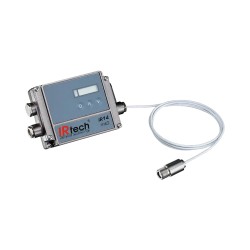
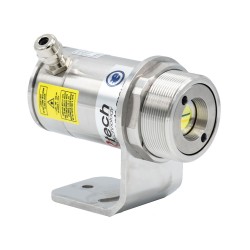
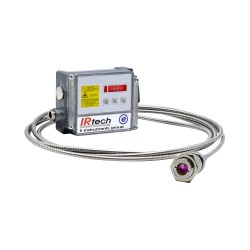
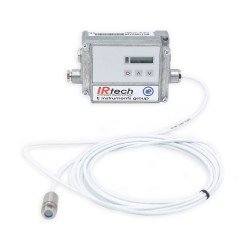
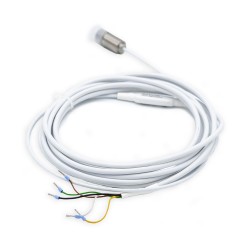
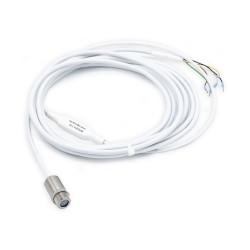
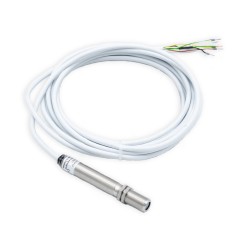
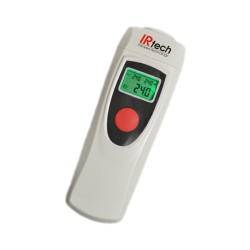
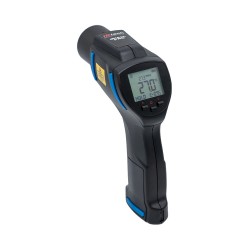
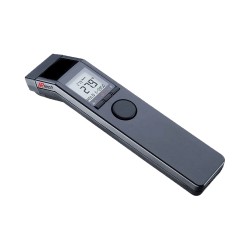
Pyrometers are essential tools for non-contact temperature measurement, used in various industrial and scientific fields. These devices use the infrared radiation emitted by an object to determine the temperature precisely, even in extreme conditions. Ideal for applications where direct contact is not possible or safe, pyrometers are widely used in metal manufacturing, glass processing, plastics and other tasks requiring accurate and continuous thermal control. Our range of pyrometers includes fixed and portable models, designed to ensure reliable and long-lasting measurements.



Technical FAQ:
Pyrometers
What is a pyrometer?
A pyrometer is a non-contact temperature measuring instrument that detects the thermal (infrared) radiation emitted by a body to determine its surface temperature. It is applicable to any object with a temperature above absolute zero and allows rapid, safe, and repeatable measurements without physically interfering with the target.
What is a pyrometer used for?
It is used to measure the temperature of objects without physical contact, particularly useful when the target is moving, very hot, inaccessible, electrically live, or when contamination is to be avoided. It replaces or complements thermocouples and RTDs in many industrial and laboratory applications.
In which sectors are pyrometers used?
They are used in virtually every industrial sector: metallurgy, glass industry, ceramics, plastics, food, pharmaceutical, automotive, aerospace, energy, construction, HVAC, scientific research, electrical system maintenance (hot spot detection), fire brigades, quality control, and industrial safety applications.
How does a pyrometer work?
The pyrometer collects the infrared radiation emitted by the target through an optical system, focuses it onto a thermal sensor (thermopile, InGaAs photodiode, microbolometer), and converts the signal into temperature by applying Planck's law of blackbody radiation, corrected for the emissivity of the material.
What types of pyrometers exist?
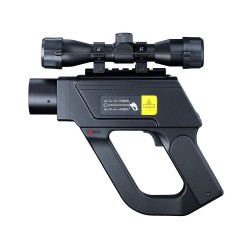
The main categories are: laser pyrometers (laser guide pointer), optical pyrometers (visual viewfinder, advanced optics), infrared pyrometers (general category by physical principle), professional and industrial pyrometers. By configuration they are divided into fixed and portable.
What is the difference between a pyrometer and a thermal camera?
The pyrometer measures the temperature of a single point or small area (spot), returning a numerical value. The thermal camera acquires a two-dimensional thermal image, providing the spatial distribution of temperature over an entire scene. The pyrometer is faster, more economical, and more accurate for point measurements; the thermal camera is irreplaceable for identifying spatial anomalies and hot spots.
What affects the accuracy of a pyrometer?
The main factors are: emissivity of the material (correct setting is fundamental), distance from the target (relative to the instrument's D:S), presence of optical obstacles (smoke, dust, windows), ambient temperature (for sensor drift), working wavelength (appropriate for material and range), cleanliness of the optics, and periodic calibration.
What is emissivity?
It is a physical property of the material that indicates how efficiently it radiates thermal energy compared to an ideal blackbody, expressed with values from 0 (perfect reflector) to 1 (perfect blackbody). Shiny metallic materials have low emissivity (0.1–0.3), while plastics, paints, ceramics, and wood have high values (0.9–0.98). Incorrect settings can generate errors of 5–20% on the indicated temperature.
What temperature ranges do pyrometers cover?
The total market range covers from −50 °C to over 3500 °C, divided into specific models. Each instrument has its own optimal range: low T (−50/+500 °C) for HVAC and food, medium (200/1200 °C) for metals and ceramics, high (500/2200 °C) for steel and foundries, very high (1000/3500 °C) for molten metals, glass, plasma.
What are the advantages of a pyrometer over a thermocouple?
Non-contact measurement (no wear), speed (1–100 ms vs. seconds for thermocouples), measurement on moving or dangerous objects, remote measurement, absence of sensor drift (no chemical contamination), extended range toward high T (over 2000 °C where thermocouples become fragile and expensive), no invasive process cabling.
Which pyrometer is most suitable for my application?
The choice depends on parameters: temperature range, working distance (D:S), type of material (emissivity), environmental conditions (dust, smoke, ATEX), datalogging and connectivity requirements, frequency of use (spot vs. continuous), budget. See the guide Industrial infrared pyrometers: how to choose the right model.
Do pyrometers need calibration?
Yes, annual or biennial periodic calibration is recommended to ensure measurement accuracy over time. It is performed by comparison with a reference blackbody source in an ISO/IEC 17025 accredited laboratory. For official inspection activities, up-to-date calibration is mandatory.