


Fixed combustion analyzers
Our combustion analyzers are designed to offer reliable gas monitoring in continuous industrial environments. These robust devices are essential to resist for a long time in extreme conditions: such as very high temperatures, a high humidity level or with a high concentration of dust in the flue gases. Our range of combustion analyzers offers unprecedented precision and reliability.

Technical FAQ:
Fixed combustion analyzers
What is a fixed combustion analyzer?
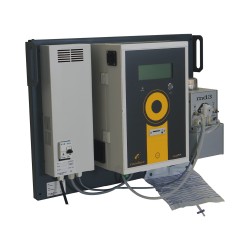
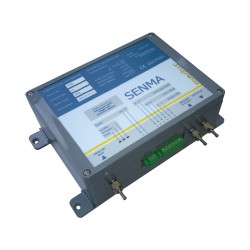
A fixed combustion analyzer is a measurement system permanently installed on the stack of an industrial plant, designed for continuous 24/7 monitoring of gaseous emissions and combustion parameters. Also known as SME (Emission Monitoring System) or AMS (Automated Measuring System) according to UNI EN 14181, it is mandatory for plants subject to an Integrated Environmental Authorization (AIA) with regulated emission limits.
What are fixed combustion analyzers used for?
They are used for continuous monitoring of atmospheric emissions to demonstrate compliance with regulatory limits (D.Lgs. 152/2006, European BAT Conclusions), to optimize combustion process efficiency, for environmental reporting (ETS – Emission Trading System), and to provide data to regulatory authorities (ARPA, Ministry of the Environment).
In which sectors are fixed combustion analyzers used?
They are used in sectors such as thermal power plants, refineries, cement plants, glassworks, steel plants, foundries, paper mills, waste-to-energy and waste treatment plants, chemical and petrochemical industries, cogeneration plants, district heating systems, ceramics industry, and in all industrial facilities subject to Integrated Environmental Authorization (AIA) or specific sector regulations.
When is it better to use a fixed combustion analyzer rather than a portable one?
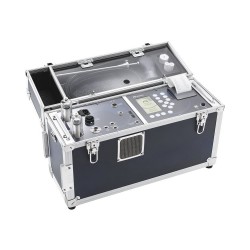
A fixed combustion analyzer is mandatory when environmental permits require continuous monitoring (CEMS – Continuous Emissions Monitoring System), typically for plants with thermal power > 50 MW, incineration plants, and AIA-regulated facilities. A portable combustion analyzer is preferred for periodic inspections, civil heating systems, and occasional checks at multiple points within a plant.
What are SME, AMS and CEMS?
SME (Sistema di Monitoraggio delle Emissioni) is the Italian term. AMS (Automated Measuring System) is the European term according to UNI EN 14181. CEMS (Continuous Emissions Monitoring System) is the international term. All refer to a fixed system consisting of analyzer, sampling system, flue gas conditioning, data acquisition, and automatic reporting to environmental authorities.
What parameters does a fixed analyzer measure?
It typically measures O₂, CO, CO₂, NOx, SO₂, HCl, HF, TOC (Total Organic Carbon), NH₃ (for SCR/SNCR systems), particulates (using opacity meters or triboelectric probes), as well as process parameters such as flue gas flow rate, temperature, pressure, and humidity. The configuration depends on the emission limits defined for the specific plant.
What technologies are used in fixed analyzers?
The main technologies include NDIR for CO, CO₂, NO, SO₂ (high accuracy, long lifetime); paramagnetic sensors for high-accuracy O₂ measurement; chemiluminescence for trace NOx; UV-DOAS for in-line SO₂, NO₂, NH₃; FID for TOC/VOC; and sampling systems such as cold extraction (Hot-Cold Wet) or hot extraction (Hot-Wet) for gas conditioning. In-situ systems (direct in-stack analysis without extraction) are also used for specific applications.
What do QAL1, QAL2 and QAL3 certification levels mean under EN 14181?
UNI EN 14181 defines three quality assurance levels for AMS systems: QAL1 is the suitability certification of the instrument (TÜV or equivalent, according to EN 15267); QAL2 is the on-site calibration of the installed AMS, including comparison with the Standard Reference Method (SRM) and establishment of the calibration curve, typically repeated every 3 to 5 years; QAL3 is periodic stability control performed weekly or monthly using reference gas measurements.
What are extractive and in-situ sampling systems?
Extractive systems draw flue gas from the stack, cool and condition it (removing moisture), and send it to the analyzers. This is the most common AMS solution, accurate and robust. In-situ systems perform analysis directly in the stack using optical probes (UV-DOAS, NDIR cross-duct) or zirconia sensors inserted into the flue gas stream. They are faster and require less maintenance, but are more sensitive to environmental conditions.
How is a fixed analyzer integrated with management systems?
A fixed analyzer typically communicates via 4–20 mA, Modbus RTU/TCP, Profibus, or OPC with the plant DCS, SCADA systems, and dedicated SME data acquisition software for environmental reporting. Data are validated and stored every second, and hourly/daily reports are automatically sent to regulatory authorities via dedicated platforms (Smart-SME / ETS).
What are typical emission limits?
Limits are defined by D.Lgs. 152/2006 and European BAT Conclusions and vary by sector and plant size. For example, in large combustion plants (LCP > 50 MW), typical limits are NOx 150–300 mg/Nm³, SO₂ 200–400 mg/Nm³, particulates 10–30 mg/Nm³, CO 100–200 mg/Nm³, always expressed on dry gas and normalized to the reference oxygen content specific to the fuel.
What is the typical maintenance of a fixed analyzer?
Maintenance includes weekly QAL3 checks with zero/span gases, monthly or bimonthly filter replacement in sampling lines, quarterly maintenance of conditioning systems (pumps, chillers), annual full inspection of sensors and lines, and QAL2 field calibration every 3 to 5 years using SRM methods. Operation typically requires specialized service contracts and qualified personnel.