Why choose infrared pyrometers
In the industrial context, non-contact temperature measurement has become increasingly important to ensure control, safety and operational continuity. Infrared pyrometers today represent an indispensable solution in all those applications where direct contact with the material is not possible, is not safe or would compromise the process.
Unlike traditional sensors, an industrial infrared pyrometer allows you to measure the temperature by detecting the energy emitted by an object, without the need for physical contact. This approach allows you to operate on moving surfaces, high temperature materials or difficult environments, maintaining high response speed and reducing instrument wear.
Infrared measurement finds application in numerous industrial sectors, where data precision is fundamental for process control. In these contexts, pyrometers do not only represent an alternative to contact technologies, but a strategic choice to improve the reliability of measurements and operational efficiency.
How an infrared pyrometer works
The operating principle of infrared pyrometers is based on the ability of each body to emit electromagnetic radiation depending on its temperature. This radiation, belonging to the infrared spectrum, is detected by the instrument's sensor and converted into a temperature value.
Unlike non-contact temperature measurement based on traditional sensors, the pyrometer does not directly measure the temperature of the material, but interprets the energy emitted by the surface. For this reason, one of the fundamental elements to consider is emissivity, or the ability of a material to emit infrared radiation.
Each material presents a different behavior: opaque surfaces tend to have higher and more stable emissivity, while shiny or reflective surfaces can generate measurement errors if they are not correctly compensated.
Understanding this principle is essential to correctly use an infrared industrial pyrometer and, above all, to choose the most suitable model depending on the application.
Infrared pyrometer vs contact sensors: when to choose non-contact measurement
When comparing measurement technologies, infrared pyrometers represent a particularly advantageous solution in numerous industrial applications.
Unlike thermocouples or thermoresistances, non-contact temperature measurement allows the thermal value to be detected without interfering with the process. This aspect is fundamental in the presence of:
- moving materials;
- high temperatures;
- aggressive or difficult to access environments.
An infrared industrial pyrometer also guarantees very rapid response times, allowing continuous monitoring even on dynamic processes. In contrast, contact sensors can introduce thermal inertia and wear over time, affecting the quality of the measurement.
However, infrared measurement requires correct setup and understanding of physical parameters, such as emissivity and environmental conditions. For this reason, the choice of pyrometer cannot be random, but must be based on the specific application.
Types of infrared pyrometers: how to find your way
Not all infrared pyrometers are the same. Choosing the correct model depends on several factors, including the material being measured, environmental conditions and process characteristics.
Single color pyrometer
The single-color pyrometer is the most widespread solution and is used in most industrial applications.
This type of instrument measures temperature by analyzing infrared radiation in a specific spectral band. It is particularly suitable when:
- the emissivity of the material is stable;
- environmental conditions are controlled;
- the surface is well defined and non-reflective.
Due to its simplicity and reliability, the single-color pyrometer is often the most efficient choice for standard applications.
Two-color pyrometers (ratio)
Two-color, or ratio, pyrometers are designed for more complex applications.
They measure temperature by comparing two wavelengths, making them less sensitive to changes in emissivity or harsh environmental conditions, such as:
- presence of dust or fumes;
- partially occluded surfaces;
- materials with variable emissivity.
This technology allows for more stable measurements in critical industrial contexts.
Spectral bands and specific applications
One of the most important elements when choosing a pyrometer is the spectral band, i.e. the wavelength used for the measurement.
Each material emits energy differently, and it is therefore necessary to select the most suitable sensor:
- Metals: require short wavelengths to improve precision on low-emissivity surfaces;
- Glass: requires specific bands to avoid errors due to transparency;
- Plastics: require dedicated wavelengths for thin or semi-transparent materials.
The correct choice of the spectral band is one of the most critical elements to obtain a reliable measurement.
How to choose the correct pyrometer
The choice of an industrial infrared pyrometer cannot be based on a single parameter, but must take into account a series of factors that directly influence the quality of the measurement.
Each application has specific characteristics, and identifying the correct model means carefully analyzing the operating conditions, the material to be measured and the needs of the process.
Material to measure and emissivity
One of the most critical aspects in choosing infrared pyrometers is the emissivity of the material.
Emissivity represents the ability of a surface to emit infrared radiation and varies depending on the material and its conditions. If this parameter is not set correctly, the measurement can be significantly incorrect.
In general:
- opaque materials have higher and more stable emissivity;
- shiny or metallic materials have low and variable emissivity;
- oxidized or treated surfaces can modify the emission behavior.
For this reason, knowing the material is the first step in correctly selecting the pyrometer.
Surface: glossy, reflective or matte
In addition to the material, the surface finish also affects the measurement.
Shiny or reflective surfaces tend to reflect radiation from the surrounding environment, introducing significant errors.
This phenomenon is particularly critical in metals or treated surfaces.
On the contrary, matte and uniform surfaces guarantee a more stable and reliable measurement.
In the presence of problematic surfaces, it may be necessary to:
- use specific pyrometers (e.g. two-colour);
- change the measurement angle;
- adopt application measures to reduce reflections.
Temperature range
Each pyrometer is designed to work within a certain temperature range. Choosing an instrument with an inadequate range can compromise the precision of the measurement:
- too wide a range reduces sensitivity;
- a range that is too limited can make measurement impossible.
It is therefore essential to select a model consistent with the actual temperatures of the process.
Measuring distance and optics (spot)
Another fundamental element is the distance between the pyrometer and the material.
Each instrument is characterized by a distance/spot ratio (D:S), which defines the minimum area measured. The further the distance increases, the larger the measurement spot will be.
A very common mistake is to underestimate this aspect: the pyrometer does not measure a point, but an area. If the spot is larger than the object, the detected value will be an average, resulting in a loss of precision.
For this reason, it is essential to choose the correct optics based on the distance and size of the target.
Accessories and operating conditions
The choice of an industrial infrared pyrometer is not limited to the instrument itself, but must also consider the operating conditions and accessories necessary to guarantee reliable measurement over time.
In many industrial contexts, the environment can significantly influence sensor performance. For this reason, it is essential to evaluate solutions that protect the pyrometer and keep its measurement quality constant.
Among the most relevant elements:
- Cooling systems, necessary in high temperature environments to avoid overheating of the instrument;
- Compressed air blowing, used to keep the optics clean and prevent deposits of dust, fumes or residues;
- Protection of the optics, essential to avoid measurement alterations due to dirt or condensation;
- Supports and brackets, which allow the pyrometer to be kept stable and correctly oriented with respect to the target.
These elements transform the pyrometer from a simple sensor to an integral part of a measurement system, capable of operating continuously even in complex industrial conditions.
Communication and integration in industrial systems
In modern industrial plants, measurement is no longer isolated data, but part of an integrated control and supervision system.
For this reason, infrared pyrometers must guarantee compatibility with the main communication methods, both analogue and digital.
The most popular solutions include:
- analogue outputs (e.g. 4–20 mA), still widely used for simple integration into existing systems;
- digital interfaces, which allow more advanced management of data and instrument configuration;
- industrial protocols, such as Modbus or Profinet, increasingly present in automation contexts.
Integration with PLC and supervision systems allows the infrared industrial pyrometer to be used not only as a sensor, but as an active element in process control.
This approach allows you to:
- improve data traceability;
- simplify monitoring activities;
- integrate the measurement within advanced automation systems.
Industrial applications of infrared pyrometers
Thanks to their versatility, infrared pyrometers find application in numerous industrial sectors, where non-contact temperature measurement represents a fundamental requirement.
Among the main applications:
- Metallurgical sector, for the control of high temperature materials and difficult to reach surfaces;
- Glass industry, where it is necessary to measure transparent or semi-transparent materials;
- Plastic materials, for the control of extrusion and molding processes;
- Machine manufacturers (OEMs), where pyrometers are integrated directly into systems for continuous temperature monitoring and automatic process control;
- Food sector, for rapid monitoring without contamination;
- Automotive and industrial production, for continuous control of production processes.
In all these contexts, the pyrometer allows you to obtain rapid, reliable and integrated measurements in the production system, improving the quality of the process and reducing the risk of errors.
Most common errors in infrared measurement
Despite the numerous advantages, the use of infrared pyrometers can generate significant errors if some application factors are not correctly considered.
One of the most frequent errors concerns the emissivity setting. An incorrect value can lead to completely inaccurate measurements, even if the instrument is perfectly functional.
Another critical aspect is the measurement distance. As already highlighted, the pyrometer detects a surface and not a point: if the spot is too large compared to the target, the result will be a non-representative average.
Environmental conditions also play an important role. The presence of dust, fumes, vapors or reflective surfaces can alter the infrared radiation and compromise the measurement.
Finally, incorrect installation of the instrument - incorrect measurement angle, instability of the support or absence of protections - represents one of the main causes of errors in non-contact temperature measurement.
These examples demonstrate how, in most cases, errors do not depend on the tool, but on the context in which it is used.
Quick guide to choosing an infrared pyrometer
To identify the most suitable industrial infrared pyrometer, it is useful to follow a structured logic that takes into account the main application parameters.
- Material to measure: evaluate the emissivity and behavior of the material;
- Surface: consider whether it is shiny, reflective or matte;
- Temperature range: choose an instrument suited to the operating range;
- Distance and optics: check the distance/spot ratio and the target dimensions;
- Environmental conditions: presence of dust, fumes, vibrations or high temperatures;
- Integration: need for analogue output or digital communication (Modbus, Profinet, etc.);
- Accessories: evaluate any cooling or protection systems.
Following these criteria allows you to reduce errors and select a tool that is truly consistent with the application.
Infrared pyrometers: a strategic choice for industrial measurement
Infrared pyrometers today represent a fundamental technology for temperature measurement in the industrial sector. The possibility of carrying out a non-contact temperature measurement allows you to operate safely, improve the quality of the data and optimize process control.
However, their effectiveness depends on the correct selection and configuration of the tool. Understanding the operating principles, evaluating the operating conditions and choosing the most suitable model are essential steps to obtain reliable results.
In this context, the choice of pyrometer cannot be limited to a simple catalog selection, but requires an in-depth analysis of the application, operating conditions and measurement objectives.
Thanks to consolidated know-how and over 30 years of experience in the sector, the E Instruments technical team is able to support companies and professionals in selecting the most suitable pyrometer, guaranteeing solutions consistent with real application needs.
A support that represents a fundamental added value for obtaining reliable measurements and concrete results in industrial processes.



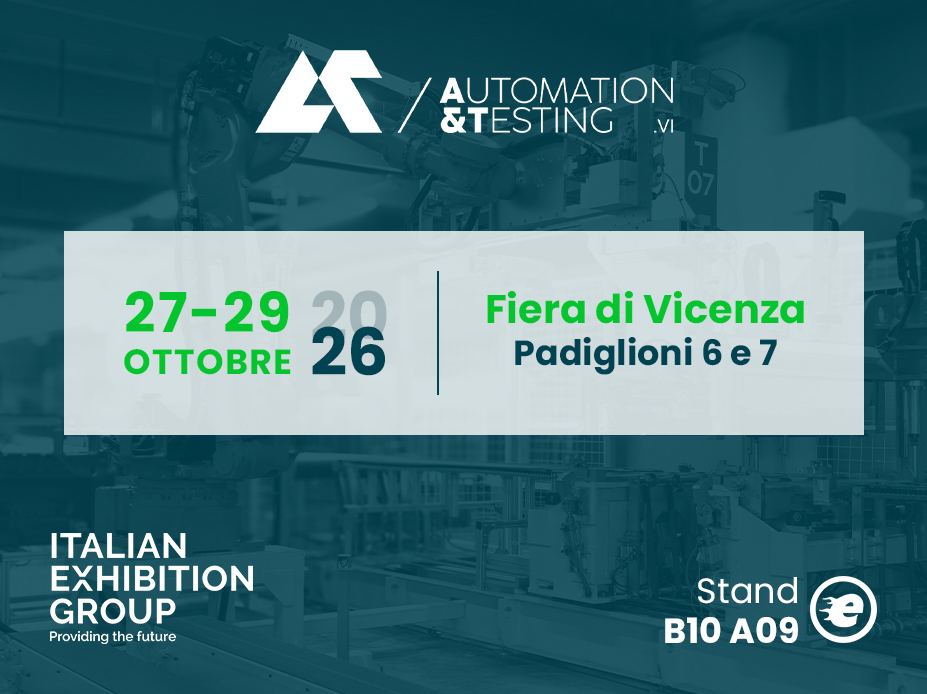 E Instruments at the A&T Vicenza 2026 Trade Fair: Measurement, Calibration, and Safety in Hall 7
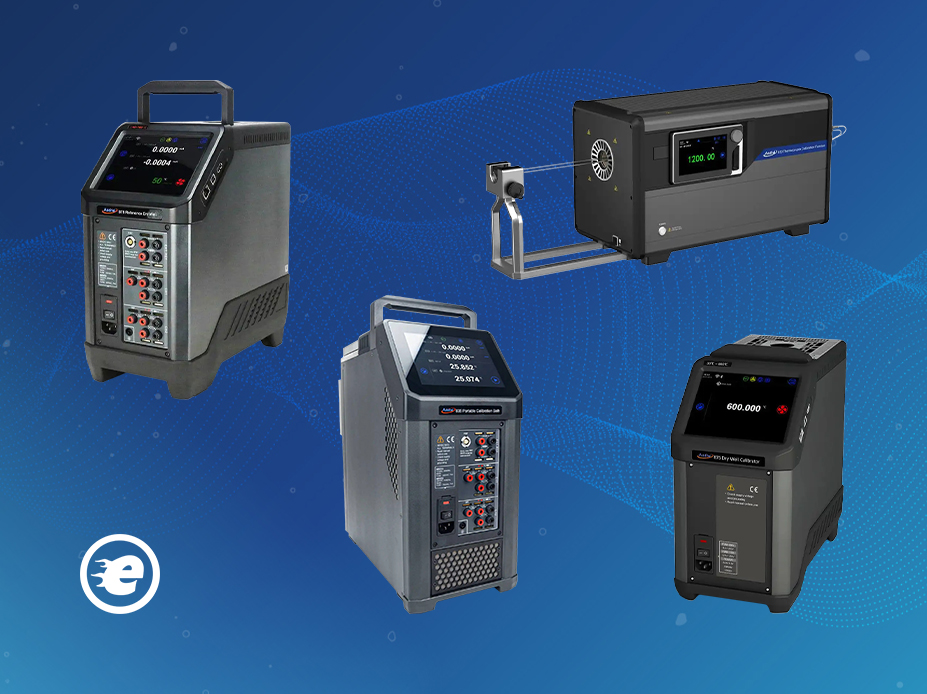 Additel dry-well temperature calibrators: the complete range for thermocouples and resistance thermometers
 Thermal imaging cameras and pyrometers for the plastics industry: applications, benefits, and solutions