


IoT dataloggers
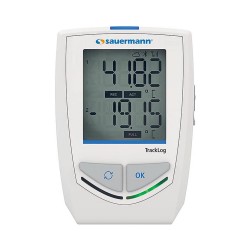
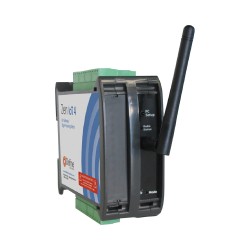
Our IoT dataloggers leverage the latest technologies to offer a remote and automated monitoring solution. These devices are designed to integrate seamlessly with existing infrastructures, providing real-time data on critical parameters such as temperature, humidity, pressure and much more through IoT connections. Our IoT data loggers facilitate data management and analysis, enabling decisions based on accurate and timely information.
Technical FAQ:
IoT dataloggers
What is an IoT data logger?
It is a connected data logger that transmits measurement data in real time to a cloud platform via WiFi, cellular network (3G/4G/5G/NB-IoT), LoRa or Sigfox, eliminating the need to manually download data from the device.
What is an IoT data logger used for?
It is used to remotely monitor environmental, process or logistics parameters in real time, receiving instant alarm notifications via email, SMS or app. It is the standard solution for smart factories, precision agriculture, the cold chain and the monitoring of distributed assets.
In which sectors is an IoT data logger used?
It is used in logistics and transport, pharmaceutical (cold chain with GPS+T tracking), food and catering, agriculture (greenhouses, silos, irrigation), energy (photovoltaic monitoring, wind, smart grid), facility management, environmental monitoring (urban air quality, noise, weather) and infrastructure (bridges, tunnels, dams).
When to choose an IoT data logger instead of a single-channel or multi-channel one?
The IoT is chosen when real-time access to data is needed without physical device recovery, when measurement points are geographically distributed and when instant automatic alarms are required. Traditional single-channel and multi-channel are preferable when the network is not available or for cost reduction.
What connectivity technologies do IoT data loggers use?
WiFi (high consumption, reduced range, ideal for buildings); cellular 4G/5G/NB-IoT (global coverage, ideal for transport); LoRaWAN (low consumption, long range, ideal for agriculture and cities); Sigfox (low consumption, low bitrate); Bluetooth (for local, to be combined with gateway).
What are the advantages of IoT data loggers compared to traditional ones?
Real-time access to data anywhere, immediate alarm notifications, elimination of physical data collection, centralized cloud archiving, integration with corporate management systems, visualization dashboards, predictive analysis and correlation of data from multiple sites.
What is the associated cloud platform?
It is a web application (and usually also mobile app) provided by the manufacturer or third parties, where data is visualized in customizable dashboards, archived over time, exportable and where alarms, users and reports are configured. Most are in SaaS mode with annual subscription.
Are IoT data loggers compliant with GMP / 21 CFR Part 11?
Yes, professional cloud platforms for the pharmaceutical sector comply with 21 CFR Part 11 (FDA), EU GMP Annex 11 and with ISO 27001 certifications for data security. They support complete audit trail, electronic signature and periodic validation.
What is the typical transmission frequency of IoT data loggers?
Variable depending on the protocol: low-consumption LoRa and NB-IoT data loggers transmit every 15-60 minutes to optimize battery life; WiFi or cellular ones can transmit every minute or even continuously. Between transmissions, data is still recorded
locally on the device.
What happens if the connection drops?
Professional IoT data loggers integrate an internal backup memory: in case of coverage loss they continue to record locally and, upon connection restoration, transmit in batches all backlog data without loss. This is the so-called store & forward function.
What are the operating costs of an IoT data logger?
In addition to the device cost, the annual subscription to the cloud platform and the cost of connectivity (data SIM or LoRa gateway) must be considered. For large fleets, corporate plans with decreasing unit costs are available.
Are IoT data loggers integrable with other corporate systems (ERP, MES, SCADA)?
Yes, professional cloud platforms provide REST APIs and webhooks to integrate with management systems (SAP, ERP), MES, SCADA, CMMS software and Business Intelligence platforms. It is a fundamental requirement for Industry 4.0 projects and integrated energy management.