


Pneumatic pumps for calibration
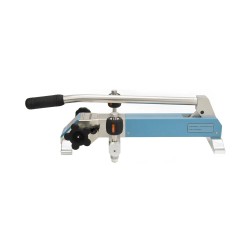
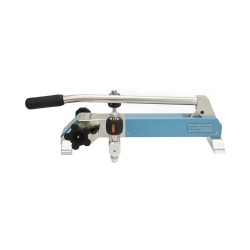
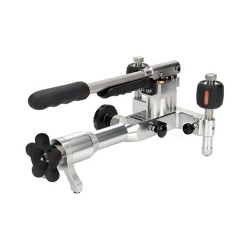
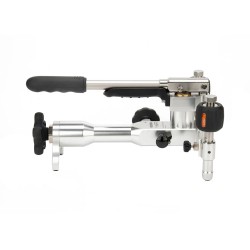
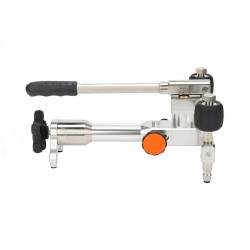
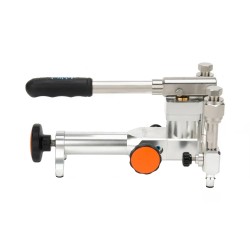
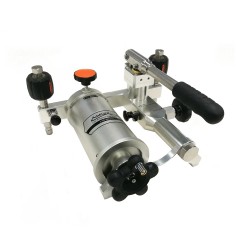
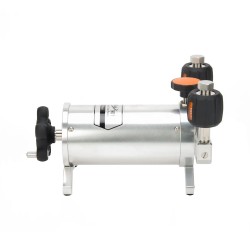
Our pneumatic pump pressure calibrators are designed to guarantee maximum sealing, to carry out accurate and repeatable calibrations. Lightweight and versatile, they are perfect for use in a wide range of environments: from the metrology laboratory to heavy industry. Pneumatic pumps provide unprecedented control, thanks to the maximum seal resulting from the numerically controlled production process. Robustness and ease of use are the characteristics that distinguish them.




Technical FAQ:
Pneumatic pumps for calibration
What is a pneumatic calibration pump?
A pneumatic calibration pump is a pressure generator that uses a gas (typically clean air or nitrogen) as a working fluid to produce controlled pressure values, to be used in the calibration operations of measuring instruments. It exists in a benchtop, portable or motorized version.
Feedback
Google Traduttore
What is the pneumatic pump used for calibration?
It is used to generate in a stable and adjustable way the reference pressure to be applied to the instrument being calibrated (pressure gauge, transmitter, pressure switch), so that it can be compared with the value read by a digital reference pressure gauge or a calibrator.
In which sectors can pneumatic pumps be used for calibration?
They are used in maintenance workshops, calibration laboratories, quality control, oil & gas, HVAC, pharmaceutical, food, water treatment, automotive and in all contexts where a controlled gas pressure is necessary for the verification of the instrumentation.
How does a pneumatic pump work?
It works by compressing a volume of air using a manually operated (plunger or crank) or motorized piston. A fine adjustment screw allows the pressure to be brought exactly to the set point, while relief and by-pass valves allow controlled discharge.
What is the difference between a hydraulic pump and a pneumatic pump?
The pneumatic pump uses gas as the working fluid and typically operates from a few mbar up to 20-40 bar (rarely 70-100 bar). The hydraulic pump, like the hydraulic press, uses oil or water and reaches much higher pressures, up to several thousand bars.
What pressure range does a pneumatic pump cover?
The most popular models cover from a few mbar up to 20-40 bar, with specific versions up to 70-100 bar. There are also low range pumps (mbar/Pa) dedicated to the calibration of ventilation instruments, filters and clean rooms.
Can a pneumatic pump also generate vacuum?
Yes, many pneumatic pumps are designed to operate in both positive pressure and vacuum, typically reaching up to -0.9 / -0.95 bar (relative vacuum). This feature is useful for testing instruments used on suction lines or in vacuum processes.
What fluids are used with a pneumatic pump?
Only gases are used: clean filtered air or, in specific applications, nitrogen. They are not compatible with oil or liquids: the hydraulic press is used for hydraulic calibration.
Which instruments can be calibrated with a pneumatic pump?
Pressure gauges, vacuum gauges, pressure transmitters, pressure switches, mano contacts and indicators, combining it with a pressure calibrator or a digital reference pressure gauge.
Manual or motorized pneumatic pump: which to choose?
The manual pump is cheaper, lighter and suitable for occasional or field calibrations. The motorized pump, integrated into the automatic pressure calibrators, it is preferable for laboratories with high calibration volumes, because it guarantees speed, repeatability and automation.
What accessories are needed?
Set of adapters and fittings for the different threads, high pressure hoses, filters to prevent contamination of the reference instrument, digital pressure gauge or calibrator for reading the pressure generated.
Is the pneumatic pump a measuring instrument?
No, it is a pressure generator: it produces and regulates the pressure but not the measurement. For the measurement it must always be combined with a reference instrument (digital pressure gauge or calibrator). The final accuracy of the calibration depends on the readout instrument, not the pump.