


Electrical multimeters
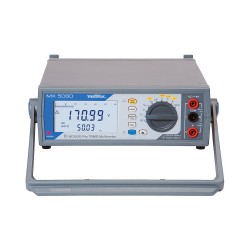
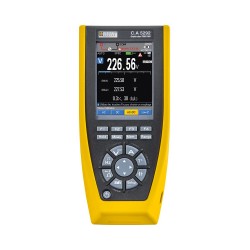
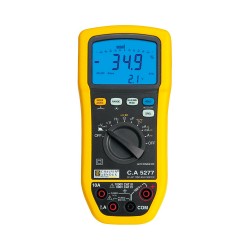
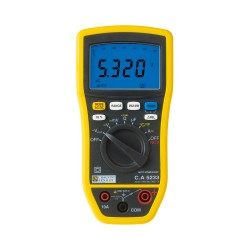
Our multimeters are indispensable tools for every electrical professional, offering the ability to measure voltage, current, resistance and other electrical parameters with precision. Ideal for diagnosis, maintenance and repair of electrical systems in residences, offices and industrial plants. Easy to use and highly reliable, our multimeters are designed to ensure maximum safety and operational efficiency.


Technical FAQ:
Electrical multimeters
What is an electrical multimeter?
It is a portable measuring instrument capable of measuring multiple electrical quantities with a single device: voltage (DC/AC), current (DC/AC), resistance, continuity, frequency, capacitance, temperature, diodes and (in advanced models) process parameters such as 4-20 mA.
What is an electrical multimeter used for?
It is used to measure and diagnose electrical quantities on installations, electronic equipment and process devices. It is the fundamental tool for electricians, maintenance technicians, electronic engineers and service technicians for fault diagnosis and installation verification.
In which sectors is an electrical multimeter used?
It is used in industrial, civil and tertiary electrical maintenance, in electronic equipment repair, automotive, HVAC, telecommunications, R&D, laboratories, aerospace sector and in all activities requiring precision electrical measurements.
What is the difference between an electrical multimeter and a clamp meter?
The multimeter measures voltage, current (via probes, requires circuit opening), resistance and other quantities with high accuracy. The clamp meter measures current non-invasively by clamping the cable, and it is preferable when the circuit cannot be interrupted or for high current measurements.
What is the True RMS function?
True RMS (true effective value) correctly measures waveforms distorted by non-linear loads (inverters, drives, switching power supplies, LED lighting). "Average sensing" multimeters assume pure sinusoidal waveforms and introduce errors of 10-40% on
modern electrical networks.
What does CAT III 600 V or CAT IV 1000 V mean?
They are the safety categories according to IEC 61010 for use on electrical installations: CAT III is for electrical panels and industrial distribution (up to 600 or 1000 V); CAT IV is for installation origin and meters (up to 1000 V). They are indispensable for operator safety in case of network transients.
Which are the most common multimeters: digital or analog?
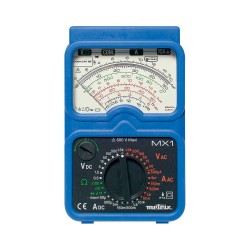
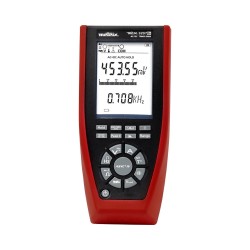
Digital ones (DMM - Digital Multimeter) are the modern standard: LCD display, high accuracy (0.5-0.025%), True RMS function, autoranging, memory. Analog ones (needle-type) are now residual, useful only to quickly visualize variations and trends in
an intuitive way.
What advanced parameters can a professional multimeter measure?
DC/AC voltage and current (True RMS), resistance, audible continuity, diode test, capacitance, frequency, duty cycle, temperature (with thermocouple), 4-20 mA loop with power supply, peak capture, Min/Max/Avg, data logging and wireless connectivity.
What is the continuity test and what is it used for?
It is the verification that an electrical path exists between two points, signaled by an acoustic buzzer (and by the displayed resistance value). It is used to check the integrity of cables, fuses, protective conductors (PE), continuity of motor windings and
correctness of wiring.
Can high current measurements (>10 A) be made with an electrical multimeter?
The standard multimeter typically measures up to 10-20 A. For higher currents, clamp meters (up to 1000 A or more) or dedicated accessories such as flexible Rogowski clamps are used, which connect to the multimeter as an external probe.
What is "low impedance" mode (LoZ)?
The LoZ mode lowers the internal impedance of the multimeter during voltage measurement, eliminating "ghost voltages" induced by capacitive coupling on unpowered cables. Indispensable to avoid false readings in junction boxes and industrial panels.
Do electrical multimeters need periodic calibration?
Yes, the typical interval is annual for multimeters used in official inspection activities or in regulated environments (ISO/IEC 17025), biennial for general use. The updated calibration certificate is required for declarations of conformity and periodic verifications.