


Pressure gauge calibrators
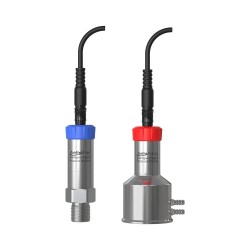
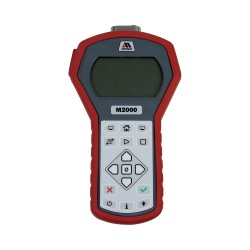
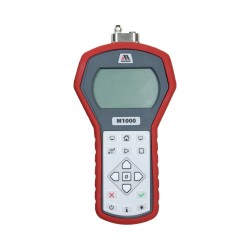
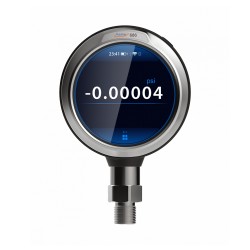
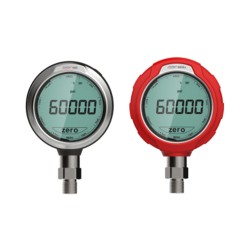
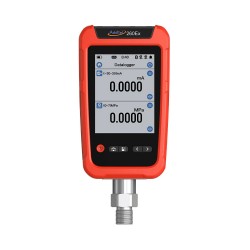
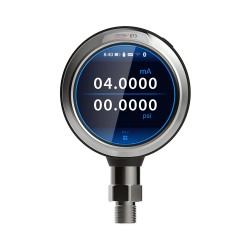
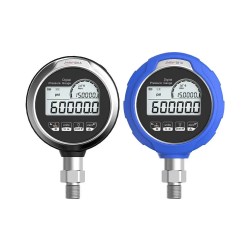
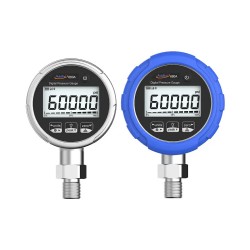
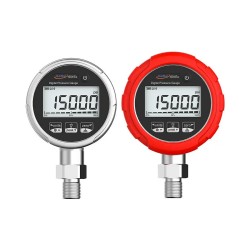
Our pressure gauges are designed to provide maximum accuracy and precision in pressure measurements. These pressure calibrators are essential for various types of applications that require exact and reproducible measurements, ensuring reliable results in a variety of industrial contexts. They are perfect for use in the laboratory or in the field, they combine robustness and precision, offering numerous configurations and accuracies. Thanks to the latest technologies, some models integrate the data logger and a referential PT100.



Technical FAQ:
Pressure gauge calibrators
What is a pressure gauge?
The pressure gauge is a measuring instrument used to detect the pressure of a fluid (liquid or gas) compared to a reference, typically atmospheric pressure. It can be analogue, based on an elastic element (Bourdon tube, membrane, bellows), or digital with conditioning electronics.
What is a pressure gauge for?
A pressure gauge is used to monitor process pressure in systems, pipes and equipment, ensuring that they operate within expected safety and productivity parameters. In the high accuracy reference version, it is used as a standard for the calibration of other pressure gauges, transmitters and pressure switches.
In which sectors can a pressure gauge be used?
It is used in practically all industrial sectors: oil & gas, chemical and petrochemical, pharmaceutical, food, HVAC, automotive, energy, water treatment, aeronautics and metrological laboratories. Even in process applications the pressure gauge is a fundamental instrument.
What types of pressure gauges exist?
The main ones are analogue pressure gauges, digital pressure gauges with electronic sensor, differential pressure gauges, those for absolute pressure and those for relative pressure. Digital reference pressure gauges constitute a specific category dedicated to calibration.
What is meant by digital reference pressure gauge or calibrator?
It is a high-accuracy digital pressure gauge, equipped with certified sensors and metrological traceability, used as a comparison sample for the calibration of other pressure measuring instruments. It differs from process pressure gauges because it declares uncertainty, accuracy class and calibration validity period.
What is the difference between analog pressure gauge and digital pressure gauge?
The analog pressure gauge uses an elastic mechanical element and an index dial; it is economical but subject to wear, hysteresis and accuracy classes typically 1-2.5%. The digital pressure gauge uses an electronic sensor with accuracies up to 0.01% or better, offers datalogging, digital communication, automatic temperature compensation and greater stability over time.
What does relative, absolute and differential pressure mean?
Relative pressure (or gauge) is measured relative to the local atmospheric pressure. Absolute pressure is measured relative to a perfect vacuum and includes atmospheric pressure. Differential pressure is the difference between two pressures applied to the two sensor inputs.
What accuracy must a pressure gauge have to be used as a calibrator?
To be used as a standard, the reference pressure gauge should have an accuracy at least 4 times better (TAR ratio 4:1) than the instrument to be calibrated. Typically we are talking about values from 0.025% to 0.1% of full scale, depending on the category of use (field, laboratory or metrology).
Which pressure measurement units does a pressure gauge use?
The most common are bar, mbar, Pa, kPa, MPa (SI system), psi (SI system). Anglo-Saxon), kg/cm², mmH₂O, mmHg, inH₂O and inHg. Digital pressure gauges typically allow automatic conversion between tens of units.
How often should a pressure gauge be calibrated?
The typical calibration frequency ranges from 6 months to 2 years, depending on the criticality of the measurement, the working environment, the level of accuracy required and the requirements of the quality management system (see ISO/IEC 17025). Reference pressure gauges typically require annual re-calibration.
How do you choose the range of a pressure gauge?
The full scale should be selected so that the normal working pressure falls within 25-75% of the measurement range, to limit wear on the sensitive element and guarantee the best accuracy. It is good practice to provide a margin of 30-50% compared to the maximum expected pressure.
How do you avoid measurement errors with a pressure gauge?
Correct assembly (reference position, absence of vibrations, siphons for hot fluids), chemical compatibility with the process fluid, compensation of the hydrostatic height difference and periodic calibration must be considered. Further information in Measurement errors: what not to do in process measurement.