


Analogue Atex cameras
Our Atex analog cameras are designed to ensure safety in high-risk environments, such as those with potentially explosive atmospheres. These cameras comply with Atex regulations, making them ideal for plant use; they offer a robust and reliable solution for continuous video surveillance, improving the safety of personnel and infrastructure. These video surveillance cameras are essential for the prevention and management of emergencies.
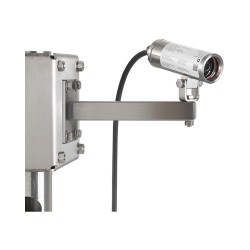

Technical FAQ:
Analogue Atex cameras
What is an ATEX analog camera?
It is a video surveillance camera certified ATEX/IECEx for use in potentially explosive atmospheres (Zone 1/2 for gas, 21/22 for dust), with video signal transmission in analog format via coaxial cable.
What is an ATEX analog camera used for?
It is used to monitor plant areas at risk of explosive atmosphere (oil & gas, chemical, petrochemical) where the use of a standard camera would be dangerous, ensuring service continuity in existing installations that already adopt analog infrastructure.
In which sectors is an ATEX analog camera used?
It is used in refineries, offshore platforms, LPG depots, chemical and petrochemical plants, gas tankers, oil terminals, hydrocarbon treatment plants, mines and every ATEX-classified industrial site where an analog video surveillance infrastructure is already present.
What is the difference between an ATEX analog camera and an ATEX digital one?
The analog one transmits the signal via coaxial cable, with lower resolution (PAL/NTSC, up to Full HD with HD-CVI/TVI), simple but limited infrastructure. The digital IP transmits via Ethernet with 4K-8K resolutions, integrated video analytics and advanced VMS integration, but requires structured network.
Which ATEX protection methods do they use?
The most widespread are Ex d (flameproof, robust housing that contains any internal explosion), Ex e (increased safety) and in some models Ex p (internal overpressure). The choice depends on the classified zone, the gas group (IIA, IIB, IIC) and the temperature class (T3-T6).
Which ATEX zones do they cover?
Professional ATEX cameras typically cover Zone 1 and Zone 2 for gas (occasional or non-probable presence) and Zone 21 and Zone 22 for dust. For Zone 0 (continuous presence of explosive gas) applications are very rare and require specific certifications.
Are ATEX analog cameras compatible with existing DVRs?
Yes, ATEX analog cameras use common transmission standards (HD-CVI, HD-TVI, AHD, CVBS) compatible with most existing DVRs, facilitating the replacement of standard cameras in areas subsequently classified ATEX without having to replace the entire infrastructure.
What mechanical protection rating do ATEX analog cameras have?
Typically IP66/67/68 for dust and immersion, IK08/IK10 for mechanical resistance. Housings are in AISI 316L stainless steel (for marine and corrosive environments), anodized aluminum or special alloys resistant to aggressive chemicals.
Which optics do ATEX analog cameras use?
The most widespread optics are fixed (with predetermined focal length), varifocal (manually adjustable at installation), motorized (remotely controllable) and PTZ (with motorized movement and zoom). The choice depends on the area to be covered, the distance of the object and the necessary viewing angle.
Do ATEX analog cameras work at night?
Yes, most integrate IR (infrared) illuminators for night vision up to 30-100 meters, also ATEX certified. For applications in total darkness or with smoke and fog, ATEX thermal cameras are used.
How long do ATEX analog cameras last?
The typical useful life is 10-15 years in well-sized installations, thanks to the constructive robustness required by ATEX certification. Periodic maintenance (glass cleaning, gasket verification, connection check) and any periodic recertifications must
be provided according to internal safety procedures.
Do ATEX analog cameras require specialized installers?
Yes, installation in ATEX zones must be performed by qualified personnel according to CEI EN 60079-14 (electrical installations in explosive atmospheres), with initial and periodic verification of correct installation, integrity of housings, flameproof sealants and entering cables.