


Standard multifunction calibrators
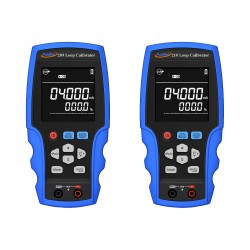
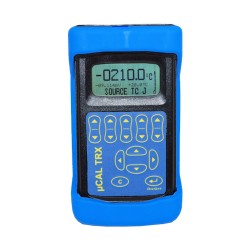
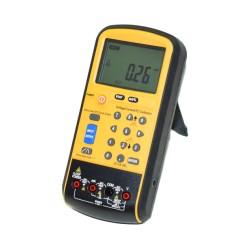
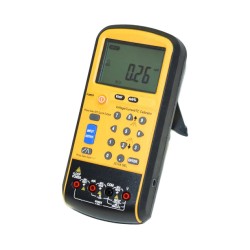
Standard multifunction calibrators are essential tools for those looking for reliable, handheld solutions. These calibrators combine the ability to measure and simulate various parameters such as temperature and electrical signals, providing high precision in a single device. Suitable for use in industrial environments, our Loop and Tc calibrators offer superior handling and consistent performance; they are designed to simplify calibration processes, improving productivity and measurement accuracy.

Technical FAQ:
Standard multifunction calibrators
What is a standard multifunction calibrator?
A standard multifunction calibrator is a portable instrument capable of measuring and generating the main electrical and process quantities — mA current, voltage, resistance, frequency, RTD and thermocouples — for the calibration of transmitters, indicators and process instrumentation. It is the "essential" version of the multifunction calibrators, optimized for daily use in the field.
What is a standard multifunction calibrator for?
It is used to verify and calibrate process instrumentation directly in line: analog transmitters, RTDs, thermocouples, pressure switches and indicators, simulating the input signals and reading the outputs. It is the reference tool for maintenance technicians who work on industrial plants every day.
In which sectors is a standard multifunction calibrator used?
It is used in the maintenance of industrial plants, oil & gas, chemical, food, pharmaceutical, HVAC, automotive, energy, water treatment, paper mills and in all contexts that require periodic checks of the instrumentation without the need for the most advanced automation functions.
What is the difference between the advanced multi-function calibrator and the standard multi-function calibrator?
The standard calibrator offers essential measurement/generation functions, is more economical and suitable for rapid field interventions. The advanced calibrator adds superior accuracies, HART/Fieldbus communication, documenting mode with automatic procedures and integration with quality management software.
What quantities can a standard multifunction calibrator measure and generate?
DC voltage, DC current (mA), resistance, frequency, pulse count, RTD (Pt100, Pt1000) and thermocouples in the main types (K, J, T, N, E). Many models also feature 24V loop power for testing passive transmitters without external power.
When to choose a standard calibrator instead of an advanced one?
The standard is chosen when the calibrations concern traditional analog instruments (4-20 mA, RTD, thermocouples), HART/Fieldbus digital communications are not required and the calibration documentation is managed with external systems. It is the optimal choice for most field maintenance tasks.
Can it be used to calibrate smart HART transmitters?
Not directly: the standard calibrator can read the 4-20 mA analog signal of the HART transmitter, but does not communicate with the device via digital protocol. To configure and diagnose a HART instrument you need a HART communicator (or programmer) or a HART-enabled advanced calibrator.
What accuracy does a standard multifunction calibrator offer?
Typical accuracy is ±0.02-0.05% for current and voltage, ±0.1-0.3 °C for Pt100 RTDs, and ±0.5-1 °C for thermocouples. It is suitable for most industrial process calibrations, where the class of calibrated instruments is generally 0.1-0.5%.
Which instruments can be calibrated with a standard multifunction calibrator?
4-20 mA analog transmitters, process indicators, recorders, RTDs and thermocouples with related transmitters, pressure switches (with external pressure sensor), PLC panels, signal converters and any device with input/output in standard electrical quantities.
Can it be combined with calibration management software?
The most recent standard models integrate USB or Bluetooth connections for data transfer to calibration management software, although with simpler functionality than advanced models. For accredited laboratories and GMP environments the advanced version is generally preferable.
How much does it weigh and how is it transported in the field?
The standard multifunction calibrators are designed for maximum portability: they typically weigh 1-2 kg, are battery powered (8-20 h autonomy), have a rugged case with IP54 protection rating and are carried with a shoulder strap or in a dedicated case.
What is the typical battery life?
Standard models typically offer 8-20 hours of battery life on rechargeable lithium-ion or standard alkaline batteries, enough for a full day of field maintenance. Some models also have energy saving functions to further extend autonomy.