


Portable combustion analyzers
Our combustion analyzers are essential tools for the detection and analysis of gases within processes. Offering portability and accuracy, these devices are ideal for professionals who need tools to monitor gas composition and percentage in real time. Equipped with advanced sensors and cutting-edge technology, the analyzers allow quick and reliable measurements.

Technical FAQ:
Portable combustion analyzers
What is a portable combustion analyzer?
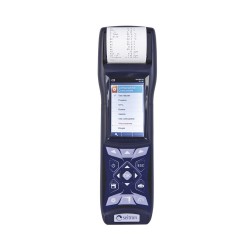
A portable combustion analyzer is a compact, battery-powered measurement instrument designed for on-site verification of combustion efficiency and pollutant emissions in heating systems. It integrates in a single unit gas sensors (O₂, CO, NOx), flue gas probes, temperature sensors, differential pressure (draft) measurement, and automatic efficiency calculation functions according to UNI 10389-1.
What are portable combustion analyzers used for?
They are used to verify the correct operation of boilers, burners, and heating generators, check combustion efficiency, measure CO, NOx, and other pollutant emissions, perform mandatory inspections required by DPR 74/2013 for civil heating systems, and generate test reports valid for technical documentation and fiscal purposes (RCEE forms).
In which sectors are portable combustion analyzers used?
They are used by installers and maintenance technicians of civil and industrial heating systems, inspection authorities (e.g., ARPA), authorized service centers, ESCOs (Energy Service Companies), industrial facilities, hotels, hospitals, and large buildings, as well as in sectors where process burners are used (bakeries, ceramics, glassworks, foundries).
When is it better to use a portable combustion analyzer rather than a fixed one?
A portable combustion analyzer is preferred for periodic checks, scheduled maintenance, calibration verification, heating system inspections, and mobile activities across multiple installations. A fixed combustion analyzer is preferred for continuous 24/7 monitoring, regular emission control in plants subject to environmental permits (AIA – Integrated Environmental Authorization), and integration with process control systems.
What parameters does a portable combustion analyzer measure?
It measures O₂ (excess air), CO (unburned gases), CO₂ (calculated or measured), NO/NOx (optional), SO₂ (optional), flue gas temperature, combustion air temperature, stack draft (negative/positive pressure), Bacharach index (manual or automatic for diesel), and calculates combustion efficiency and stack losses according to UNI 10389-1.
Which fuels can it analyze?
Typically methane, LPG, diesel, fuel oil, biomass (wood, pellets, wood chips), biogas, hydrogen (in specific models), and special industrial fuels. Each fuel has specific stoichiometric parameters (max CO₂, calculation factors) that the instrument automatically applies based on fuel selection in the menu.
What gas sensors are integrated into a portable analyzer?
Typically electrochemical sensors: O₂ (average lifespan 2–4 years), CO (3–4 years), NO (3–4 years), NO₂ (2–3 years), SO₂ (3–4 years). Advanced models may include NDIR sensors for CO₂, CH₄ or total hydrocarbons, and specific sensors for H₂S, CxHy or other compounds. Sensors are replaceable by the service center or, in some models, by the user with automatic recognition.
How is a correct flue gas measurement performed?
The flue gas probe must be inserted into the sampling point of the chimney (at a distance from the generator typically equal to 2 times the diameter). A preliminary “auto-zero” phase is performed in clean air. The system then waits for O₂ stabilization (3–5 minutes), records the measurement, and prints the report. General insight: Measurement errors in processes.
What is the control report and how is it generated?
The Energy Efficiency Control Report (RCEE) is the official document required by Italian regulation DPR 74/2013 for maintenance and periodic inspection of civil heating systems. Portable analyzers integrate direct report printing via Bluetooth printer or export to dedicated software for automatic compilation of regional RCEE forms.
Is an analyzer mandatory for boiler maintenance?
Yes, DPR 74/2013 makes it mandatory to verify combustion efficiency for all heating systems with a rated power ≥ 100 kW (annually), and for lower-power systems with varying frequency depending on fuel type and system configuration. Checks must be carried out by qualified personnel using an analyzer calibrated annually according to UNI EN 50379.
How is a bump test or zeroing performed on a portable analyzer?
Auto-zero in clean air is an automatic procedure performed when the instrument is switched on: the analyzer draws ambient air for 30–60 seconds and zeros the toxic gas sensors. It is essential to perform it away from contamination sources (exhaust gases, fumes). For higher accuracy checks, certified calibration gases with known concentrations can be used.
How often must a portable analyzer be calibrated?
Calibration is typically annual for official inspection activities (required by UNI EN 50379 and DPR 74/2013), with a calibration certificate issued by an ISO/IEC 17025 accredited laboratory or authorized service center. Intermediate checks with certified gases or fixed reference points are considered good metrological practice to ensure accuracy between calibrations.