


HART calibrators
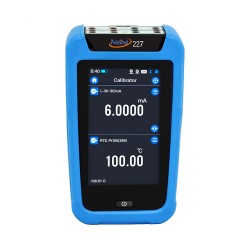
Our HART communication represent the optimal solution for calibrating and programming field devices with HART communication. These advanced tools enable effective communication and precise configurations with all HART transmitters. Ideal for technicians and engineers who need maximum reliability and precision, this type of multifunction calibrator offers extensive functionality to test, configure and recalibrate efficiently.



Technical FAQ:
HART calibrators
What is a HART communicator?
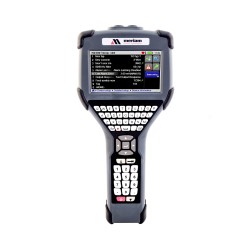
The HART communicator (also called HART programmer or HART communicator) is a portable tool dedicated to the configuration, diagnostics and calibration of intelligent transmitters that use the HART communication protocol. It allows access to all the internal parameters of the device, superimposing a digital signal on the classic 4-20 mA analogue signal.
What is a HART programmer for?
It is used to read, modify and configure the operating parameters of smart transmitters (range, units of measurement, damping, alarm thresholds, calibration), perform advanced diagnostics, download event logs and — in the most complete models — manage the entire life cycle of the instrument from commissioning to predictive maintenance.
In which sectors is a HART programmer used?
It is used in sectors such as oil & gas, refineries, petrochemical, chemical, energy (thermoelectric and nuclear power plants), pharmaceutical, food, water treatment, paper mills and in all process plants where intelligent pressure, temperature, level and flow transmitters with HART protocol are installed.
What is the HART protocol and how does it work?
HART (Highway Addressable Remote Transducer) is a bidirectional digital communication protocol that overlaps the traditional 4-20 mA analog signal, exploiting FSK (Frequency Shift Keying) modulation at 1200 Hz and 2200 Hz. It allows you to maintain compatibility with existing systems by adding digital functions.
What is the difference between HART communicator and HART calibrator?
The HART communicator is dedicated exclusively to device configuration and diagnostics. The HART calibrator (HART-enabled advanced multifunction calibrator) combines both functions: it communicates with the transmitter and generates/measures the physical quantities necessary for calibration, in a single instrument.
Which instruments support the HART protocol?
Pressure, temperature, flow (magnetic, vortex, Coriolis, ultrasonic), level (radar, hydrostatic) transmitters, analyzers, valve positioners and actuators, produced by the main manufacturers (Emerson, Endress+Hauser, Yokogawa, Honeywell, ABB, Siemens, Krohne). They are the most widespread devices in process automation.
Does it work with WirelessHART devices?
Yes, the latest communicators also support WirelessHART, the wireless version of the protocol that operates in the 2.4 GHz band according to the IEC 62591 standard. It allows the configuration of transmitters in a mesh network without cables, particularly useful in large systems or in difficult to access points.
What are DDs (Device Descriptions) and how are they installed?
DDs (Device Descriptions) are software files provided by the manufacturer of each transmitter that describe the parameters, menus and specific functions of the device to the communicator. They must be installed on the communicator (via USB or network connection) in order to access all the advanced features of the instrument.
How do you connect a HART programmer to a transmitter?
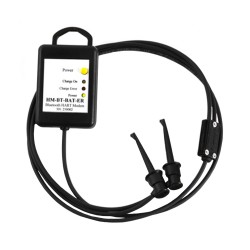
The connection is made in parallel on the 4-20 mA circuit of the transmitter, using two crocodile clips. The HART digital signal overlaps the analog loop and is read by the communicator without interrupting the measurement: it is therefore possible to configure the device even during normal operation of the system.
Can it be used in ATEX classified areas?
Yes, there are ATEX/IECEx Ex ia certified HART communicator models for use in potentially explosive atmospheres (Zone 1/2 gas and Zone 21/22 dust), indispensable in oil & gas, petrochemical and chemical plants. It is essential to verify the specific class of certification required by the site.
Does it integrate with asset management systems (AMS, FDT/DTM)?
Yes, the professional communicators interface with the main asset management systems (Emerson AMS, Honeywell FDM, Yokogawa PRM) and support the FDT/DTM framework, allowing you to centralize the management of all plant instruments and archive their configuration, calibration and diagnostic history.
How often should a HART communicator be updated?
It is good practice to update the firmware and DD libraries every 6-12 months, to support new transmitter models and the latest protocol versions (HART 7 introduces advanced diagnostic functions and WirelessHART). The instrument itself does not require calibration, but must be functionally checked periodically.