


Pressure calibrator software
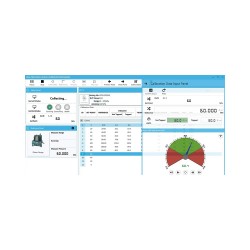
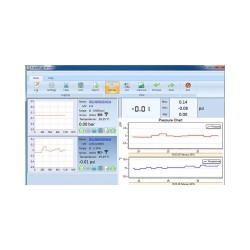
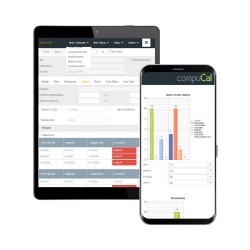
Our pressure calibrator software represents the ideal solution for those who carry out calibrations, in the laboratory or in the field. They prove to be an essential tool for metrology laboratories and engineering companies. They allow complete control of the calibration process: automating the steps and improving efficiency by reducing the time spent creating the report or certificate. These pressure and temperature calibrator software ensure easy integration and offer customizable features to meet all your needs.


Technical FAQ:
Pressure calibrator software
What is pressure calibrator software?
Pressure calibrator software consists of dedicated applications designed to manage calibration procedures, automatically collect data from pressure calibrators, generate calibration certificates, and maintain historical measurement records. These solutions can operate as standalone applications or be integrated into broader quality management systems.
What is pressure calibrator software used for?
It is used to automate and standardize the calibration process, eliminating manual transcription errors, ensuring data traceability, automatically calculating uncertainty and deviations, and generating calibration certificates compliant with ISO/IEC 17025 requirements.
In which industries is calibration software used?
Calibration software is widely used in accredited metrology laboratories, calibration service providers, industrial maintenance departments, pharmaceutical facilities (GMP), food processing industries (HACCP), oil & gas, automotive, aerospace, and energy sectors—where calibration documentation and traceability are regulatory requirements.
What are the main features of calibration software?
Key features typically include calibration procedure creation, instrument asset management, calibration scheduling, real-time data acquisition from calibrators, expanded uncertainty calculation, automatic certificate generation, and historical data archiving with audit trail functionality.
Is calibration software compatible with ISO/IEC 17025 quality systems?
Yes. Professional calibration software is specifically designed to support ISO/IEC 17025 requirements, including data traceability, comprehensive audit trails, revision management, uncertainty calculations according to GUM guidelines, and compliant calibration certificate formatting.
Which calibrators are supported by calibration software?
Most software packages are optimized for their own manufacturer's calibrators through proprietary drivers and communication protocols. More advanced solutions also support third-party calibrators via SCPI, MODBUS, HART, and other standard digital communication protocols.
Can calibration software be integrated with enterprise management systems (CMMS, ERP, MES)?
Yes. Professional software solutions often provide APIs or integration modules that connect with leading CMMS platforms (such as SAP PM and IBM Maximo) and ERP systems, enabling automatic synchronization of instrument databases, work orders, and calibration certificates.
What types of certificates can be generated?
The software can generate internal calibration certificates, ISO 9001-compliant certificates, accreditation-based certificates for accredited laboratories, DKD certificates, functional verification reports, and non-conformity reports. Most platforms allow full customization of certificate layouts and report formats.
How is measurement uncertainty calculated using the software?
The software applies the principles defined in the GUM (Guide to the Expression of Uncertainty in Measurement). It automatically evaluates uncertainty contributors such as repeatability, resolution, reference standard traceability, drift, and environmental conditions, then calculates the expanded uncertainty using a coverage factor of k = 2.
What are the advantages compared to manual data management?
Key benefits include elimination of transcription errors, reduction of calibration time by 50–70%, centralized historical data storage, complete audit trails for regulatory compliance, automatic management of calibration due dates and recalls, and automated uncertainty calculations.
Is specific training required to use calibration software?
Basic initial training is recommended, although modern calibration software typically features intuitive user interfaces and guided workflows. In accredited laboratories, documented operating procedures should also be established in accordance with the quality management system requirements.