


Fixed gas and multi-gas detectors
Our fixed gas and multi-gas detectors are designed for continuous gas monitoring. Essential in countless industrial plants or processes, where the presence of toxic, flammable or explosive gases can represent a real and constant risk. These sensors provide effective 24-hour surveillance, detecting a wide range of gases and vapours. Equipped with advanced technology, they offer immediate and precise alarms, helping to ensure safety in the workplace.

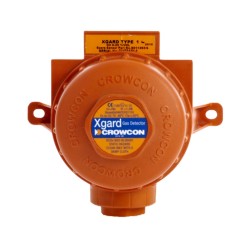
Technical FAQ:
Fixed gas and multi-gas detectors
What is a fixed gas detector?
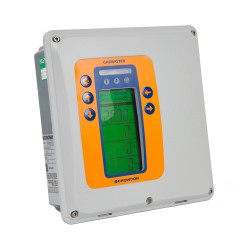
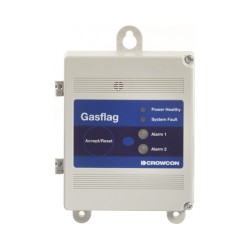
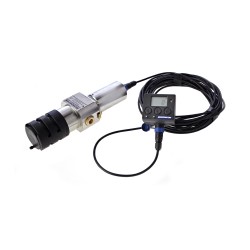
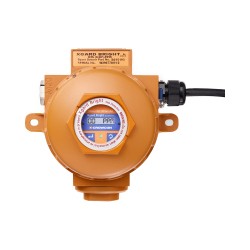
A fixed gas detector is a permanently installed gas detection system designed for continuous 24/7 monitoring of hazardous gases in a specific area or facility. It consists of one or more sensing heads connected to a control unit and is integrated into the plant’s safety systems.
What is a fixed multi-gas detector used for?
A fixed gas detector is used for continuous monitoring of areas with a risk of gas leaks, such as compressor rooms, battery rooms, solvent storage areas, tank farms, data centers, and underground parking facilities. It triggers alarms, activates emergency ventilation, shuts down processes, and alerts emergency response teams in case of gas release.
When is a fixed multi-gas detector preferred over a portable one?
A fixed gas detector is preferred when the risk is associated with a location rather than a worker, such as machinery areas, chemical processes, storage facilities, or zones with occasional personnel presence but continuous risk. Portable gas detectors are instead used for personal protection, maintenance activities, and confined space entry.
In which industries are fixed gas detectors used?
They are used in refineries, oil & gas extraction and processing, petrochemical and chemical plants, pharmaceuticals, food industry, LPG storage, technical gases facilities, power generation (electrical rooms and battery rooms), automotive, underground parking facilities, tunnels, wastewater treatment plants, and waste processing facilities.
How is the number of detectors for an area determined?
The number and placement of sensing heads are based on a risk assessment (EN 60079-29-2 guidelines), considering gas density (heavier or lighter than air), potential leak sources, natural and forced ventilation, airflow patterns, and maximum detection distances. Typically, one detector is installed every 50–100 m² of monitored area.
Where are fixed gas detectors installed depending on gas type?
Sensors for gases lighter than air (methane, hydrogen, ammonia) are installed at high level near the ceiling. Sensors for heavier-than-air gases (LPG, propane, butane, solvent vapors, sulfur dioxide) are installed low, about 30–50 cm above floor level. For gases with air-like density (CO), sensors are installed at breathing height.
What output types does a fixed gas detector have?
Standard outputs include the 4–20 mA analog signal (for connection to PLCs or control panels), digital communication protocols such as Modbus RTU/TCP, HART, Profibus, or Foundation Fieldbus, and configurable relay contacts for direct activation of fans, sirens, shut-off valves, or suppression systems.
What does SIL mean and what level is required for fixed gas detectors?
SIL (Safety Integrity Level) is the safety integrity level defined by IEC 61508/61511, which quantifies the reliability of a functional safety system. Certified gas detectors typically operate up to SIL 2 or SIL 3, a common requirement in chemical, oil & gas, and nuclear plants for automatic shutdown functions (ESD – Emergency Shutdown).
Can they be integrated with existing safety systems (DCS, PLC, SCADA)?
Yes. Through digital protocols or 4–20 mA signals, fixed gas detectors can be integrated into DCS (Distributed Control Systems), safety PLCs, SCADA systems, fire protection systems, and BMS (Building Management Systems), centralizing alarms and emergency actions. The gas detection control panel acts as the system hub.
What certifications are required for fixed gas detectors?
The main certifications are ATEX (Directive 2014/34/EU) and IECEx for use in explosive atmospheres, performance approvals according to EN 60079-29-1 (combustible gases) or EN 45544 (toxic gases), and SIL 2/3 certification according to IEC 61508 for functional safety applications.
How often should a fixed gas detector be maintained?
Functional verification (bump test) should be carried out quarterly, calibration every six months or annually depending on the environment, and sensors should be replaced preventively according to their declared service life (typically 2–5 years). EN 60079-29-2 also requires documented verification by qualified personnel and full traceability of all maintenance actions.
Can they be used in ATEX classified zones?
Yes, models are available for all classified areas: Zone 1 and 2 for gases (protection methods such as Ex d flameproof or Ex e increased safety), and Zone 21 and 22 for combustible dust. The choice of sensing head depends on the zone classification, gas group (IIA, IIB, IIC), and temperature class (T1–T6).