


Transmitters and sensors for single parameter
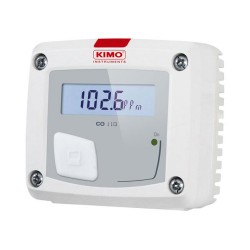
Our single parameter transmitters and sensors are designed to provide precise and reliable measurements of specific parameters such as temperature, pressure, humidity and more. These devices are easy to install and configure, provide continuous monitoring, and are built to withstand the most demanding environments. Thanks to their 4-20mA or 0-10V analog output they can be easily integrated with the process.

Technical FAQ:
Transmitters and sensors for single parameter
What is a single-parameter transmitter or sensor?
It is an industrial transmitter dedicated to the measurement of a single process quantity (only pressure, only temperature, only level), with electronics and sensor optimized exclusively for that variable.
What is a single-parameter transmitter or sensor used for?
It is used to monitor a specific process parameter with maximum accuracy, feeding PLC, DCS or SCADA with a standard signal (4-20 mA, HART, Modbus). It is the most widespread configuration in process automation.
In which sectors is a single-parameter transmitter or sensor used?
It is used in all industrial sectors: oil & gas, chemical, petrochemical, pharmaceutical, food, energy, water
When to choose a single-parameter transmitter instead of a multi-parameter one?
The single-parameter is chosen when maximum accuracy is needed on a specific variable, when there are installation constraints (reduced space for a single sensor), for maximum redundancy (a fault compromises only one variable) and when the budget per measurement point is a priority. The multi-parameter is preferable when reducing installations and wiring is desired.
What are the most common single-parameter sensors?
Pressure transmitters (static, differential, absolute), temperature (with Pt100, Pt1000 or thermocouple), level (radar, ultrasonic, hydrostatic), flow (magnetic, vortex, Coriolis), conductivity, pH, dissolved oxygen, turbidity and relative humidity.
What accuracy do single-parameter sensors offer?
Typical accuracy is 0.025-0.1% of the measurement range for industrial models, up to 0.015% in premium models for custody transfer applications. Specialization on a single parameter allows the electronics to be optimized for maximum accuracy.
Are single-parameter sensors and transmitters SIL and ATEX certifiable?
Yes, professional models are available with ATEX/IECEx Ex ia certifications for explosive atmospheres (Zone 0/1/2) and SIL 2/3 according to IEC 61508 for functional safety applications (ESD - Emergency Shutdown systems).
Which communication protocols do single-parameter sensors and transmitters support?
The main ones are 4-20 mA analog (with or without superimposed HART), HART, Modbus RTU/TCP, Profibus PA/DP, FOUNDATION Fieldbus, PROFINET and IO-Link. For IoT applications, wireless WirelessHART and Bluetooth models are available.
How to choose single-parameter sensors or transmitters for a specific application?
The criteria are: measurement range, required accuracy, process fluid (chemical compatibility), process pressure and temperature, type of mechanical connection (flanges, thread, tri-clamp), type of electrical output, sector certifications (ATEX, IL,
EHEDG) and brand/protocol of the existing DCS.
How long does a single-parameter transmitter last?
The typical useful life of a quality industrial transmitter is 10-15 years with proper maintenance. The more "consumable" sensors (e.g. pH electrodes, dissolved oxygen sensors) require more frequent replacement (1-3 years).
Do single-parameter sensors need periodic calibration?
Yes, the typical interval is annual or biennial depending on the criticality of the measurement point. Calibration is performed on site with pressure calibrators and multifunction calibrators, following GMP/ISO 17025 procedures.
Can single-parameter transmitters be diagnosed remotely?
Yes, smart transmitters with HART or Fieldbus protocol integrate advanced diagnostic functions (drift detection, abnormal process conditions, sensor residual life) accessible remotely via DCS or asset management software (AMS, FDM, PRM).