


Fixed pyrometers
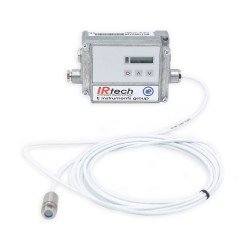
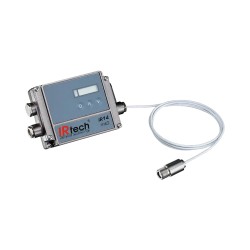
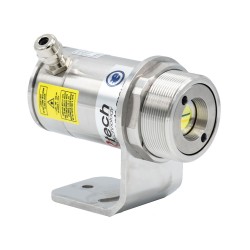
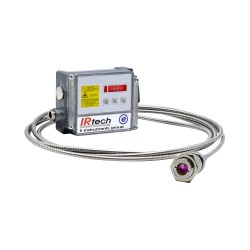
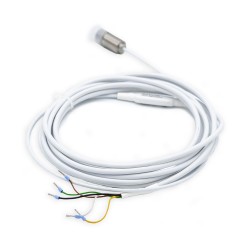
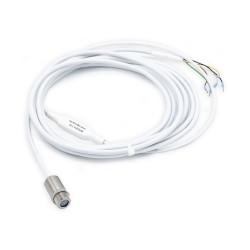
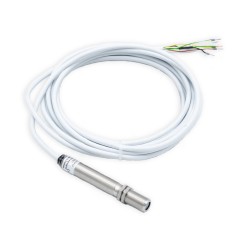
Our range of fixed infrared pyrometers offer continuous, non-contact temperature monitoring of the thermal process. We offer a vast selection of models and accessories, designed to develop the installation and customize it according to specific needs. We offer numerous types of sensors to measure metals, plastics, glass, organic material and much more, in various types of industrial, production or research applications.



Technical FAQ:
Fixed pyrometers
What are fixed pyrometers?
Fixed pyrometers are non-contact temperature measuring instruments designed for permanent installation on industrial plants. They allow continuous temperature monitoring directly on the production line, guaranteeing precision and stability even in complex operating conditions.
When are fixed pyrometers used?
Fixed pyrometers are used when continuous, automated temperature control is required in industrial processes. They are ideal for applications in which manual measurement is not sufficient or does not guarantee continuity and repeatability over time.
In which sectors are fixed pyrometers used?
Fixed pyrometers are used in industries such as metallurgy, glass, ceramics, plastics and heat treatments. They are particularly suitable for industrial ovens and automated production lines where constant temperature control is essential.
Is it possible to integrate fixed pyrometers into industrial automation systems?
Yes, fixed pyrometers can be integrated with PLC systems, SCADA and industrial supervision software. They support various analogue, digital outputs and industrial communication protocols for direct insertion into automated processes.
What role does emissivity play in infrared measurement?
Emissivity is a fundamental parameter that influences the measurement precision in infrared pyrometers. Each material has a different value and an incorrect configuration can generate significant errors in temperature detection.
When is the use of two-color pyrometers recommended?
Two-color pyrometers are recommended in complex industrial environments, such as the presence of smoke, dust or target variations. They allow more stable measurements than single-color models thanks to the comparison between two wavelengths.
How do fumes and dust affect the measurement?
Fumes, dust and particles can attenuate the infrared signal and reduce measurement accuracy. In these cases it is important to choose the correct measurement technology or more robust optical solutions to ensure stability.
What does the optical ratio (D:S) indicate?
The D:S optical ratio indicates the relationship between the measurement distance and the size of the spot detected by the sensor. A higher ratio allows you to measure small targets even from longer distances, improving installation flexibility.
What types of output are available in industrial pyrometers?
Fixed pyrometers can be equipped with analogue outputs such as 4–20 mA, digital or industrial protocols such as Modbus. This allows perfect integration into automation and process control systems.
Are fixed pyrometers suitable for harsh industrial environments?
Yes, fixed pyrometers are designed to operate even in harsh environments with high temperatures, vibrations, dust or fumes. They can be used with cooling systems or protective cases to ensure reliable measurements.
What advantages do fixed pyrometers offer in automated processes?
Fixed pyrometers allow continuous temperature monitoring directly within automated production processes. This allows you to improve quality control, reduce production errors and intervene quickly in case of thermal anomalies.
Can fixed pyrometers be used on moving materials?
Yes, fixed pyrometers are particularly suitable for measuring temperatures on moving materials or continuous production lines. Thanks to non-contact measurement and fast response times, they enable reliable controls even at high process speeds.