


Digital cameras
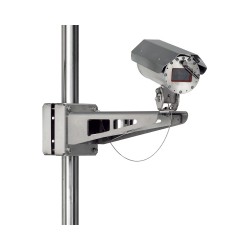
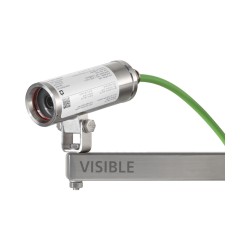
Our digital cameras represent the frontier of video surveillance technology, offering superior image quality in the plant. With features like high definition recording, night vision, and intelligent video analytics, these digital cameras are essential for monitoring processes. Easy to install and integrate with existing alarm systems, they also offer remote access via smartphone or tablet, allowing you to view images in real time, wherever you are.

Technical FAQ:
Digital cameras
What is a digital camera?
It is a video surveillance camera that transmits the digitized video signal over Ethernet network (IP), communicating with centralized NVR (Network Video Recorder) or VMS. It is the modern standard of video surveillance, with resolutions up to 4K-8K and integrated AI video analytics functions.
What is a digital camera used for?
It is used to build scalable, high-resolution video surveillance systems, with cloud remote access, integration with advanced analytics software, centralized management of hundreds or thousands of cameras and with native cybersecurity.
In which sectors is a digital camera used?
It is used in manufacturing industry, logistics, retail and large distribution, banking sector, executive tertiary, healthcare, schools and universities, smart cities, critical infrastructure (ports, airports, tunnels), public transport and in all applications where advanced video analytics are needed.
What is the difference between a digital camera and an analog camera?
The digital IP offers higher resolutions (4K-8K), native AI functions, VMS integration, remote management, network scalability, cybersecurity. The analog is simpler, more economical, compatible with existing DVRs, but with more limited resolution and functionality.
What does 4K resolution mean in cameras?
4K UHD equals 3840×2160 pixels (~8.3 megapixels), four times the resolution of Full HD. It allows large areas to be covered with a single camera while maintaining sufficient detail sharpness for facial recognition, license plate reading and a posteriori analysis (forensic analysis).
What are H.265 and H.265+ codecs?
H.265 (HEVC) is a new generation video codec that reduces bandwidth and storage by 50% compared to H.264 at the same quality. H.265+ is the version optimized by some manufacturers for video surveillance applications, with even more efficient compression up to 70-80% savings.
What is PoE and why is it useful?
PoE (Power over Ethernet) allows powering the camera and transmitting data via a single Ethernet cable (RJ45), greatly simplifying installation. There are PoE (15 W), PoE+ (30 W) and PoE++ (60-100 W for PTZ models and with heaters).
What are fish-eye panoramic cameras?
They are cameras with extreme wide-angle optics (180° or 360°) that frame an entire area without blind spots. The VMS software "de-warps" the image allowing extraction of virtual PTZ or specific quadrants, significantly reducing the number of cameras needed to cover a large area.
What are the most useful AI functions in digital cameras?
Recognition and classification of people vs vehicles (drastically reduces false alarms compared to traditional motion detection), face recognition, license plate recognition (LPR), people counting (for retail analytics), line crossing, intrusion detection, loitering detection, smoke/fire detection and object abandonment.
Do digital cameras integrate with the cloud?
Yes, many modern IP cameras are cloud-ready: they record on cloud platforms (VSaaS - Video Surveillance as a Service) eliminating the need for local NVRs. They offer encrypted storage, mobile access, centralized multi-site management and geographic data redundancy.
Which cybersecurity standards do digital cameras adopt?
TLS 1.2/1.3 encryption for communications, 802.1X authentication, mandatory strong passwords, digital certificates, secure boot, digitally signed firmware updates, compliance with industry standards (IEC 62443 for ICS, NDAA Section 889 for US government purchases).
How much storage do digital cameras require?
For a 4K H.265+ camera with 25 fps frame rate, continuous recording: approximately 30-50 GB/day per camera, reducible to 10-15 GB/day with motion-triggered recording. For a system of 50 cameras, an NVR with 30-60 TB of RAID storage is typical to guarantee 30 days of archiving.