


Atex cameras
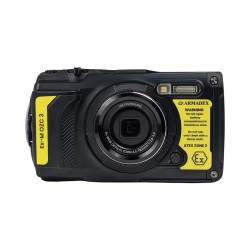
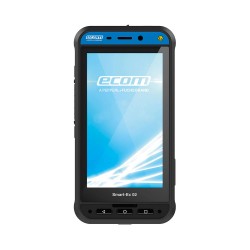
Our Atex cameras are specifically designed for use in high-risk environments, such as those with explosive atmospheres. Compliant with Atex regulations, these cameras offer high performance and guaranteed safety for documentation and inspection. These rugged devices capture high-quality photo and video images, allowing you to record crucial details without compromising the safety of your personnel.




Technical FAQ:
Atex cameras
What is an ATEX camera?
It is a digital photographic camera certified ATEX/IECEx for use in potentially explosive atmospheres (Zone 1/2 for gas, 21/22 for dust). It allows taking photographs and recording video directly in plant areas at risk, eliminating the obligation to bring the equipment to a safe area.
What is an ATEX camera used for?
It is used to document inspections, audits, maintenance and safety activities in hazardous industrial sites: it is used for valve and equipment inspections, noncompliance documentation, personnel training, incident investigations, asset mapping and on-plant engineering activities.
In which sectors is an ATEX camera used?
It is used in oil & gas (extraction, refining, distribution), petrochemical, chemical, pharmaceutical, mines, port terminals and offshore platforms, gas and oil pipeline inspections, firefighters and civil protection (industrial fires), inspection bodies and all technicians (maintenance, engineers, surveyors, auditors) operating in classified areas.
Which ATEX protection methods do they use?
Portable ATEX cameras typically adopt Ex ib IIC T4 Gb (intrinsic safety) or Ex op is (intrinsically safe optical radiation for the flash). The housings are engineered to limit any possible ignition even in case of internal fault or device drop.
For which ATEX zones are they certified?
Most are certified for Zone 1 and Zone 2 (gas) and Zone 21/22 (dust), which covers practically all operating areas of industrial sites. Specific models are also certified for Zone 0 (continuous presence of explosive atmosphere), typically inside tanks or piping.
What is the difference between a standard camera and an ATEX one?
Visually, ATEX cameras appear similar to rugged outdoor cameras (they look like reinforced compact or DSLR cameras with housing), but the difference is internal: all the electronics, battery, flash and materials are designed to be intrinsically safe. Components cannot be modified nor the battery charged in ATEX zone, even if the camera is certified.
Do ATEX cameras have limitations compared to normal cameras?
Technical specifications (resolution, optics, zoom) are generally slightly lower than consumer cameras of the same price, due to the constructive constraints of ATEX certification. Typical resolution is 8-20 MP, with 3-5x optical zoom and low-intensity flash for intrinsic safety.
Can ATEX cameras record video?
Yes, most record video in Full HD (1080p) or 4K (premium models), with audio and GPS for geotagging. It is a useful function for documenting inspections in movement, training personnel or producing video reports of safety audits.
Do ATEX cameras have integrated GPS?
Yes, many professional models integrate GPS and compass for automatic geotagging of photos, facilitating the documentation of assets distributed on large sites (tank farms, pipelines, offshore platforms) and integration with asset management systems on GIS map.
Can ATEX cameras also be used outside ATEX zones?
Yes, an ATEX-certified camera works normally even in non-classified zones, like any rugged camera. Typically it is IP67 (resistant to dust and temporary immersion) and impact-resistant (1.2-1.5 meters), so it can be used both in the workshop and on construction sites without limitations.
Can the battery be recharged in ATEX zone?
No, charging must always take place in a safe zone (non-ATEX classified), using the standard charger. Opening the battery compartment in ATEX zone is strictly forbidden, because it deactivates the device's intrinsic safety certification.
Which certifications should be looked for when purchasing?
Verify at least: ATEX 2014/34/EU and IECEx (both certifications for international use), classification II 2G Ex ib IIC T4 Gb or equivalent, IP67 for mechanical protection, compliance with CE marking. For exports to the USA, also verify Class I Division 1/2 (NEC 500) or Class I Zone 1/2 (NEC 505).