


Multi-channel datalogger
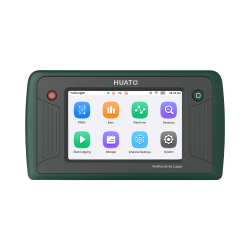
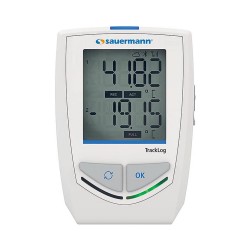
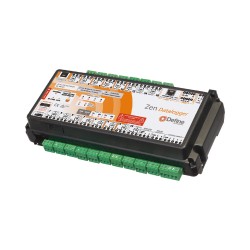
Our multi-channel dataloggers offer advanced solutions for simultaneously monitoring multiple parameters, making them ideal for specific applications. These rugged and reliable devices are designed for any type of environment. Simple to set up and use, these devices are ideal for tracking variables such as temperature, humidity, pressure or light levels, recording reliable data continuously.


Technical FAQ:
Multi-channel datalogger
What is a multi-channel data logger?
It is a data logger capable of simultaneously acquiring multiple quantities or multiple measurement points thanks to 4, 8, 16 or more independent inputs, each connected to a different sensor or transmitter.
What is a multi-channel data logger used for?
It is used to coordinately monitor complex systems where multiple variables are needed at the same point (e.g. T + RH + CO₂) or multiple points for the same variable (e.g. thermal mapping with 16 probes). It is the reference tool for validations, mapping and process monitoring.
In which sectors is a multi-channel data logger used?
It is used in pharmaceutical (thermal mapping, autoclave validation, lyophilizers), food (cooking validation, pasteurization), energy (plant monitoring), research (multiparametric experiments), structural monitoring of buildings, energy audits and laboratories.
When to choose a multi-channel data logger instead of a single-channel or IoT one?
The multi-channel is chosen when multiple points or variables need to be coordinated in the same instrument, avoiding data dispersion across multiple devices. The singlechannel is preferable for distributed spot measurements; the IoT data logger when continuous remote access is required.
How many channels can a multi-channel data logger have?
Typically from 4 to 32 channels in portable models; modular laboratory systems can reach 100, 200 or more channels by combining multiple modules. Each channel can be configured for analog input (V, mA, RTD, thermocouple) or digital.
Which inputs does a multi-channel data logger accept?
Typically: thermocouples (K, J, T, N, R, S, B, E), RTD (Pt100, Pt1000), thermistors, DC/ AC voltage, 4-20 mA current, frequency, clean contacts, digital signals. Some models also accept direct inputs from process transmitters and sensors.
How is a multi-channel data logger used for thermal mapping?
For mapping warehouses or cold rooms, a grid of probes is positioned, connected to the multi-channel data logger (typically 9-30 points per environment depending on the volume), recording is done for 7-30 days and the report is processed by mapping isotherms, identifying critical points (hot/cold) and calculating standard deviation.
Can multi-channel data loggers be used for autoclave validation?
Yes, high-accuracy multi-channel data loggers with steam-resistant stainless steel probes (4-wire Pt100 or type T thermocouples) are the standard for pharmaceutical autoclave validation, automatically calculating the F₀ value (accumulated lethality) required by GMP standards.
Can multi-channel data loggers communicate with SCADA or DCS?
Yes, professional multi-channel data loggers integrate Modbus RTU/TCP, Ethernet and OPC interfaces to integrate with control systems (SCADA, DCS, PLC) and for centralizing data in corporate quality management systems.
Do multi-channel data loggers have an integrated display?
Most integrate a graphic display (LCD or touchscreen) that shows in real time values, trend graphs, alarm thresholds and channel status. Some laboratory models are "blind" and operate only via software.
How much do multi-channel data loggers store?
Internal memory varies from tens of thousands to millions of measurements per channel, expandable via SD card. It is sufficient for mappings of weeks or months with minute sampling frequency on all channels.
Are multi-channel data loggers compatible with dedicated reporting software?
Yes, the manufacturer typically provides dedicated PC software for channel configuration, real-time graphical visualization, data analysis and automatic generation of validation, thermal mapping and energy diagnosis reports compliant with sector regulations.