


Energy management solutions
Our energy management solutions are designed to optimize energy use and improve the efficiency of electrical systems. We offer advanced devices such as network analyzers, smart meters and energy monitoring systems that help reduce operating costs and minimize environmental impact.
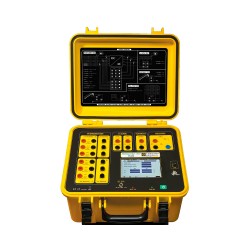
Technical FAQ:
Energy management solutions
What is meant by energy management solutions?
Energy management solutions refer to the set of instruments, measurement systems and software platforms dedicated to consumption monitoring, power quality analysis, energy diagnosis and efficiency optimization of electrical and thermal plants.
What energy management solutions does E Instruments offer?
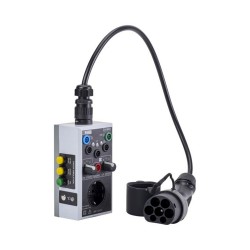
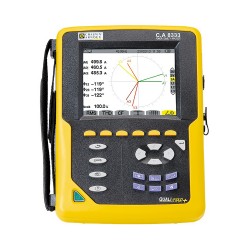
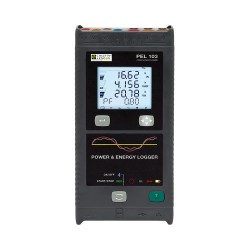
The range includes portable three-phase network analyzers, fixed energy meters, electrical and thermal consumption data loggers, wattmeters and instruments for energy audit according to UNI CEI EN 16247, as well as IoT data loggers for remote consumption monitoring.
In which sectors are energy management solutions used?
They are used in manufacturing industry, tertiary (offices, hospitals, hotels, shopping centers), public administration, ESCOs and energy managers, energy certifiers, condominiums, energy communities, NZEB buildings and in all contexts subject to mandatory energy diagnosis (large enterprises and energy-intensive companies according to D.Lgs. 102/2014).
What is an energy diagnosis?
It is a systematic analysis of energy consumption of a site, performed according to UNI CEI EN 16247, which identifies energy flows, waste areas, efficiency interventions and calculates their economic viability. For large enterprises and energy-intensive companies, it is mandatory every 4 years (D.Lgs. 102/2014, transposing EU Directive 2012/27/EU).
What does a three-phase network analyzer measure?
Voltage and current of all phases, neutral and PE; active/reactive/apparent power; power factor (cos φ); energy consumed; harmonics up to the 50th order; flicker; unbalance; sequence imbalance; transients and network disturbances (dip, swell, micro-interruptions) according to EN 50160.
What is the EN 50160 standard?
It is the European standard that defines the characteristics of voltage supplied by public distribution networks (voltage variations, frequency, harmonics, flicker, dip, overvoltages). It is the reference for evaluating the quality of energy received and for any disputes with the distributor in case of non-compliance.
What are continuous consumption monitoring systems (CMS)?
They are distributed measurement systems with current and voltage sensors permanently installed on main and department circuits, connected to Energy Management (EM) platforms that acquire consumption in real time, generate reports, dashboards, efficiency KPIs and feed ISO 50001 systems.
What is ISO 50001?
It is the international standard for Energy Management Systems (EnMS), applicable to any organization that wants to systematically improve energy efficiency. It is based on the PDCA (Plan-Do-Check-Act) cycle and includes continuous monitoring of consumption, definition of indicators (EnPIs), audits and continuous improvement.
What are White Certificates (TEE)?
The Energy Efficiency Titles (TEE), or "white certificates", are economic incentives recognized for energy efficiency interventions in end uses (Italian D.Lgs. 102/2014 and D.M. 11/01/2017). One TEE corresponds to saving 1 toe (tonne of oil equivalent) and has an economic value variable according to the market.
How is the power factor (cos φ) evaluated?
The cos φ is the ratio between active power (useful) and apparent power (absorbed by the network). Values below 0.9 generate penalties in the bill according to the Italian ARERA tariff regime. It is corrected by installing power factor correction capacitor banks sized on the basis of measurements from the network analyzer, reducing penalties and improving plant efficiency.
What are harmonics and why should they be monitored?
Harmonics are components of current or voltage at multiple frequencies of the fundamental (50 Hz), generated by non-linear loads (inverters, drives, switching power supplies, LEDs). They cause overheating of cables and transformers, malfunctions, reduced efficiency. They are measured as THD (Total Harmonic Distortion) and must be kept within the limits of EN 61000-3-2.
Are Energy Management platforms integrable with corporate management systems?
Yes, professional platforms integrate via REST API or OPC with ERP systems (SAP, Oracle), MES, SCADA, BMS and Business Intelligence platforms, feeding executive dashboards with efficiency KPIs, cost per unit produced and consumption projections. It is a key requirement of Industry 4.0 and PNRR Transition 5.0 projects.