


Gas detection units
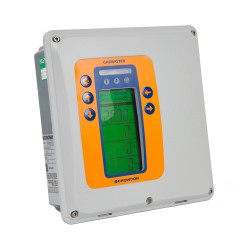
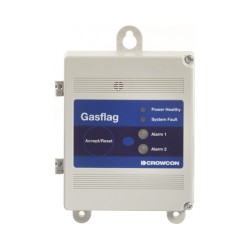
Our gas detection units offer a centralized monitoring solution to ensure maximum safety in industrial environments. These control units allow the management and control of multiple sensors, facilitating monitoring of the system and supporting rapid emergency management. They are designed to detect and report dangerous levels of various types of gases: toxic, flammable or explosive.

Technical FAQ:
Gas detection units
What is a gas detection control panel?
A gas detection control panel is a control unit that receives, processes, and displays signals coming from multiple fixed gas detectors installed in an industrial plant. It manages alarm thresholds, activates acoustic and visual alarms and emergency systems (ventilation, plant shutdown, remote alarms), centralizing safety monitoring in a single supervision point.
What is a gas detection control panel used for?
It is used to centralize the management of a distributed gas detection system, ensuring continuous 24/7 monitoring, event history logging, structured alarm management, and integration with plant safety systems (DCS, SCADA, fire protection, BMS). It is a key element in risk assessment according to Legislative Decree 81/2008.
In which sectors is a gas detection control panel used?
It is used in refineries, petrochemical plants, oil & gas, chemical and pharmaceutical industries, LPG and technical gas storage facilities, power plants, underground parking areas, road tunnels, wastewater treatment plants, waste processing facilities, ships and offshore platforms, battery rooms, and all contexts with multiple fixed gas detector installations.
How does a gas detection control panel work?
The control panel continuously receives signals from field detectors (4–20 mA, Modbus, HART, relay contacts), processes them by comparing them with programmed alarm thresholds for each detector, and in case of exceedance activates the associated outputs: sirens, warning lights, shut-off valves, extraction fans, process shutdowns, and notifications to control rooms or fire safety systems.
How many detectors can a control panel manage?
Capacity ranges from compact models for 1–4 sensors (small rooms, garages) to modular control panels for 16, 32, 64, or over 100 sensors, up to DCS-based systems capable of managing hundreds of detectors in complex industrial plants. The architecture is typically modular with 8- or 16-channel expansions.
What types of input signals are supported?
Standard control panels accept 4–20 mA analog signals from detectors, digital on/off inputs (dry contacts), Modbus RTU/TCP, HART protocols, and in some cases Profibus or FOUNDATION Fieldbus. Multi-protocol compatibility allows integration of detectors from different manufacturers.
What output controls does a control panel integrate?
Typically: configurable relays (NO/NC) for direct control of sirens, beacons, valves, and fans; 4–20 mA analog outputs for retransmission to DCS systems; Modbus, OPC, and Ethernet digital outputs for SCADA and BMS integration; and fault contacts for monitoring system availability.
What does EN 50402 standard mean for gas detection control panels?
EN 50402 is the European standard that specifies functional requirements, reliability, and testing for fixed gas detection and measurement systems. It defines performance requirements for control panels and gas detectors, including alarm response, fault management, redundancy, and safety logic in case of malfunction.
Are gas detection control panels SIL certified?
Professional control panels are certified SIL 2 or SIL 3 according to IEC 61508/61511, a common requirement in functional safety applications where the gas detection system is part of Safety Instrumented Functions (SIF) for automatic process shutdown (ESD).
Can they be integrated with fire protection systems and BMS?
Yes, control panels are designed to integrate with fire protection systems (EN 54), DCS/SCADA systems, BMS (Building Management Systems), voice evacuation systems (EVAC), and access control systems. This integration enables a coordinated emergency response by activating multiple plant safety functions simultaneously.
What redundant safety functions do they include?
Typical safety functions include dual power supply (mains + backup battery with 24–72 hours autonomy), continuous channel diagnostics (cable break detection, sensor failure, out-of-range signals), processor watchdog, CPU redundancy in SIL 3 models, and automatic fault reporting to supervisory systems.
How often does a gas detection control panel require maintenance?
The control panel requires semi-annual or annual inspection, including functional testing of alarm circuits, testing of output controls, simulation of faults on each input channel, and verification of the backup battery. Connected detectors follow their own maintenance schedules (bump tests, calibration), as required by EN 60079-29-2.