


Laser pyrometers
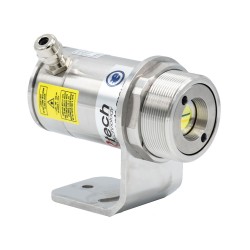
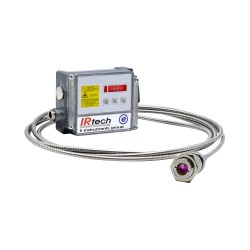
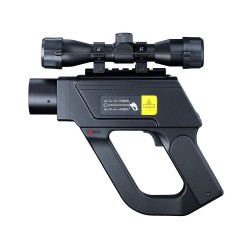
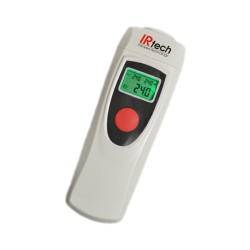
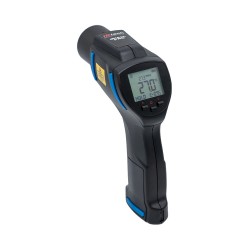
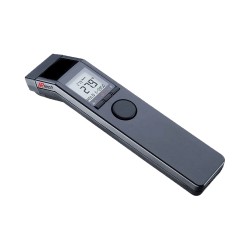
Here is our selection of laser pyrometers, ideal tools for quick and precise temperature measurements. These pyrometers use cutting-edge laser technology to ensure accurate results in various industrial and research environments. They are perfect for applications that require non-contact measurements, offering safety and convenience. With a wide range of models, our laser pyrometers meet diverse measurement needs, from monitoring industrial processes to preventive maintenance. Choose reliable laser pyrometers that combine innovation, precision, and ease of use.



Technical FAQ:
Laser pyrometers
What is a laser pyrometer?
A laser pyrometer is a non-contact temperature measuring instrument equipped with a visible laser pointer, which indicates to the operator the exact point the instrument is measuring. The laser does not intervene in the thermal measurement (which is always based on infrared detection), but serves to ensure correct aiming of the instrument at the target object.
What is the laser pointer used for in a pyrometer?
It serves to precisely identify the measurement area, especially at distance, avoiding aiming errors that would lead to reading the temperature of objects other than the desired one. Without a laser, it is very difficult to know exactly what the pyrometer is targeting, especially at 2–3 meters or more from the object.
In which sectors are laser pyrometers used?
They are used in manufacturing industry, metallurgy, glass industry, ceramics, automotive, HVAC, electrical maintenance, food industry (cooking control), construction (thermal diagnostics), as well as in all contexts where rapid and accurate non-contact temperature measurements are required in professional and industrial applications.
What types of laser pointing systems exist?
There are three main configurations: single laser (one point at the center of the measurement area), dual laser (two points that converge indicating the focusing position), cross or circle laser (projection of the actual outline of the measurement area). Dual-laser and circumference systems are more precise on small objects or at high distances.
Does the laser affect the temperature measurement?
No, the laser pointer and the temperature measurement are completely independent. The laser operates in the visible spectrum (typically 635–650 nm wavelength, red light) with a power of a few mW, while the thermal measurement is performed by a separate infrared (IR) radiation sensor. The laser serves only as an optical guide for the operator.
What is the difference between a laser pyrometer and an optical pyrometer?
The laser pyrometer has a laser pointer for aiming, but uses a standard optic without a viewfinder. The optical pyrometer instead integrates an optical sighting system (with or without laser) for direct visual aiming through the eyepiece, essential for highprecision applications at long distances.
What does the measurement ratio (D:S) mean in a laser pyrometer?
The Distance:Spot (D:S) ratio indicates the ratio between the distance from the object and the diameter of the area actually measured. For example, a D:S of 50:1 means that at 50 cm distance the measured area has a diameter of 1 cm. The higher the ratio, the smaller the object that can be measured at the same distance, and the more important the laser pointer becomes to ensure correct targeting.
Is the laser pointer safe for the eyes?
The pointers of industrial pyrometers typically belong to Class 2 according to IEC 60825-1: the radiation is considered safe thanks to the blink reflex that protects the eye from accidental exposure. It is still advisable to avoid pointing the laser directly at people's eyes, in accordance with good safety practices.
Do laser pyrometers measure the temperature of the laser point?
No, this is a common misconception: the pyrometer does not measure the temperature of the red laser dot, but of a circular area (the spot) around the laser point, of variable size depending on the D:S ratio and distance. The laser indicates the center of the area, not the entire measured zone.
Are there fixed and portable laser pyrometers?
Yes, they are available in both configurations: fixed laser pyrometers for permanent installation on process lines, and portable laser pyrometers for spot measurements, maintenance, and inspection. The choice depends on the type of application and
frequency of measurements.
How to choose the most suitable laser pyrometer?
The main criteria are: temperature range (from −50 °C to over 3000 °C depending on the model), D:S ratio appropriate for the working distance, response time, required accuracy, type of pointer (single, dual, cross), analog/digital output for integration with control systems. See also: Industrial infrared pyrometers: how to choose the right model.
Do laser pyrometers need periodic calibration?
Yes, calibration of the temperature sensor should typically be performed annually, by comparison with a reference blackbody source with metrological traceability. The laser pointer does not require specific calibration, but should be periodically checked
to ensure it remains correctly aligned with the optical axis of the IR sensor.