


Industrial pyrometers
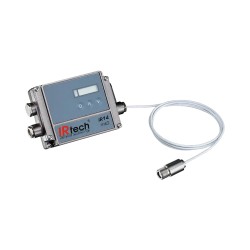
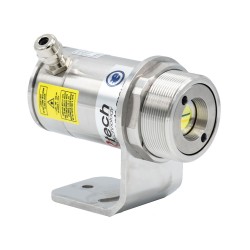
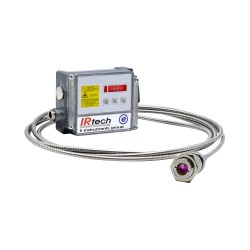
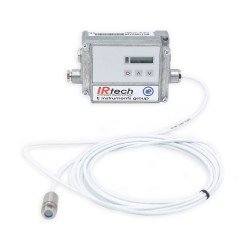
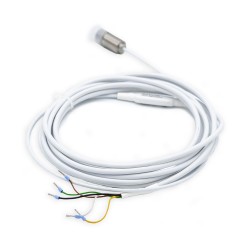
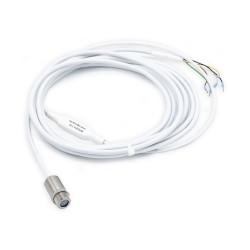
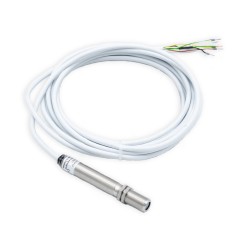
Industrial pyrometers are designed to provide accurate and reliable temperature measurements in industrial environments. These rugged instruments are ideal for demanding applications, ensuring precision even in the most challenging conditions. From industrial furnaces to production processes, our industrial pyrometers provide crucial data for quality control and safety. With a range of high-tech and user-friendly models, E Instruments is the right choice for industrial pyrometers that combine performance, durability, and reliability.



Technical FAQ:
Industrial pyrometers
What is an industrial pyrometer?
An industrial pyrometer is defined as a non-contact temperature measuring instrument specifically designed for continuous use in process plants. It is characterized by mechanical robustness, resistance to high ambient temperatures, vibrations, dust, and humidity, standard industrial outputs (4–20 mA, Modbus, Profibus), and native integration with PLC, DCS, and SCADA.
What is an industrial pyrometer used for?
It is used for continuous monitoring of the temperature of production processes, products in processing, mechanical components, and plant parts in 24/7 industrial operation. It provides temperature data to control systems for automatic regulation, safety alarms, quality control, and process optimization.
In which industrial sectors are pyrometers used?
Metallurgy (furnaces, rolling mills, foundries, heat treatments), iron and steel industry (continuous casting, rolling trains), glass industry (melting furnaces, forming, annealing), ceramics (firing), cement (rotary kilns), plastics (extrusion, injection molding), food industry (drying, cooking), paper mills, automotive, semiconductors, chemistry (reactors and high-T processes).
What are the most typical applications of industrial pyrometers in metallurgy?
Measurement of liquid metal casting temperature, control of quench furnaces, monitoring of wire temperature at rolling mill exit, control of forging temperature, verification of processing temperature on dies and gears, continuous heat treatment monitoring. These are applications where traditional thermocouples would be destroyed by heat or mechanical impact.
How do industrial pyrometers behave in dusty or smoky environments?
In the presence of dust and smoke, protective accessories are used: air purge (nozzle with compressed air blowing in front of the optics to keep it clean), replaceable sapphire/ZnSe protection windows, or two-color (ratio) pyrometers that automatically compensate for signal attenuation due to dust or smoke. For the most severe cases, fiber optic systems are used.
What is the difference between an industrial pyrometer and a professional pyrometer?
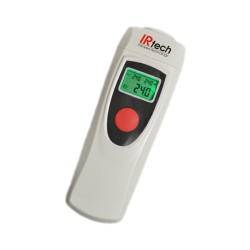
A professional pyrometer is a term indicating the technical-professional quality of the instrument, applicable to both portable and fixed models. An industrial pyrometer is a specific usage category: designed for permanent installation in a plant, robust, with industrial outputs, and suited for continuous 24/7 operation. All industrial pyrometers are professional, but not all professional pyrometers are suited for continuous industrial use.
What industrial certifications must pyrometers have?
CE marking, IP65/67/68 for mechanical protection, ATEX/IECEx Ex d / Ex e for explosive atmospheres (oil & gas, chemical), SIL 2/3 according to IEC 61508 for functional safety applications (gas furnaces, chemical reactors), EMC for immunity to electromagnetic interference from electric drives and inverters.
What temperature ranges do industrial pyrometers cover?
They cover from −50 °C to over 3500 °C, divided into specific range models. Correct range selection is critical: too wide a range reduces resolution, too narrow risks saturation. Typically: −50/+550 °C for HVAC and food, 200/1200 °C for metals and ceramics, 600/2200 °C for steel plants, 1000/3500 °C for molten metals and glass.
How are industrial pyrometers integrated with PLCs and DCS?
Integration occurs via 4–20 mA output (connected to PLC analog modules), Modbus RTU/TCP protocol (multiple variables on the same bus), Profibus DP/PA (for Siemens plants), HART (configuration and diagnostics via HART communicator), PROFINET and Ethernet/IP for Industry 4.0 architectures.
Are specific accessories needed for installing an industrial pyrometer?
Yes: stainless steel adjustable mounting brackets for robust and adjustable mounting, water cooling jacket for very hot environments (above 70–80 °C), air purge for optical cleaning, standardized mounting flanges, compensated industrial cables with double shielding, protection windows for separation between hot zone and sensor, 24 V DC dedicated power supplies.
What is the useful life of an industrial pyrometer?
The typical useful life is 10–15 years in correctly dimensioned and maintained installations, thanks to robust construction and the absence of moving mechanical parts. Preventive maintenance includes periodic optical cleaning, alignment verification, cable inspection, and annual calibration. Many historical models are still in service after more than 20 years.
Do industrial pyrometers need periodic calibration?
Yes, the recommended periodicity is annual for critical applications (safety, quality) and biennial for monitoring applications. Calibration is performed by comparison with a reference blackbody source in an ISO/IEC 17025 accredited laboratory. For models in difficult-to-reach areas, on-site calibration can be requested.