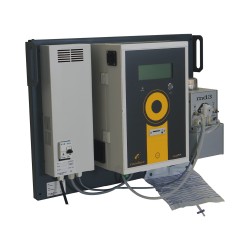
Multigas analyzers

Our multigas analyzers are designed to provide reliable and detailed monitoring of various gases in a single solution. These advanced devices are essential for sectors that require continuous surveillance on multiple fronts; Equipped with cutting-edge technology, multigas analyzers simultaneously and accurately detect the presence of various dangerous gases, offering timely alerts to ensure workplace safety and environmental protection.
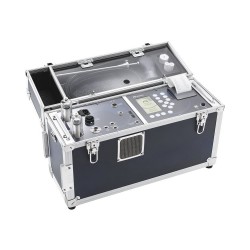

Technical FAQ: Multigas analyzers
What is a multi-gas analyzer?
A multi-gas analyzer is a measuring instrument capable of quantifying multiple gases simultaneously (typically from 3 to 12 gases) through the integration of NDIR, electrochemical, and paramagnetic sensors in a single body. It is used in industrial emission monitoring, combustion analysis, biogas controls, and process applications where multiple correlated parameters are needed.
What is a multi-gas analyzer used for?
It is used to perform complete gas analysis in a single intervention, simultaneously returning combustion gases (CO, CO₂, O₂), pollutant gases (NOₓ, SO₂, hydrocarbons), process gases (CH₄, H₂S), and calculated parameters. In fixed versions, it also performs continuous surveillance of indoor air quality in workplaces with automatic alarms when thresholds are exceeded.
In which sectors is a multi-gas analyzer used?
It is used in biogas and cogeneration plants, landfills and waste-to-energy plants, cement plants, glass factories, foundries, thermal power plants, chemicals and petrochemicals (process transformation control), engine and turbine R&D (combustor development), monitoring of air quality in industrial environments.
What is the difference between a multi-gas and a single-gas analyzer?
The multi-gas analyzer measures multiple gases simultaneously with a single instrument, ideal for complete analyses and complex environmental checks. The single-gas analyzer is optimized for a single gas with maximum dedicated accuracy. When the parameters to be monitored are regularly more than 2–3, the multi-gas analyzer drastically reduces analysis time.
How many gases can a multi-gas analyzer measure simultaneously?
The standard configuration includes 3–4 gases (e.g., O₂ + CO + NO + CO₂), while advanced models reach 12 simultaneous gases combining an NDIR bench for CO/CO₂/hydrocarbons with electrochemical sensors for O₂, NO, NO₂, SO₂, H₂S. The configuration is customized at order time according to the application.
What sensor technologies does a multi-gas analyzer combine?
The main technologies are NDIR (non-dispersive infrared bench, for CO, CO₂, CH₄, hydrocarbons with high long-term stability), electrochemical (for toxic gases at low concentrations: NO, NO₂, SO₂, H₂S, NH₃, HCl), paramagnetic or zirconia for O₂, optionally PID for VOCs. Multi-technology integration is the added value of the professional multi-gas analyzer.
Are multi-gas analyzers available in fixed, portable, and bench versions?
Yes, they are available in three configurations: portable case format for periodic inspections at multiple plants, fixed for continuous 24/7 monitoring of a process point or emission, bench/rack for laboratory, R&D, and long-duration analysis in a controlled environment.
Can multi-gas analyzers be used for environmental controls and safety?
Yes, multi-gas analyzers cover both needs. For environmental controls, they continuously measure regulated pollutant gases (NOₓ, SOₓ, CO, hydrocarbons) at chimney outlets, supporting the monitoring required by environmental permits. For safety, they monitor air quality in enclosed environments (industrial buildings, machine rooms, biogas storage), generating alarms when predefined thresholds are exceeded.
How is gas sampling and conditioning managed?
The sample is extracted from the chimney via probe (also heated to 180 °C for gases with high dew points), transported in a heated line, filtered, dehumidified (condensate cooler for NDIR sensor protection), optionally diluted for high-concentration gases, and finally distributed to sensors via aspirating pump and switching valves.
Are combustion parameters calculated automatically?
Yes, professional models automatically calculate combustion efficiency (η), flue gas losses, excess air (λ), CO/CO₂ ratio, specific emissions (mg/Nm³ referred to reference O₂), acid dew point temperature, Bacharach index. The calculation follows UNI 10389 and UNI EN 50379 standards.
Can a multi-gas analyzer be integrated with SCADA or DCS systems?
Yes, fixed multi-gas analyzers integrate isolated 4–20 mA outputs for each gas channel, Modbus RTU/TCP for transmission of all variables on a serial bus, Profibus DP for Siemens plants, Ethernet/IP and PROFINET for Industry 4.0 architectures. Data is transmitted in real time to control, archiving, and environmental reporting systems.
How often do multi-gas analyzers need calibration?
Calibration is mandatory annually or semi-annually according to the criticality of the application (semi-annual for AIA plants with continuous SME monitoring). It must be performed with certified multi-component gas mixtures in an ISO/IEC 17025 accredited laboratory or on-site for fixed analyzers.