Single gas analyzers
Our single-gas analyzers are designed to offer precise and reliable measurements of a single gas type. These specialized devices are essential for applications that require specific and continuous monitoring. Equipped with high-precision sensors, single-gas analyzers guarantee accurate detections, contributing to safety and compliance with environmental regulations.
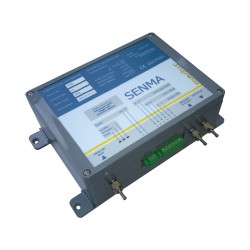
Technical FAQ:
Single gas analyzers
What is a single-gas analyzer?
A single-gas analyzer is a measuring instrument dedicated to the accurate quantification of a single specific gas (e.g., CO, CH₄, CO₂, NOₓ, SO₂), with sensor and electronics optimized exclusively for that parameter. It is used in process monitoring, emission control, and research applications where a single gas is the critical parameter to follow continuously.
What is a single-gas analyzer used for?
It is used to monitor with maximum accuracy a single gas in dedicated applications: CO₂ control in greenhouses and food processes, CH₄ measurement in biogas and landfills, H₂S monitoring in water treatment plants, O₂ control in inertized atmospheres, NOₓ or SO₂ measurement in chimney emissions for environmental compliance checks.
In which sectors is a single-gas analyzer used?
It is used in biogas and anaerobic digestion (dedicated CH₄ or H₂S), agriculture and greenhouses (CO₂ for carbon fertilization), food industry (CO₂ in modified atmospheres), wastewater treatment (H₂S), incinerators and waste-to-energy plants (individual regulated pollutants), engine and turbine R&D, industrial emissions subject to specific regulatory limits.
What is the difference between a single-gas and a multi-gas analyzer?
The single-gas analyzer is optimized for maximum accuracy, simplicity, and reliability on a single gas, at low cost and with targeted calibration. The multi-gas analyzer measures multiple gases simultaneously with a single instrument, ideal for complete process analysis. For continuous single-parameter monitoring, the single-gas analyzer is generally preferable.
What sensor technology does a single-gas analyzer use?
The choice depends on the gas: NDIR (non-dispersive infrared) for CO, CO₂, CH₄, and hydrocarbons — the preferred technology for long-term stability and robustness; electrochemical for toxic gases at low concentrations (CO, NO, NO₂, SO₂, H₂S, NH₃); paramagnetic or zirconia for O₂. Optimization on a single gas guarantees maximum selectivity and repeatability.
Is a single-gas analyzer more accurate than a multi-gas analyzer?
Generally yes: all electronics, the sensor, and any sample conditioning system are optimized for a single measurement parameter, without integration compromises. Professional models achieve accuracies of ±1–2% of the reading, with resolutions down to 0.1 ppm for toxic gases. For metrological and environmental certification applications, the single-gas analyzer is preferable.
How is a fixed single-gas analyzer installed?
The fixed single-gas analyzer is designed for permanent installation near the process (biogas digesters, chimneys, greenhouses, enclosed environments to be monitored). The device is sized for heavy-duty use and long-term applications without the need for frequent maintenance. 4–20 mA analog outputs can be combined with digital outputs for network integration with control systems.
What are the continuous monitoring applications?
The most frequent applications are: continuous CH₄ measurement at the outlet of biogas digesters or landfill capture wells, CO₂ in greenhouses for carbon fertilization control, H₂S at the inlet to blowers and turbines (equipment protection), O₂ in protective atmospheres for welding, NOₓ or SO₂ at chimney outlets for continuous verification of emission limits.
How is gas sampling managed?
The analyzer receives the sample via aspirating pump or pressurized sampling line. The sample is filtered (particulate removal), dehumidified (condensate cooler to prevent water vapor effects on NDIR sensors), optionally diluted for high concentrations, and finally sent to the sensor at constant flow rate.
How long do the sensors last?
Useful life varies by technology: NDIR 5–10 years (very stable, semi-permanent), electrochemical 1–3 years (consumable, to be periodically replaced), paramagnetic 5–10 years, zirconia for O₂ 5–10 years. Periodic sensor replacement is considered planned routine maintenance.
What certifications do single-gas analyzers have?
CE marking, ATEX/IECEx for explosive atmospheres (specific models), MCERTS for chimney emissions (international standard), TÜV approval according to EN 15267 for continuous emission monitoring (required by AIA for plants subject to IED Directive), SIL 2 according to IEC 61508 for functional safety applications.
How often do single-gas analyzers need calibration?
The typical periodicity is annual or semi-annual according to the criticality of the application and regulatory requirements (semi-annual for AIA plants with continuous monitoring, annual for general use). Calibration is performed with certified gas samples in an ISO/IEC 17025 accredited laboratory or on-site for fixed analyzers.