Evolution of a Standard in Non-Contact Temperature Measurement
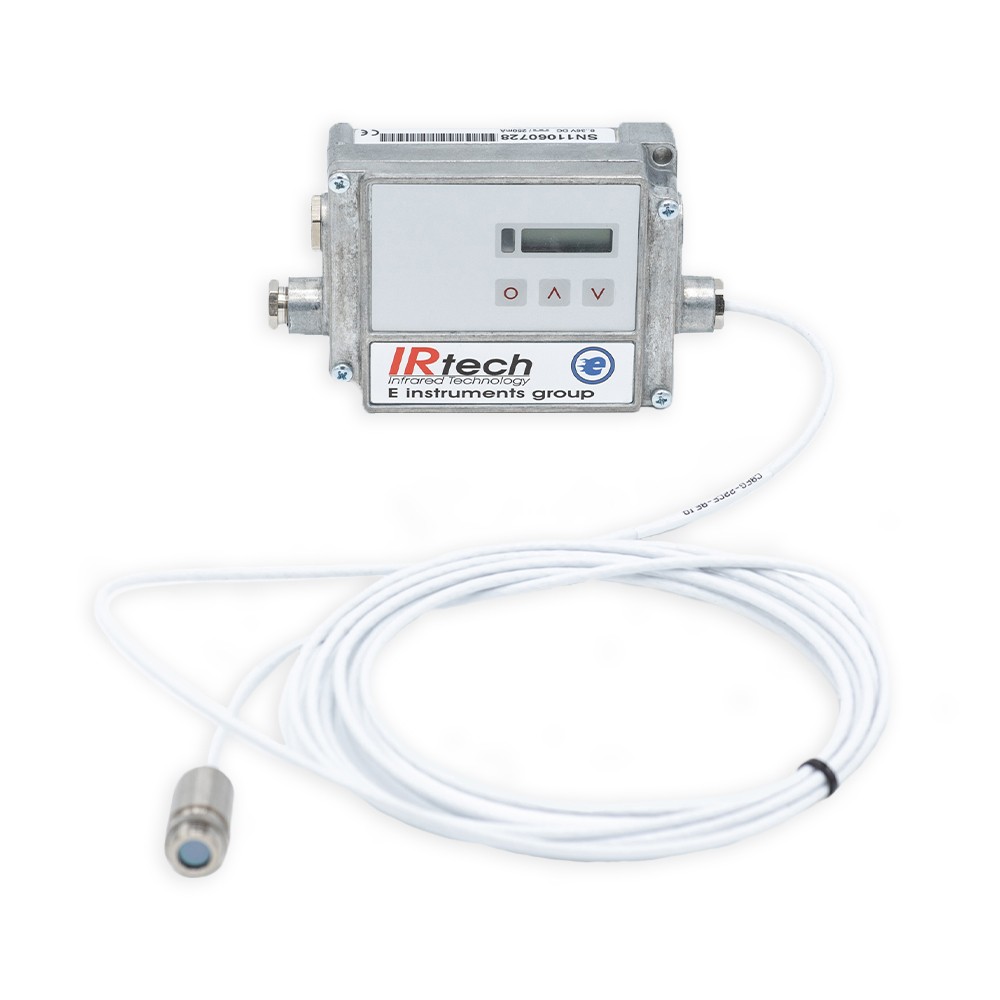
In the field of non-contact temperature measurement, the IR14 series has represented a well-established benchmark for high-reliability industrial applications for over twenty years. Used in complex production environments, the IR14 pyrometer has proven to be a robust and stable solution for process thermal control, becoming a standard in many installations where the industrial infrared pyrometer is an integral part of the automation system.
Today, with the introduction of the IR14 MK2 pyrometer, this platform evolves significantly. It is not simply a product update, but a real technological leap that integrates higher sampling speed, improved metrological performance and advanced industrial connectivity, while maintaining mechanical and application continuity with the previous series.
In the current context of the manufacturing industry—where processes are increasingly dynamic and integrated into PLC architectures and industrial Ethernet networks—a modern industrial infrared temperature sensor must ensure:
- fast response for high-speed processes;
- long-term stability and repeatability;
- easy integration into supervision and control systems;
- flexible I/O configuration.
The IR14 MK2 pyrometer was designed precisely to meet these requirements, combining the proven reliability of the IR14 series with performance and interfaces tailored for modern automation.
Let’s take a closer look at the technical comparison between IR14 and IR14 MK2, highlighting the key differences and the practical advantages that make the new industrial pyrometer the preferred choice for advanced IR temperature measurement applications today.
What Really Changes with the IR14 MK2 Pyrometer
The IR14 MK2 pyrometer is not simply an update to the IR14 series, but a new generation designed to meet the current demands of industrial automation.
In recent years, production processes have become faster, more integrated and more interconnected. In this scenario, an industrial pyrometer can no longer be limited to measuring temperature: it must become an active part of the control system, communicate with PLCs and industrial networks, and ensure stability even under complex operating conditions.
The IR14 MK2 was developed with this exact approach in mind: to provide more responsive, more precise and easily integrated non-contact temperature measurement within modern plant architectures.
Compared with the previous generation, the new series introduces improvements in four key areas:
- Dynamic performance, for faster applications and critical processes
- Measurement accuracy and stability, essential for quality control
- Advanced industrial connectivity, aligned with the most widely used Ethernet protocols
- Greater operational flexibility, thanks to more advanced I/O configuration
Another key aspect is design continuity: the IR14 MK2 pyrometer maintains mechanical and optical compatibility with the previous series, making upgrades straightforward even in existing installations.
In summary, moving to this new instrument is not just a performance improvement, but a necessary technological upgrade for applications where speed, reliability and integration have become essential requirements for industrial infrared temperature measurement.
Detailed Technical Comparison: IR14 vs IR14 MK2
After a general overview of the innovations, let’s now examine in detail the technical differences between the IR14 series and the IR14 MK2 pyrometer, focusing on the aspects that truly affect the performance of an industrial infrared pyrometer in process applications.
Temperature Range
The new series significantly expands the range of possible applications.
- IR14 pyrometer: versions up to 975 °C (depending on the model)
- IR14 MK2 pyrometer: extended range up to 1050 °C
This extended measurement range allows the industrial pyrometer to cover a wider variety of applications, reducing the need to use different models for different temperature intervals.
This is particularly relevant in:
- multi-stage thermal processes;
- production lines with different materials;
- applications where the operating temperature may vary over time.
Sampling Speed and Response Time
One of the most significant technological improvements concerns dynamic performance.
Sampling frequency
- IR14 pyrometer: 70 Hz
- IR14 MK2 pyrometer: up to 10 kHz
Response time
- IR14 pyrometer: 150 ms
- IR14 MK2 pyrometer: down to 40 ms (T02)
This difference makes the IR14 MK2 pyrometer particularly suitable for:
- rapidly moving materials;
- small objects;
- intermittent processes;
- real-time control adjustments.
In non-contact temperature measurement, acquisition speed is often a decisive factor in achieving accurate and stable process control.
Accuracy, Repeatability and Thermal Sensitivity (NETD)
From a metrological perspective, the IR14 MK2 pyrometer introduces significant improvements.
Repeatability
- IR14 pyrometer: ±0.5% or ±0.5 °C
- IR14 MK2 pyrometer: up to ±0.1% or ±0.1 °C
NETD (thermal sensitivity)
- IR14 pyrometer: up to 100 mK
- IR14 MK2 pyrometer: up to 25 mK
A lower NETD means that the industrial infrared temperature sensor can detect much smaller temperature variations, improving:
- measurement stability;
- accuracy in quality control;
- the ability to identify minimal deviations in the process.
Industrial Interfaces and Connectivity
The difference in terms of system integration is substantial.
IR14 Pyrometer
- USB (via external kit)
- RS232
- RS485
- Modbus RTU
- Profibus DP
IR14 MK2 Pyrometer
- Integrated USB-C
- Ethernet TCP
- Modbus TCP
- EtherNet/IP
- Profinet
- EtherCAT
- IO-Link
For a modern industrial IR thermometer, the availability of industrial Ethernet protocols has become an increasingly important requirement in new installations.
The IR14 MK2 pyrometer is designed to integrate natively with PLC architectures and next-generation automation systems, ensuring seamless communication within modern industrial networks.
I/O and Signal Management
The new instrument introduces greater flexibility in the management of inputs and outputs.
IR14 Pyrometer
- Pins F1–F3 programmable as functional inputs
IR14 MK2 Pyrometer
- I/O 1–3 configurable as input or output
- Freely selectable analog outputs
- Configurable alarm functions
- Advanced trigger functions
- External compensations via software
In addition, the new series prevents short circuits on the outputs, improving overall operational reliability.
This level of flexibility makes the IR14 MK2 pyrometer suitable for complex application scenarios without the need for additional hardware.
Mechanical Compatibility and Simplified Upgrade
Another strategic aspect is mechanical continuity with the previous generation.
- Same optics
- Same dimensions
- Compatibility with IR14 accessories
- Interchangeable sensor head
This means that upgrading to the IR14 MK2 pyrometer can be carried out without structural modifications to the system, simplifying integration into existing installations.
Software and Updates
The new series uses IR Plus Connect software, an evolution of the previous platform.
Key improvements include:
- more advanced configuration options;
- extended I/O management;
- online firmware updates.
This is an important advantage for users integrating the industrial pyrometer into complex systems that require long-term adaptability and software updates.
Concrete Advantages in the Industrial Pyrometer Landscape
In the field of industrial pyrometry, real differences are not measured only by specifications on a datasheet, but by the instrument’s ability to meet the practical demands of everyday operations.
The IR14 MK2 pyrometer stands out thanks to a set of features that together make it an advanced solution for non-contact temperature measurement in industrial environments.
One of the most significant elements is the sampling frequency of up to 10 kHz. This capability allows the industrial infrared pyrometer to capture extremely rapid thermal variations, making it particularly effective in applications involving moving objects or high-speed processes.
In dynamic environments, acquisition speed is not just a detail—it is a fundamental requirement for ensuring reliable process control.
This performance is complemented by advanced thermal sensitivity, with a NETD of up to 25 mK. Such a low value enables the sensor to detect extremely small temperature variations, improving both measurement stability and overall accuracy. The ability to identify micro thermal changes can be crucial in critical process monitoring and quality control.
Another key strength lies in the fully programmable I/O architecture. The ability to configure inputs and outputs via software provides high operational flexibility, allowing the device to adapt to different system logics without requiring additional hardware. This makes the industrial pyrometer more versatile and easier to integrate into complex automation architectures.
From a connectivity perspective, the availability of a wide range of industrial protocols enables seamless integration into modern automation systems. The device does not simply provide a temperature value—it becomes an active component of the control system, communicating directly with PLCs and industrial Ethernet networks. The presence of an integrated USB-C interface further simplifies configuration and maintenance, making access to the instrument quicker and more efficient.
Another distinctive feature is backward compatibility with the previous IR14 series. This allows systems to be upgraded to the IR14 MK2 pyrometer without invasive mechanical modifications, reducing both downtime and installation costs. The upgrade becomes a natural technological evolution rather than a structural change.
Finally, short-circuit protection on the outputs represents a technical detail that significantly enhances system reliability. In industrial environments—where operating conditions can be demanding—this feature helps prevent accidental damage and improves the long-term robustness of the instrument.
Overall, the new instrument does more than simply deliver higher performance. It provides a platform designed to integrate seamlessly into modern industrial processes, combining speed, precision, flexibility and reliability in a single solution.
Ideal Applications of the IR14 MK2 Pyrometer
The IR14 MK2 pyrometer has been designed to meet the needs of advanced industrial processes, where non-contact temperature measurement must be fast, precise and fully integrated into the automation system.
Thanks to its dynamic performance and configuration flexibility, it is ideally suited for applications such as:
- High-speed production lines, where fast data acquisition is essential to ensure continuous process control.
- Applications involving moving materials, such as conveyor belts or rotating processes, where an industrial pyrometer must detect temperature within extremely short time frames.
- Fine thermal control processes, where even minimal temperature variations can influence the quality of the final product.
- Automated plants integrated into industrial Ethernet networks, where the industrial infrared temperature sensor must communicate directly with PLCs and supervision systems.
- Technological upgrades in existing installations, where a previous industrial IR thermometer needs to be replaced while maintaining mechanical compatibility and ease of installation.
The combination of performance, connectivity and configurability makes this instrument suitable both for new installations and for retrofit projects on existing industrial systems.
A Necessary Technological Evolution
Switching to the IR14 MK2 pyrometer is not simply about adopting a newer model, but about implementing a technological upgrade aligned with the needs of modern industry.
Today, an industrial infrared pyrometer must ensure:
- response speed suitable for dynamic processes;
- high metrological stability;
- full integration within industrial networks;
- operational flexibility and ease of configuration.
The IR14 MK2 addresses these requirements with a platform designed to be an active part of the control system, rather than just a measurement device.
For users already operating with the IR14 series, the upgrade represents a natural evolution, simplified by mechanical compatibility and seamless integration into existing installations.
For those planning a new installation, the IR14 MK2 pyrometer provides a solution ready for modern automation environments and Industry 4.0 architectures.


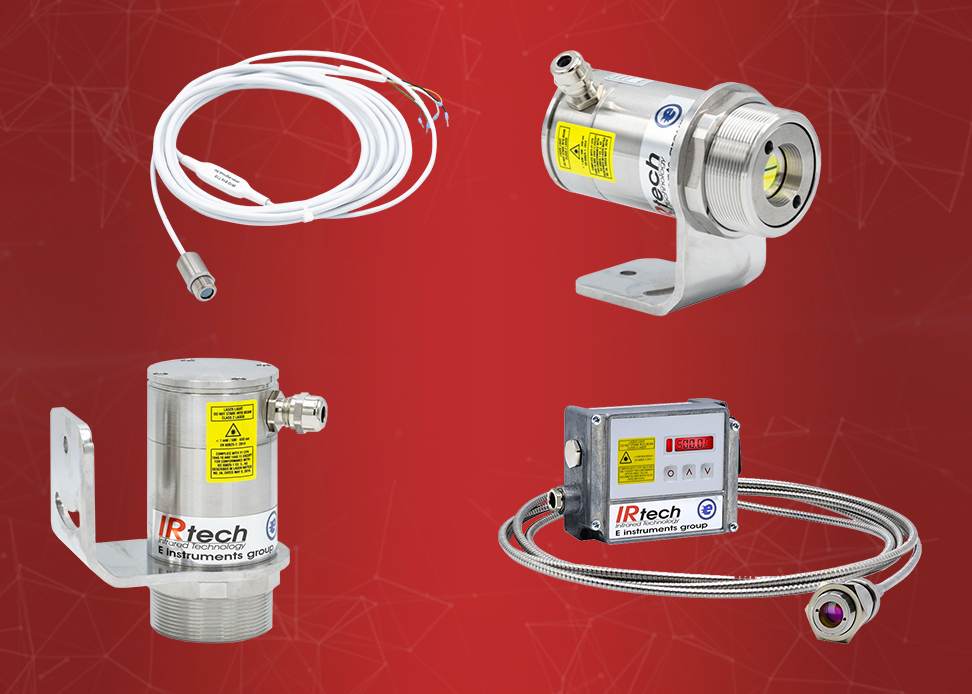

 E Instruments at the A&T Vicenza 2026 Trade Fair: Measurement, Calibration, and Safety in Hall 7
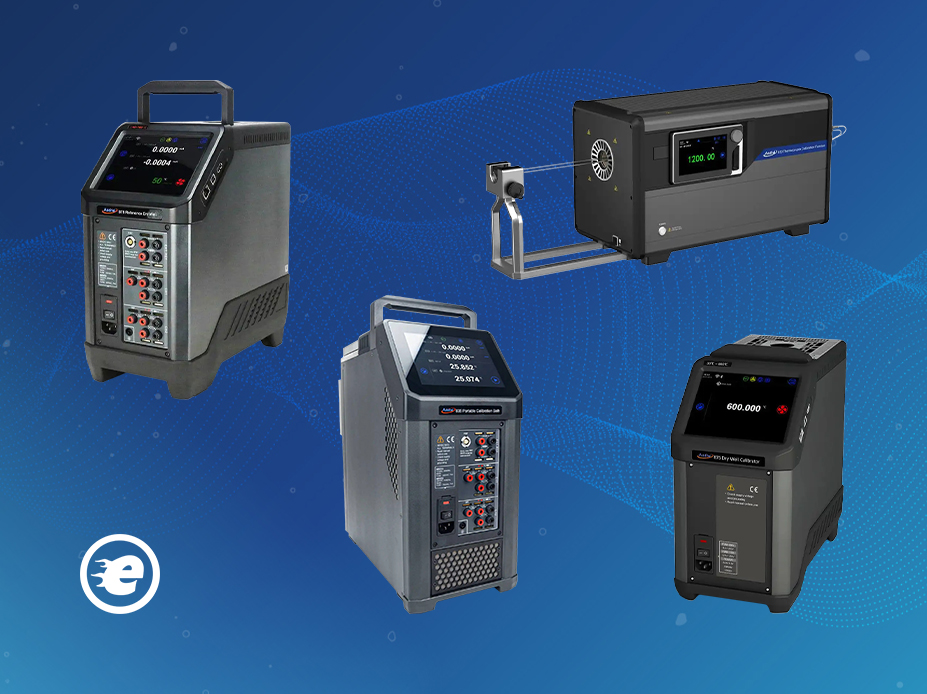 Additel dry-well temperature calibrators: the complete range for thermocouples and resistance thermometers
 Thermal imaging cameras and pyrometers for the plastics industry: applications, benefits, and solutions