


Calibration ovens for calibration
Calibration furnaces are essential tools for calibrating sensors, thermocouples and thermoresistances. These ovens guarantee accurate temperature control, allowing uniform and repeatable calibration. They are suitable for metrological laboratories and field calibrations. Each model of this type of temperature calibrator is designed for high performance. The best performing models offer automated procedures.



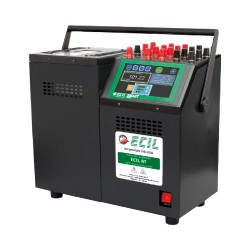

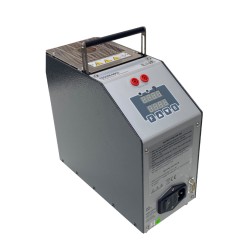

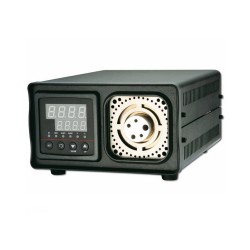
Technical FAQ:
Calibration ovens for calibration
What are dry block calibrators?
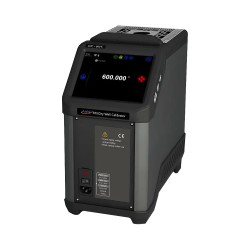
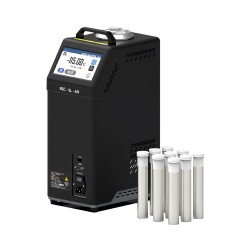
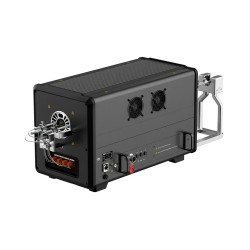
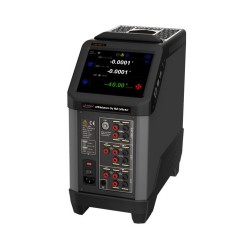
Dry block calibrators (also known as calibration furnaces or dry-well calibrators) are instruments that generate a controlled reference temperature inside a metal block with drilled wells, where temperature probes are inserted for calibration. They replace liquid baths in applications that require speed, portability, and contamination-free operation.
What are dry block calibrators used for?
They are used to calibrate and verify RTDs, thermocouples, digital thermometers, and other temperature probes without the use of liquids, reducing stabilization time and eliminating contamination risks. They are widely used for field calibration and industrial maintenance applications.
In which industries are dry block calibrators used?
Dry block calibrators are used in industrial maintenance, oil & gas, chemical and petrochemical plants, food processing (HACCP), pharmaceuticals (GMP), automotive, energy sector, refineries, and any process industry where temperature calibration is performed either on-site or in workshops.
What is the difference between a dry block calibrator and a calibration bath?
A dry block calibrator is faster, portable, clean, and does not require any liquid. However, it typically offers lower uniformity (around ±0.05 to ±0.2 °C) and is limited by the geometry of the block inserts. A calibration bath provides superior uniformity (±0.005 to ±0.01 °C) and accommodates any probe shape, but it is slower, bulkier, and less portable.
How does a dry block calibrator work?
A heating element (and in some models a cooling system using Peltier cells or compressors) brings a metal block—usually aluminum or brass—to the desired temperature. The probe under test and the reference probe are inserted into dedicated wells where they reach thermal equilibrium.
What temperature ranges do dry block calibrators cover?
Most dry block calibrators cover a range from about −55 °C (Peltier or compressor-based models) up to 700–1200 °C for high-temperature units. Selection depends on the application range and calibration requirements. For extremely low temperatures or higher uniformity, calibration baths are preferred.
What accuracy and uniformity can be achieved with a dry block calibrator?
Typical stability ranges from ±0.01 to ±0.05 °C, radial and axial uniformity from ±0.02 to ±0.2 °C, while displayed accuracy is generally between ±0.1 and ±0.5 °C. For metrological-grade results, a high-precision external reference probe and thermometer are essential.
What are inserts and why are they important?
Inserts are interchangeable metal sleeves with drilled holes that fit into the calibrator block and accommodate probes of different diameters. Proper thermal contact between the probe and insert is essential: excessive clearance or poor fit can introduce significant measurement errors.
Can dry block calibrators be used as measuring instruments?
No. The internal sensor of a dry block calibrator provides only control feedback and limited accuracy. For reliable calibration, an external reference probe combined with a precision thermometer must always be used. Learn more about measurement risks: Measurement errors in calibration processes.
Which instruments can be calibrated with a dry block calibrator?
RTDs (Pt100, Pt1000), thermocouples (types K, J, T, N, R, S, B), digital thermometers, temperature transmitter probes, and—in some configurations—infrared sensors using dedicated blackbody accessories, provided probe dimensions and immersion depth requirements are met.
What is minimum immersion depth?
Minimum immersion depth is the required insertion length of a probe into the calibrator block to ensure that heat exchange with ambient air does not significantly affect the measurement. Insufficient immersion is a major source of error; typically, at least 15–20 times the probe diameter is recommended.
How often should a dry block calibrator be calibrated?
The typical calibration interval is one to two years, depending on usage intensity and quality system requirements (ISO/IEC 17025). Calibration should cover the full operating range and include axial uniformity, radial uniformity, and stability verification.