


Analyzers
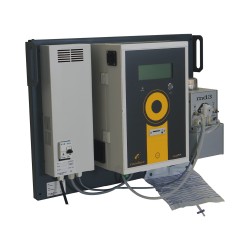
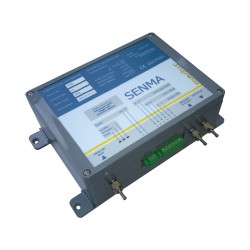
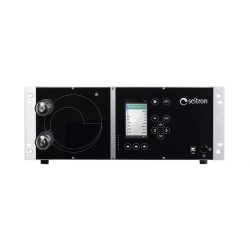
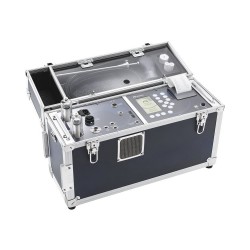
Discover our range of Gas and Multi-Gas Analyzers, designed to provide precise and reliable measurements in various industrial environments. Our analyzers are versatile, easy to use, and equipped with the most advanced technologies to detect a wide range of gases. They are essential tools for workplace safety, environmental monitoring, and scientific research. We offer customized solutions to meet the specific needs of each sector, always ensuring the high quality and reliability that characterize our products.

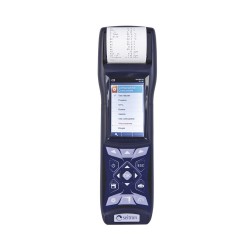
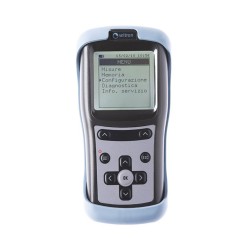
Technical FAQ:
Analyzers
What is a gas and multi-gas analyzer?
A gas analyzer is a quantitative measurement instrument designed to analyze, with high accuracy, the composition of a gas mixture by determining the concentration in ppm, % volume, or mg/m³ of one or more specific components. It differs from a gas detector, which is a safety and alarm device, because it provides precise process measurements intended for technical analysis of emissions or efficiency
What is a gas and multi-gas analyzer used for?
It is used to monitor atmospheric emissions for environmental and regulatory compliance (D.Lgs. 152/2006, Industrial Emissions Directive), verify combustion process efficiency, check the quality of technical gases, analyze mixtures in laboratories, and ensure plant compliance with limits set by environmental authorities.
In which sectors are gas and multi-gas analyzers used?
They are used in sectors such as thermal and power plants, refineries, cement plants, glass factories, steel mills, incinerators, waste treatment and cogeneration plants, chemical and petrochemical industries, food and pharmaceutical industries, maintenance of industrial and domestic boilers, internal combustion engine emission testing, research laboratories, and heating system installers.
When is it better to use a portable gas analyzer instead of a fixed one?
A portable combustion analyzer is preferred for periodic checks, inspections, calibration verification, scheduled maintenance, mobile inspection activities, and when monitoring is not continuous. A fixed combustion analyzer is preferred for continuous 24/7 monitoring, regulatory emissions self-monitoring (AMS/SME), integration with DCS/SCADA systems, and when required by environmental regulations (e.g., facilities subject to environmental authorization such as AIA permits).
What is the difference between a gas analyzer and a gas detector?
A gas detector is a safety device designed to trigger alarms when dangerous thresholds (LEL, TLV) are exceeded, protecting people and equipment. A gas analyzer is a quantitative measurement instrument designed to provide accurate concentration values of gas components for process control, environmental monitoring, or energy efficiency analysis.
What does a combustion analyzer measure?
It typically measures O₂ (residual oxygen, indicator of excess air), CO (carbon monoxide, incomplete combustion), CO₂ (calculated or measured), NOx (nitrogen oxides: NO + NO₂), SO₂ (sulfur dioxide), H₂ (hydrogen), CxHy (unburned hydrocarbons), as well as flue gas temperature, air temperature, draft, combustion efficiency, and stack losses.
What sensor technologies do gas analyzers use?
The main technologies are: electrochemical sensors (for O₂, CO, NO, NO₂, SO₂, H₂S, CxHy in portable applications); NDIR (Non-Dispersive Infrared, for CO, CO₂, NO, SO₂, hydrocarbons in % or ppm); chemiluminescence (for NOx in laboratory or high-end fixed systems); FID (Flame Ionization Detector, for total VOCs); paramagnetic (for high-accuracy % O₂ measurement); and UV (for SO₂ and NO₂).
What is the Bacharach index and how is it measured?
The Bacharach index (or soot number) is a scale from 0 to 9 that evaluates the presence of carbonaceous particulate in combustion flue gases from liquid fuels (diesel, fuel oil). It is measured by drawing a known volume of flue gas through a paper filter and comparing the resulting stain with a reference color scale. It is required by DPR 412/93 for diesel heating systems.
What does combustion efficiency mean?
It is the percentage of the fuel’s chemical energy that is effectively converted into useful heat, calculated by subtracting from 100% the stack losses due to heat carried away by flue gases. It is calculated using O₂, flue gas temperature, and air temperature measurements, applying UNI 10389-1 formulas. A typical value for modern condensing boilers is above 95%.
What are the main reference standards?
The main standards are UNI 10389-1 (on-site measurement of combustion efficiency), UNI EN 50379 (portable instruments for measuring combustion products), Legislative Decree 152/2006 (Environmental Code – air emissions), UNI EN 14181 (quality assurance for AMS – Automated Measuring Systems), UNI EN 15267 (QAL1 certification of analyzers), and DPR 74/2013 for civil heating systems.
What does “expressed at 3% O₂” mean in emissions?
It refers to the normalization of pollutant concentrations to a standard oxygen reference value (3% O₂ for liquid/gaseous fuels, 6% for solid fuels, 11% for incinerators). It prevents emission limits from being “diluted” by introducing excess air into flue gases. The normalization formula considers measured O₂ and reference O₂ according to environmental regulations.
How often should gas analyzers be calibrated?
The typical frequency is annually for portable instruments (UNI EN 50379 requires an up-to-date calibration certificate for official inspections) and semi-annually or quarterly for fixed systems (AMS), with weekly QAL3 checks according to UNI EN 14181. Calibration must be performed using certified gases traceable to national standards and by ISO/IEC 17025 accredited laboratories.