In the plastics processing sector, temperature is the most critical process parameter. Every phase of the production cycle — from melting the raw polymer to moulding, from extrusion to cooling — depends on precise and continuous thermal control. An error of just a few degrees can result in dimensional defects, warping, colour variations, non-uniform internal structure or, in the most severe cases, material degradation.
And yet measuring the temperature of plastic is not straightforward. Polymers exhibit variable emissivity depending on their type, colour and surface finish; processes often take place at high speed; and physical contact with thermocouple sensors is frequently impractical on materials that are moving or inside a mould. Non-contact temperature measurement with pyrometers and thermal cameras for the plastics industry is the most effective technological solution and is now economically accessible to anyone wishing to monitor and optimise production.
Why infrared measurement is essential in plastics processing
Infrared sensors — both point-measurement industrial pyrometers and fixed thermal cameras that deliver complete thermal images — measure temperature without any physical contact with the material. This advantage is particularly relevant in a sector where the product is in motion, at high temperature, or sensitive to any surface contamination.
Compared with traditional contact sensors (thermocouples, PT100), IR measurement offers:
- Real-time response, with acquisition times reaching just a few milliseconds in the fastest models;
- Continuous monitoring of the entire surface, not just a single point;
- No mechanical interference with the product being processed;
- Direct integration with PLCs, SCADA systems and process control systems via 4-20mA, RS485 or Ethernet outputs.
Key applications of infrared measurement in the plastics sector
Injection moulding
In injection moulding, the thermal control of the mould and the injected material is decisive for the quality of the finished part. Non-uniform temperatures across the mould surfaces cause shrinkage differentials that result in warping, residual stresses and surface defects. A fixed thermal camera permanently installed on the press allows a complete thermal map of the part to be captured at every cycle as it exits the mould, identifying in real time anomalies such as cold spots, insufficient bonding areas or yellowing due to overheating.
Thermal monitoring in injection moulding also makes it possible to detect mould drift over time, enabling maintenance interventions before scrap is produced.
Extrusion
In the extrusion of profiles, tubes, sheets and films, the temperature of the material at the die exit and along the cooling line determines the mechanical and dimensional properties of the product. A fixed pyrometer positioned at the die or immediately downstream provides a continuous signal that the control system can use to regulate extrusion speed, die temperature or cooling flow.
Response speed is critical in this application: temperature variations in the extrudate propagate quickly along the line and must be corrected within a few seconds to avoid scrap over significant lengths of product.
Thermoforming
Thermoforming — the process in which a plastic sheet or board is heated until pliable and then formed over a mould — requires the material to reach the correct forming temperature window uniformly. Temperatures that are too low cause tears or incomplete fill; temperatures that are too high cause excessive thinning, degradation and surface defects.
A thermal camera for the plastics industry installed downstream of the heater makes it possible to verify the thermal distribution across the entire surface of the sheet before it enters the mould, detecting cold spots caused by faulty heating elements or variations in the thickness of the incoming material.
Welding and joining of plastic components
In the welding of plastic components — by vibration, ultrasound, hot air or contact — joint quality depends on the temperature reached at the interface zone. Thermal monitoring during and after welding makes it possible to verify that thermal energy has been applied correctly and uniformly, avoiding both cold joints (insufficient fusion) and zones of thermal degradation (localised overheating).
Rotational moulding
In rotational moulding (roto-moulding), the polymer powder is melted inside a rotating mould in an oven. The thermal profile during heating and cooling determines the quality of the part — uniform wall thickness, absence of bubbles, correct crystallisation. IR monitoring makes it possible to optimise oven cycle times and cooling cycles without having to open the mould.
Adhesive application and bond quality
In processes involving structural bonding of plastic components, the distribution of the adhesive and its thermal activation can be verified with a thermal camera. Missing adhesive, interruptions in the bead or areas of poor activation generate thermal anomalies that can be detected in real time during the process, before the joint is finalised.
Specific challenges of infrared measurement on plastic materials
Emissivity of polymers
Emissivity is the fraction of thermal radiation emitted by a material relative to that of an ideal blackbody at the same temperature. Polymers generally have high emissivity (typically between 0.90 and 0.97 in the 8–14 μm spectral band), making them favourable subjects for non-contact temperature measurement — better than metals, which exhibit much lower and more variable emissivity. However, emissivity varies between different polymers and changes with temperature, colouring and surface finish. The correct setting of emissivity in the sensor is fundamental to obtaining accurate readings.
Thin plastic films: dedicated spectral bands
The most significant challenge is presented by thin plastic films (below 0.5 mm). In the standard 8–14 μm spectral band, thin films are partially transparent to IR radiation: the sensor "sees" the temperature of the substrate behind as well, introducing a systematic error. The solution is to use industrial pyrometers with a spectral band at 7.9 μm or 3.43 μm: at these wavelengths, even the thinnest films become optically opaque, making accurate measurement of the surface alone possible.
Surface reflectivity and high ambient temperatures
Glossy or metallised plastic surfaces can reflect thermal radiation from the surrounding environment — from hot moulds, heating elements, IR lamps — introducing errors in the reading. In these cases it is necessary to shield the sensor from the environment and correctly calibrate the ambient temperature compensation, a function available on advanced fixed pyrometers in the IRtech range.
When to use a fixed pyrometer and when to use a thermal camera
The choice between a fixed pyrometer and a fixed thermal camera depends on the information required.
A fixed pyrometer provides the temperature of a single point continuously and with very fast response times — down to 1 ms in high-speed models. It is the ideal solution when the control point is well defined, the product geometry is constant, and a direct signal is required for integration into the process control loop (PLC, temperature controller).
A fixed thermal camera generates a complete thermal map of the area in view and makes it possible to detect distributed defects, non-uniform gradients and localised anomalies that a point-measurement industrial pyrometer could not identify. It is the right choice when the surface to be monitored is large, when the location of the defect is variable or unknown in advance, and when visual traceability of the thermal process is required.
E Instruments: IRtech products for the plastics industry
IR10 — Compact fixed pyrometer with 4-20mA output
The IR10 is the fixed industrial pyrometer in the IRtech range with a split architecture — electronics separate from the sensor head — allowing the compact sensor head (M12×28mm) to be installed even in very confined spaces and high-temperature environments up to 180°C without cooling. Measurement range from -50°C to 1600°C (8–14 μm spectral band for general plastic applications), optical resolution up to 75:1, response time from 8 ms. The 2-wire 4-20mA output facilitates direct integration into industrial control systems. Ideal for continuous monitoring on extrusion lines, die exits and fixed control points on injection presses.
IR14 — Advanced fixed pyrometer with display, keypad and plastic-specific configurations
The IR14 is the fixed pyrometer in the IRtech range with the most comprehensive performance: measurement range from -40°C to 2200°C, optical resolution up to 75:1, response time down to 90 µs, sensor head ambient temperature up to 250°C without cooling, a wide range of digital outputs (USB, RS232, RS485, Profibus, CAN, Ethernet) and the ability to connect numerous sensors in a network. For specific applications in the plastics industry, the IR14 is available in versions with dedicated spectral bands:
- Model 343 (3.43 μm band): optimised for measurement of plastic in general — range 50–400°C;
- Model 790 (7.9 μm band): specific to thin plastic films — range 0–710°C;
- Model 814 (8–14 μm band): for opaque polymers of standard thickness — range up to 975°C.
Also available in an ATEX-certified version for environments with explosion risk.
IR640 — Compact fixed thermal camera for area monitoring
The IR640 is the compact fixed IRtech thermal camera designed for permanent installation in plant. In a body of just 36×90mm and 185g, it integrates a thermal sensor with a measurement range from -20°C to 900°C, NETD of 0.10°C, motorised focus with remote control and process outputs of 0–10V / 4-20mA. The IP67 protection rating makes it suitable for industrial environments with humidity, dust and splashing. It is the ideal solution for surface thermal monitoring in moulding, thermoforming and welding, where complete visibility of the process zone and archiving of thermal data for traceability and quality control are required.
The IRtech range offers a comprehensive selection of advanced products and solutions for non-contact temperature measurement, suited to a wide variety of industrial, automation and research applications. The technical team is available to analyse the specific application, select the correct spectral band and define the most suitable solution in terms of optical resolution, measurement range and integration with existing control systems.


 E Instruments at the A&T Vicenza 2026 Trade Fair: Measurement, Calibration, and Safety in Hall 7
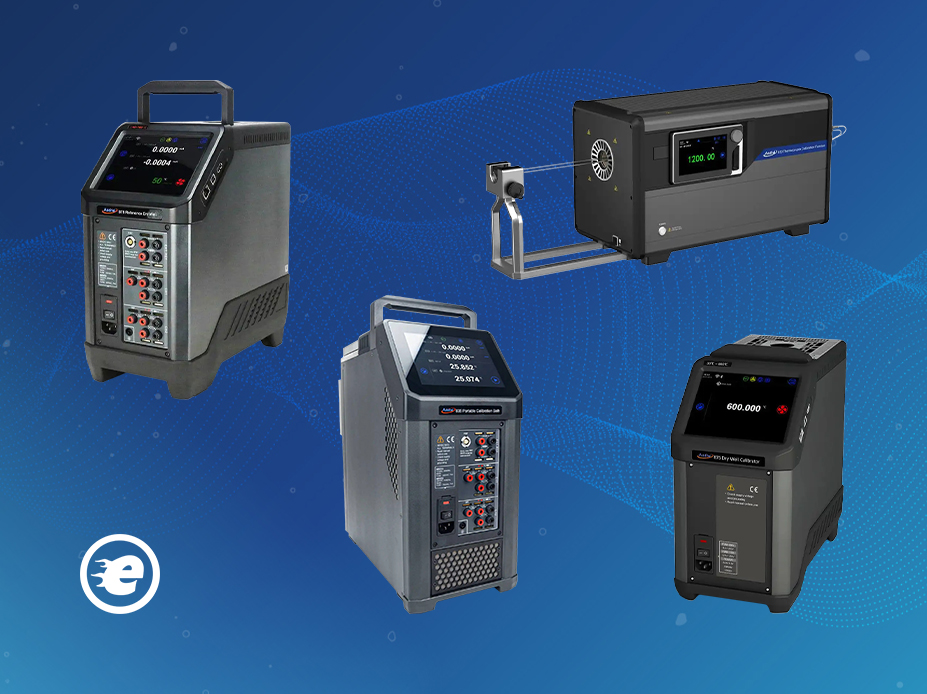 Additel dry-well temperature calibrators: the complete range for thermocouples and resistance thermometers
 Thermal imaging cameras and pyrometers for the plastics industry: applications, benefits, and solutions