


Temperature calibrators
Our selection of Temperature Calibrators is perfect for ensuring precise and reliable thermal measurements. Our calibrators are designed to meet the needs of various sectors, including laboratories, industries, and scientific research. We offer solutions that stand out for their ease of use, precision, and versatility. With a range of models suitable for a variety of applications, E Instruments is the ideal partner to ensure your temperature measurements are always accurate and meet the highest quality standards.


Technical FAQ:
Temperature calibrators
What is a temperature calibrator?
A temperature calibrator is an instrument used to verify, calibrate, or certify temperature measurement devices. It generates a stable and known temperature, allowing comparison with the readings of thermocouples, RTDs, probes, thermometers, or temperature transmitters. It is essential for ensuring accurate, repeatable, and quality-compliant temperature measurements.
Which instruments can be calibrated with a temperature calibrator?
Temperature calibrators can be used to calibrate thermocouples, RTDs (Resistance Temperature Detectors), reference probes, digital thermometers, temperature transmitters, industrial sensors, and other temperature measurement devices used in manufacturing and process applications. Compatibility depends on the temperature range, sensor type, immersion depth, and required accuracy.
What is the difference between a calibration bath and a dry block calibrator?
A calibration bath uses a liquid medium to create a highly uniform thermal environment, making it ideal for calibrating multiple sensors simultaneously or probes with unusual shapes. A dry block calibrator uses a heated metal block with interchangeable inserts, offering greater portability and convenience for field calibrations. The choice depends on the sensor type, required accuracy, and operating environment.
When should a calibration bath be used?
A calibration bath is recommended when high thermal uniformity is required, when multiple sensors must be calibrated in the same cycle, or when working with probes that have special geometries, sanitary fittings, flanges, or dimensions not compatible with dry block calibrators. It is widely used in laboratories, pharmaceutical, food processing, biotechnology, and metrology applications.
When should a dry block calibrator be used?
A dry block calibrator is ideal for fast calibrations, field service work, and routine verification of standard temperature probes. Its compact design and interchangeable inserts allow stable temperature generation in a practical and safe manner. It is particularly suitable for maintenance technicians, mobile laboratories, and industrial applications where portability and ease of use are important.
What are reference probes in temperature calibration?
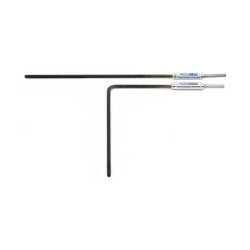
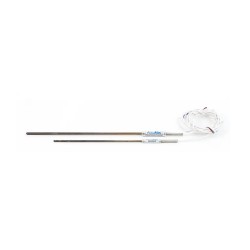
Reference probes are high-accuracy temperature sensors used as standards during calibration. They are typically used together with precision thermometers, calibration baths, or dry block calibrators to provide traceable temperature measurements. Their accuracy plays a critical role in minimizing calibration uncertainty.
What are calibration thermometers used for?
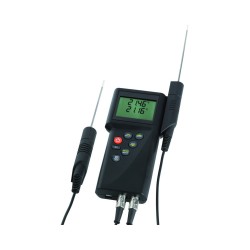
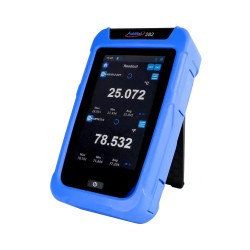
Calibration thermometers are precision instruments used to accurately measure the temperature indicated by reference probes, thermocouples, or RTDs. They are essential in metrology laboratories and any application where measurements must be compared against a reliable reference standard.
What is the difference between thermal stability and thermal uniformity?
Thermal stability refers to the calibrator’s ability to maintain a constant temperature over time. Thermal uniformity refers to how evenly the temperature is distributed throughout the usable calibration zone. Both parameters are essential: stability ensures repeatable measurements, while uniformity minimizes temperature differences between sensors positioned in different locations.
Why is immersion depth important in temperature calibration?
Immersion depth is a critical factor because it directly affects measurement accuracy. If a probe is not immersed deeply enough, heat loss along the stem can introduce measurement errors. For accurate calibration, the recommended minimum immersion depth should be respected, and the sensing element must be positioned within the thermally stable zone of the calibrator.
What is measurement uncertainty in temperature calibration?
Measurement uncertainty represents the range within which the true temperature value is expected to lie. It depends on factors such as instrument accuracy, stability, uniformity, resolution, sensor performance, and environmental conditions. Proper uncertainty evaluation is essential for reliable and traceable calibration results.
When should a temperature sensor be calibrated?
A temperature sensor should be calibrated periodically based on industry requirements, process criticality, frequency of use, and applicable quality or regulatory standards. Calibration is also recommended after mechanical shock, exposure to extreme temperatures, maintenance activities, or whenever measurement inconsistencies are observed.
In which industries are temperature calibrators used?
Temperature calibrators are used across a wide range of industries, including pharmaceuticals, food processing, biotechnology, metrology laboratories, energy, automotive, chemical processing, HVAC, manufacturing, and quality control. They are indispensable wherever reliable, traceable, and repeatable temperature measurements are required.
How do you choose the right temperature calibrator?
Selecting the appropriate temperature calibrator requires evaluating factors such as temperature range, required accuracy, sensor type, probe dimensions, immersion depth, the number of sensors to be calibrated simultaneously, field versus laboratory use, and reporting or certification requirements. The choice between a calibration bath, dry block calibrator, reference probe, or precision thermometer depends on the specific application.
Can temperature calibrators be used in pharmaceutical applications?
Yes. In pharmaceutical, biotechnology, and life science industries, temperature calibrators are used to verify and calibrate sensors installed in environmental chambers, refrigerators, autoclaves, production lines, sterilization systems, and controlled environments. In these applications, accuracy, traceability, repeatability, and calibration documentation are essential requirements.