Choosing a pressure gauge involves several technical variables that significantly affect performance, durability, and suitability for the intended application. Full-scale range, accuracy, connection type, process medium, and display resolution all play a specific role, and an incorrect choice can compromise measurement quality or, in certain contexts, operational safety.
Let’s examine the main criteria for selecting a digital pressure gauge, compare the available technologies, and present the models in the Additel range, along with their technical characteristics and ideal application contexts.
Analog or Digital Pressure Gauge? The Key Differences
The Analog Pressure Gauge
An analog pressure gauge relies on a mechanical elastic element—typically a Bourdon tube, diaphragm, or bellows—that transfers movement to a pointer on a graduated dial. It is simple, robust, cost-effective, and requires no electrical power, which is why it remains widely used for continuous process pressure monitoring.
Its main limitation is accuracy. Typical industrial accuracy classes are 1.0% or 2.5% FS according to the EN 837 standard, and mechanical hysteresis as well as pointer stiction can introduce additional measurement errors. Readings are also subjective, as they depend on operator interpretation and viewing angle (parallax error). Furthermore, analog gauges cannot record data or be integrated into digital monitoring systems.
The Digital Pressure Gauge
A digital pressure gauge uses a silicon piezoresistive sensor whose signal is processed by an electronic circuit and displayed on a digital screen. Compared to analog gauges, the advantages are significant: accuracy levels down to 0.01% FS in reference-grade models, objective readings, automatic temperature compensation, data logging, peak and minimum value capture, and wireless or serial communication capabilities for integration with monitoring and control systems. For these reasons, digital pressure gauges are the preferred choice in metrology laboratories, field calibration activities, and any application where measurement quality and traceability are critical requirements.
Key Parameters for Choosing a Digital Pressure Gauge
Full Scale (FS) Full scale is the first parameter to define when selecting a pressure gauge. Operating too close to the upper limit can accelerate sensor wear, while working in the lower portion of the measuring range may reduce effective resolution. In industrial practice, the choice falls on the full scale closest to the real working pressure: for a 20 bar process a 20 bar instrument is chosen. Additel digital pressure gauges cover ranges from a few mbar up to 60,000 psi (4,200 bar), with configurations available for vacuum and compound pressure measurements.
Accuracy and Precision Class
Accuracy indicates the maximum permissible deviation between the displayed value and the true value, expressed as a percentage of full scale (% FS) and typically compensated for temperature effects. Available accuracy levels within the Additel range include:
- 0.5% FS – process monitoring and replacement of analog gauges;
- 0.1% to 0.2% FS – transmitter maintenance and first-level field calibration;
- 0.05% FS – structured field calibration with suitable Test Accuracy Ratio (TAR);
- 0.02% FS – calibration laboratories and metrology reference applications.
When a pressure gauge is used as a calibration reference, metrology best practices generally recommend a minimum 4:1 TAR (Test Accuracy Ratio) compared to the instrument being calibrated.
Display Digits and Resolution
The number of display digits determines the smallest pressure variation that can be displayed: 4 digits = 9,999 counts 5 digits = 99,999 counts 6 digits = 999,999 counts For the same full-scale range, higher resolution allows smaller pressure changes to be displayed. It is important not to confuse resolution with accuracy: a gauge may have very high resolution but limited accuracy, or vice versa.
Process Connection Type
The process connection must be compatible with the pressure port thread used in the application. The most common standards are:
- 1/2 BSP and 1/4 BSP (British Standard Pipe) – the most common standard in Europe;
- 1/2 NPT and 1/4 NPT (National Pipe Thread) – widely used in North America and the oil & gas industry;
- G 1/4" and M20×1.5 – metric connections commonly found on European equipment.
Using incompatible connections may require adapters, which can introduce leak points or chemical compatibility issues.
Process Media
Compatibility The process fluid determines the chemical compatibility requirements of the wetted parts:
- Air and non-corrosive dry gases: typically compatible with standard 316L stainless steel;
- Water and steam: may require a siphon to protect the sensor from excessive temperatures;
- Hydraulic oils and lubricants: generally compatible, although viscosity and contamination risks should be evaluated;
- Aggressive media (acids, bases, solvents): may require special materials such as Hastelloy, PTFE, or diaphragm seals.
Additel pressure gauges feature fully welded stainless-steel sensor assemblies that are compatible with air, water, and oil in most industrial applications.
Measurement Type: Gauge, Absolute, or Differential Pressure
Gauge pressure is measured relative to local atmospheric pressure and is the most common measurement type in industrial applications. Typical units include barg and psig.
Absolute pressure is measured relative to a perfect vacuum and includes atmospheric pressure. It is essential for vacuum applications and thermodynamic processes. Typical units include bara and psia.
Differential pressure measures the difference between two pressure points and is commonly used for flow measurement (orifice plates, Venturi tubes), hydrostatic level measurement, and filter monitoring.
Advanced Additel models feature an integrated barometric reference, allowing users to switch between gauge and absolute pressure measurements without changing instruments.
Transmitters with 4–20 mA Output and Digital
Communication Protocols When pressure measurement data must be transmitted to SCADA, PLC, or DCS systems, instruments equipped with analog or digital communication outputs are required.
The 4–20 mA output remains the industrial standard for analog signal transmission. In this configuration, 4 mA corresponds to 0% of the measurement range, while 20 mA represents 100% of the calibrated span. This signal is highly resistant to electromagnetic interference and is compatible with virtually all industrial control and data acquisition systems.
The RS-485 bus allows multiple instruments to be connected on the same communication line using a multi-drop architecture, with cable lengths of up to 1,200 meters (4,000 ft). It is commonly used with the Modbus RTU protocol for communication with PLCs, SCADA platforms, and industrial automation systems.
The HART protocol enables digital communication superimposed on the traditional 4–20 mA loop, preserving full compatibility with existing analog infrastructure. This allows users to access advanced device information, configuration parameters, and diagnostic functions without affecting the analog measurement signal. A pressure calibrator with an integrated HART communicator, such as the ADT673, allows technicians to configure, diagnose, and calibrate smart pressure transmitters directly in the field without disconnecting them from the process loop, significantly reducing maintenance time and improving operational efficiency.
The Additel Digital Pressure Gauges Range
ADT601EX — 4-Digit Intrinsically Safe Digital Pressure Gauge
The ADT601EX digital pressure gauge is designed for hazardous areas and is certified Ex ia IIC T4 Ga according to ATEX and IECEx standards.
– 0.5% FS accuracy
- Pressure ranges from -1 to 1,000 bar;
- 4-digit display;
- Bluetooth BLE 5.3 connectivity;
- IP67 protection rating;
- Battery life up to 9,000 hours.
It is the ideal solution for refineries, oil & gas facilities, and pharmaceutical plants where intrinsic safety certification is mandatory.
ADT680A — 5-Digit Digital Pressure Gauge with Data Logger
The ADT680A is a 5-digit digital pressure gauge featuring an integrated data logger capable of storing up to 800,000 records (time and pressure).
- 0.1% or 0.2% FS accuracy;
- Pressure ranges up to 60,000 psi;
- Bluetooth and RS232 connectivity; - IP67 protection rating.
An ADT680AEx version is also available for hazardous area applications.
ADT681A — High-Resolution 6-Digit Digital Pressure Gauge
The ADT681A offers a selectable 5- or 6-digit display with 0.01% FS accuracy. In addition to gauge pressure measurement, it can calculate absolute pressure and ambient temperature, and includes advanced functions such as: TARE Leak testing Min/Max peak capture Trend bar graph Bluetooth connectivity is available up to 20 meters.
ADT685 — Touchscreen Digital Pressure Gauge
The ADT685 introduces a 3.4" color touchscreen display with replaceable tempered glass, combining ease of use with advanced functionality.
- 0.02% FS accuracy;
- Pressure ranges up to 60,000 psi;
- Integrated barometer for switching between gauge and absolute pressure;
- Bluetooth, Wi-Fi, USB, and RS232 connectivity Optional 4-20 mA output and RS-485 communication.
ADT686 — Advanced Touchscreen Digital Pressure Gauge with Certified Barometer
The ADT686 expands the capabilities of the ADT685 by incorporating a certified barometer with an accuracy of ±50 Pa, allowing three measurement modes within a single instrument: Gauge pressure Absolute pressure Barometric pressure It also offers comprehensive connectivity options, including Bluetooth, Wi-Fi, USB, RS-485, and optional 4-20 mA output.
ADT673 — Advanced Pressure Calibrator with HART Communication
The ADT673 Advanced Pressure Calibrator is a multifunction pressure calibrator with 0.02% FS accuracy, designed for calibration and maintenance of smart transmitters. In addition to pressure measurement, it provides: mA and mV measurement 24 V loop power supply Full HART communicator functionality Integrated data logger Bluetooth, Wi-Fi, USB, and RS-485 connectivity IP67 protection rating The ADT673 enables users to configure, diagnose, and calibrate HART transmitters directly in the field without disconnecting them from the process loop.
ADT161 — Intelligent External Pressure Sensor Module
The ADT161 is an interchangeable external pressure sensor module designed to expand the measurement capabilities of compatible Additel calibrators. It is particularly useful for: Multi-channel calibration setups Extending measurement ranges Covering multiple pressure ranges with a single base instrument The modular design allows users to optimize accuracy across different pressure ranges while maintaining flexibility and reducing calibration downtime.
How to Choose the Right Model
The selection of the correct digital pressure gauge depends on the operating context and the required measurement performance. Below is a practical guide for the most common applications.
If the application is in a hazardous ATEX classified area, intrinsic safety certification is a mandatory requirement. In this case, the ADT601EX is the natural choice for users looking for a compact and cost-effective solution, while the Ex versions of the ADT680A and ADT685 cover more advanced needs such as data logging or touchscreen operation in hazardous environments.
If you need to record pressure trends over time — such as test campaigns, leak tests, or unattended monitoring — the ADT680A and ADT681A are the most suitable instruments. They offer memory capacity up to 800,000 records with configurable sampling intervals. The ADT681A further adds 6-digit resolution and higher accuracy, making it ideal when logged data is also used for calibration documentation.
Users who need to calibrate process transmitters using the HART protocol or measure electrical signals in mA directly in the field should rely on the ADT673, which is the only model in the range that integrates a full HART communicator, current measurement, and loop power supply in a single portable device.
For laboratory applications or high-accuracy requirements (0.02% FS), the choice is between the ADT685 and ADT686. Both share the same measurement performance and touchscreen interface, while the ADT686 includes a certified barometer, making it the preferred option when switching between gauge and absolute pressure measurements is required.
Finally, for general field applications where the goal is to replace an analog gauge with a reliable digital instrument, the ADT680A (0.1% FS) represents the best balance between performance, functionality, and cost.
Our technical team is available to support you in selecting the most suitable digital pressure gauge for your application, analysing operational requirements, and providing a tailored quotation.


 E Instruments at the A&T Vicenza 2026 Trade Fair: Measurement, Calibration, and Safety in Hall 7
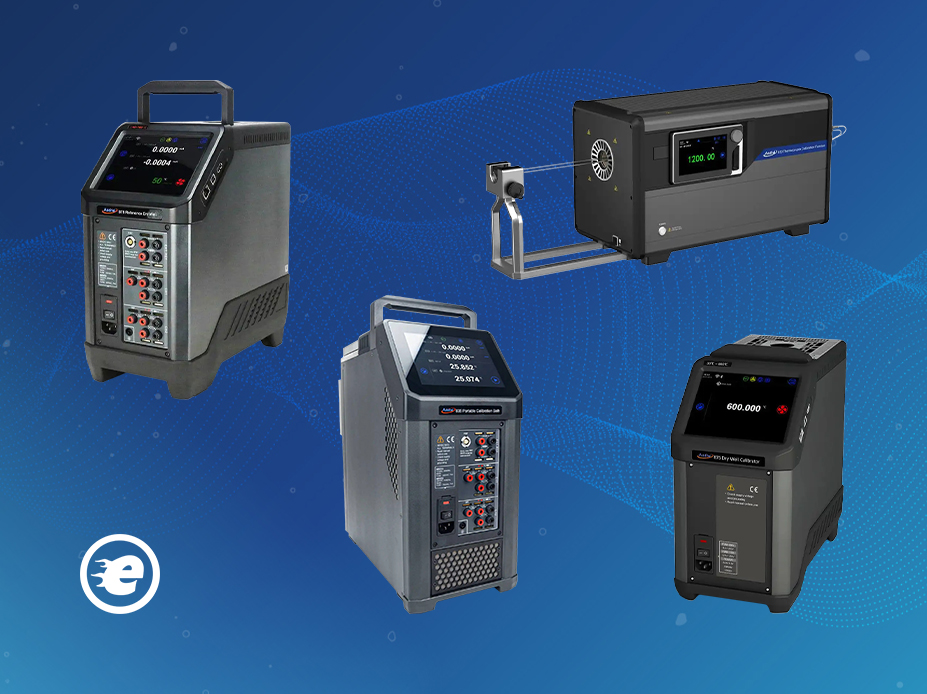 Additel dry-well temperature calibrators: the complete range for thermocouples and resistance thermometers
 Thermal imaging cameras and pyrometers for the plastics industry: applications, benefits, and solutions