Why non-contact temperature measurement was developed
Industrial pyrometers originated from the need to overcome the limitations of traditional instruments used for temperature measurement. For many years, production processes relied on contact probes or immersion sensors—effective tools, but with clear constraints: slower response times, deterioration over time, difficulties when measuring fast-moving surfaces, and the impossibility of operating in extreme environments or at very high temperatures.
With the evolution of industry—from metallurgy to chemical processing, from glass and ceramics to industrial automation—it became essential to measure temperature in a fast, safe and reliable way, without direct contact with the object or the process fluid. In many applications, physical contact is neither feasible nor safe, especially in the presence of incandescent materials, corrosive substances or continuously moving products.
From this need, optical temperature measurement technology was developed and later evolved into infrared detection, which forms the basis of modern non-contact measurement systems. The principle is simple: every object emits radiation proportional to its temperature; by detecting this radiation through dedicated sensors, it is possible to obtain immediate and accurate temperature readings.
The introduction of optical systems marked a turning point in thermal control for industrial processes, making it possible to overcome the limits of traditional probes while ensuring greater accuracy, faster response times and improved operational safety. It is within this context that industrial pyrometers have become indispensable tools for quality, efficiency and production continuity.
Non-contact temperature measurement: how it really works
Non-contact temperature measurement, which today forms the basis of modern industrial pyrometers, relies on a fundamental physical principle: every object emits electromagnetic radiation proportional to its temperature. This radiation, which falls within the infrared spectrum, can be detected and converted into a temperature value through highly sensitive sensors.
At the core of this technology are IR sensors, devices that capture the amount of energy emitted by a surface and translate it into a numerical temperature reading. Compared to older technologies, modern sensors offer greater stability, higher resolution and extremely fast response times, allowing pyrometers to operate effectively on moving objects, very hot materials or surfaces that are difficult to access.
A key factor in optical temperature measurement is emissivity, which refers to a material’s ability to emit infrared radiation. Each surface—such as metals, ceramics, plastics or glass—has a different emissivity, and this directly affects measurement accuracy. Industrial pyrometers allow emissivity to be adjusted according to the material being measured, ensuring reliable results even under particularly challenging conditions.
Over the years, the technology has evolved thanks to more precise IR sensors, higher-performance optics and advanced compensation algorithms. Today, non-contact temperature measurement has become a benchmark across many industrial sectors, offering an ideal balance of speed, safety and accuracy.
Industrial pyrometers: what they are and when they are indispensable
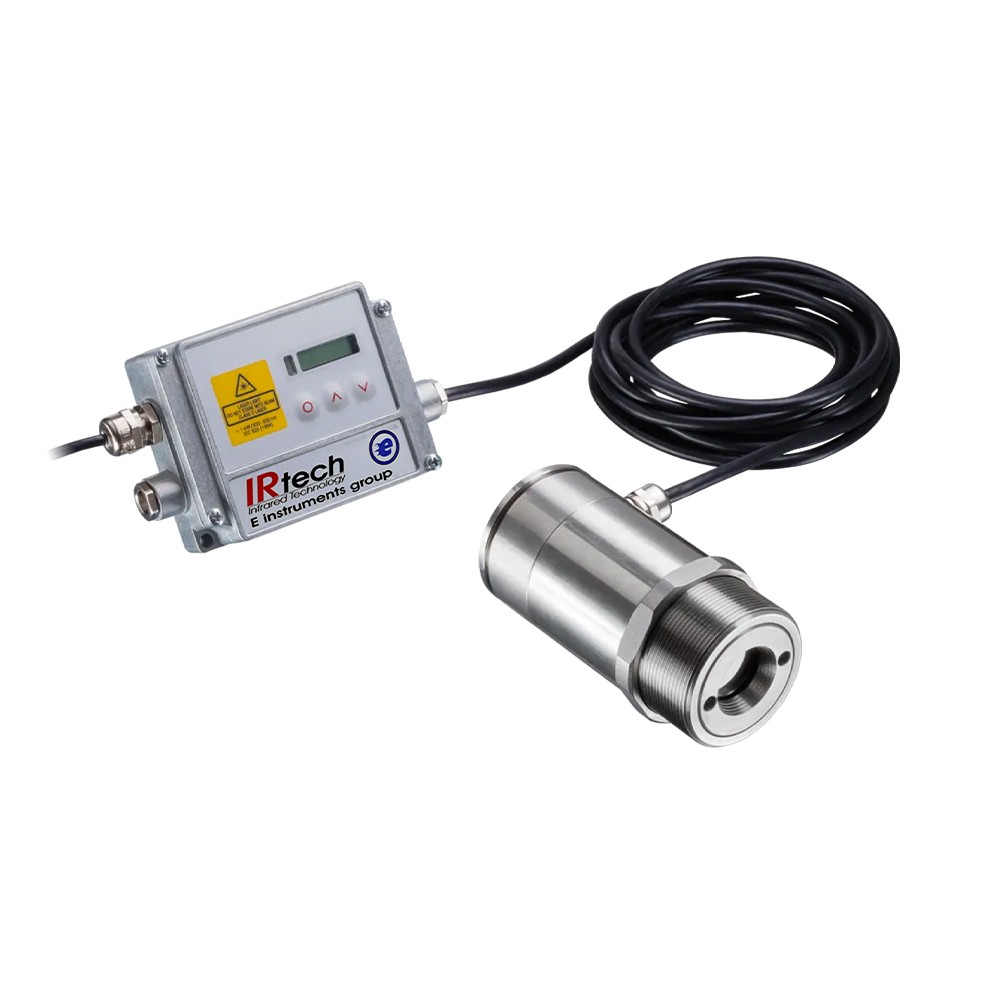
Industrial pyrometers are instruments designed to measure the temperature of surfaces, materials or processes without any physical contact, by detecting the infrared radiation emitted by objects. Unlike probes, thermocouples or immersion instruments, which require direct contact with the material, pyrometers operate at a distance, ensuring safety, speed and accuracy even under complex operating conditions.
These instruments become indispensable when temperature measurement with traditional contact sensors is difficult or impossible, such as in the presence of:
- high-temperature surfaces, including glowing metals or molten glass;
- fast-moving materials, such as conveyor belts or production lines;
- corrosive, abrasive or hazardous substances;
- processes where physical contact could alter the true temperature value or damage the sensor.
From an operational perspective, industrial pyrometers provide instant response times, high repeatability and improved operator safety. For these reasons, they are widely used in sectors such as metallurgy, ceramics, chemical processing, industrial automation, plastics manufacturing, metalworking and in-line process control.
The combination of fast measurement and reliable performance makes pyrometers essential tools for quality control, predictive maintenance and precise regulation of thermal processes.
Available technologies: IR, optical and laser systems
In today’s industrial landscape, several types of pyrometers are available, each designed to meet specific application requirements. The main technologies include:
Infrared (IR) pyrometers
- They are the most widely used and rely on IR sensors to detect thermal radiation;
- They offer an excellent balance between speed, accuracy and cost;
- They are ideal for the majority of industrial processes.
Optical pyrometers
- They operate on a visual principle based on brightness comparison;
- They are used in very high-temperature applications and in contexts where optical precision is a priority.
Laser pyrometers
- They do not measure the laser itself, but use it as a targeting aid to accurately identify the measurement spot;
- They are ideal for temperature measurements on very small or distant targets.
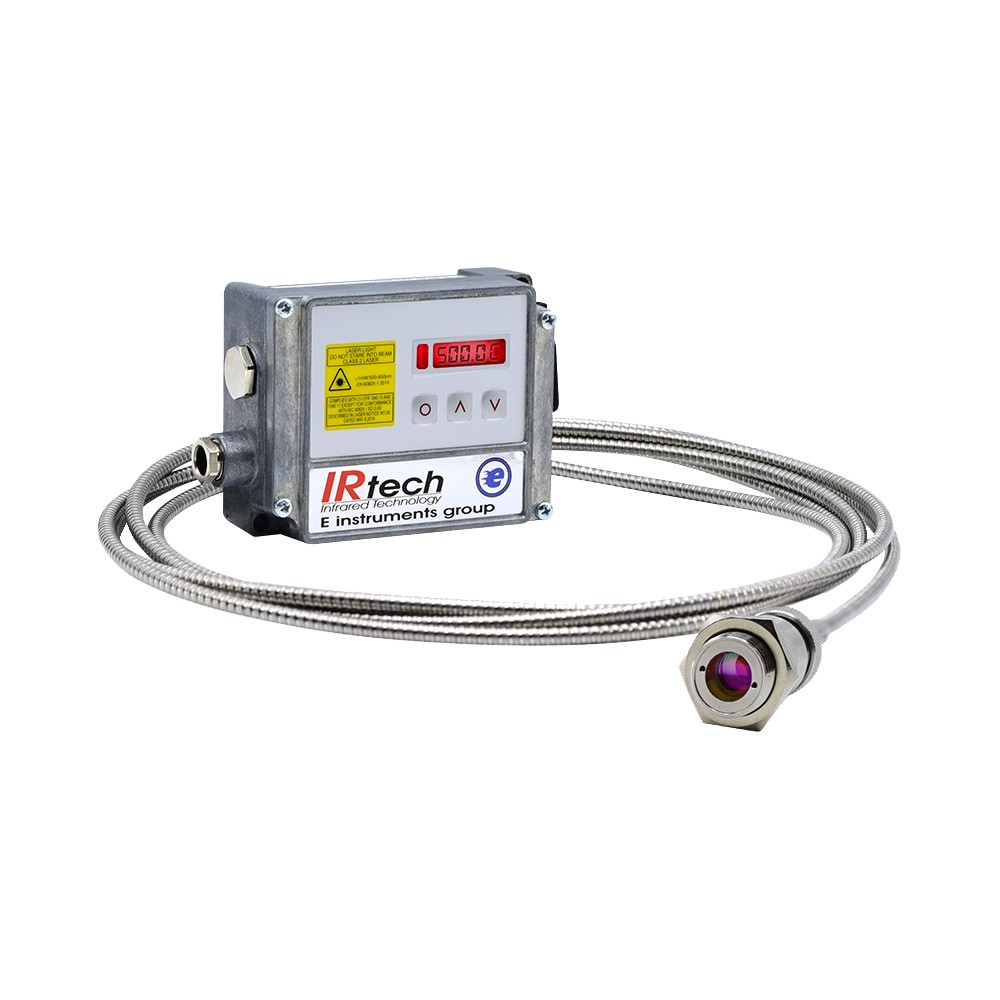
Fiber optic pyrometers
- Instruments designed for extreme environments, with very high temperatures or strong electromagnetic interference;
- The use of fiber optics protects the electronics while maintaining high measurement accuracy.
High-resolution systems
- Typically used in advanced industrial applications;
- They enable highly accurate measurements even on complex surfaces with variable emissivity.
Main application sectors of industrial pyrometers
Thanks to their ability to measure temperature without contact, industrial pyrometers are widely used across many manufacturing sectors, especially where operating conditions make traditional contact probes unreliable or impractical. Fast response times, high accuracy and operational safety make them essential tools for numerous thermal processes.
Metallurgy and metal processing
In melting furnaces, heat treatment processes, continuous casting and rolling mills, pyrometers are used to control extremely high temperatures, monitor material quality and optimize production cycles.
Plastics industry
They are widely applied in the monitoring of molds, extruders, thermoforming systems and rapid heating processes, ensuring temperature uniformity and reducing production scrap.
Glass and ceramics
Non-contact temperature measurement enables reliable monitoring of glowing surfaces, continuously moving materials and high-temperature furnaces, delivering excellent stability and repeatability.
Industrial automation and process machinery
In automated systems, infrared pyrometers and IR sensors are often integrated for continuous temperature control in high-throughput production lines, where speed and data consistency are critical.
Industrial furnaces and heat treatment processes
Pyrometers are essential for verifying thermal uniformity, calibrating heating cycles, monitoring critical process phases and ensuring compliance with technical specifications.
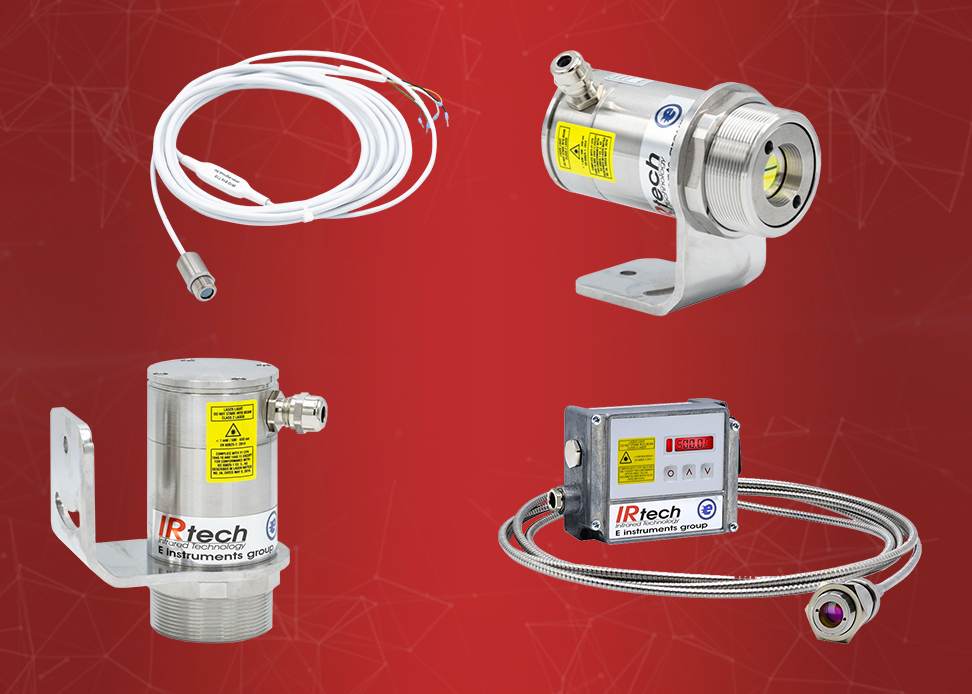
The IRtech range: pyrometers for every application
E Instruments offers a complete selection of industrial pyrometers, designed to meet different requirements in terms of performance, operating conditions and process integration.
From standard applications to the most extreme environments, each model is engineered to ensure reliability, measurement continuity and long-term accuracy.
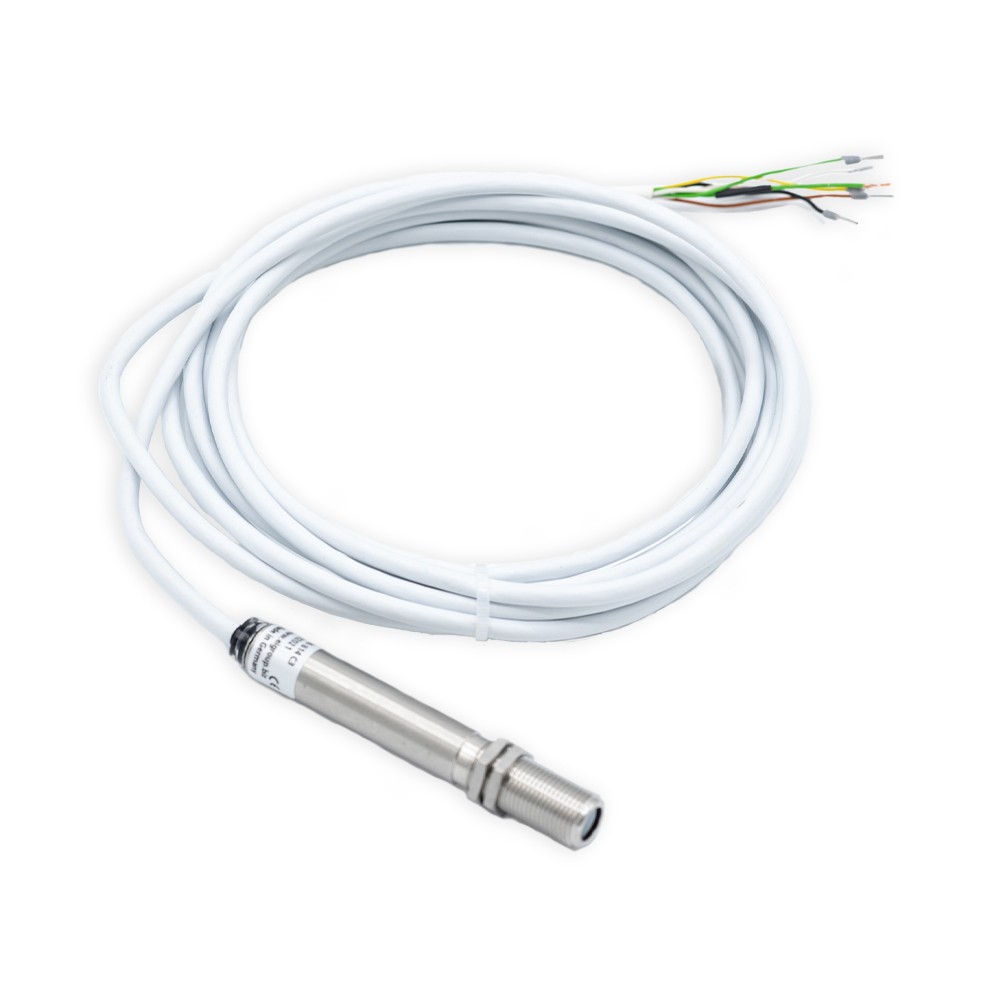
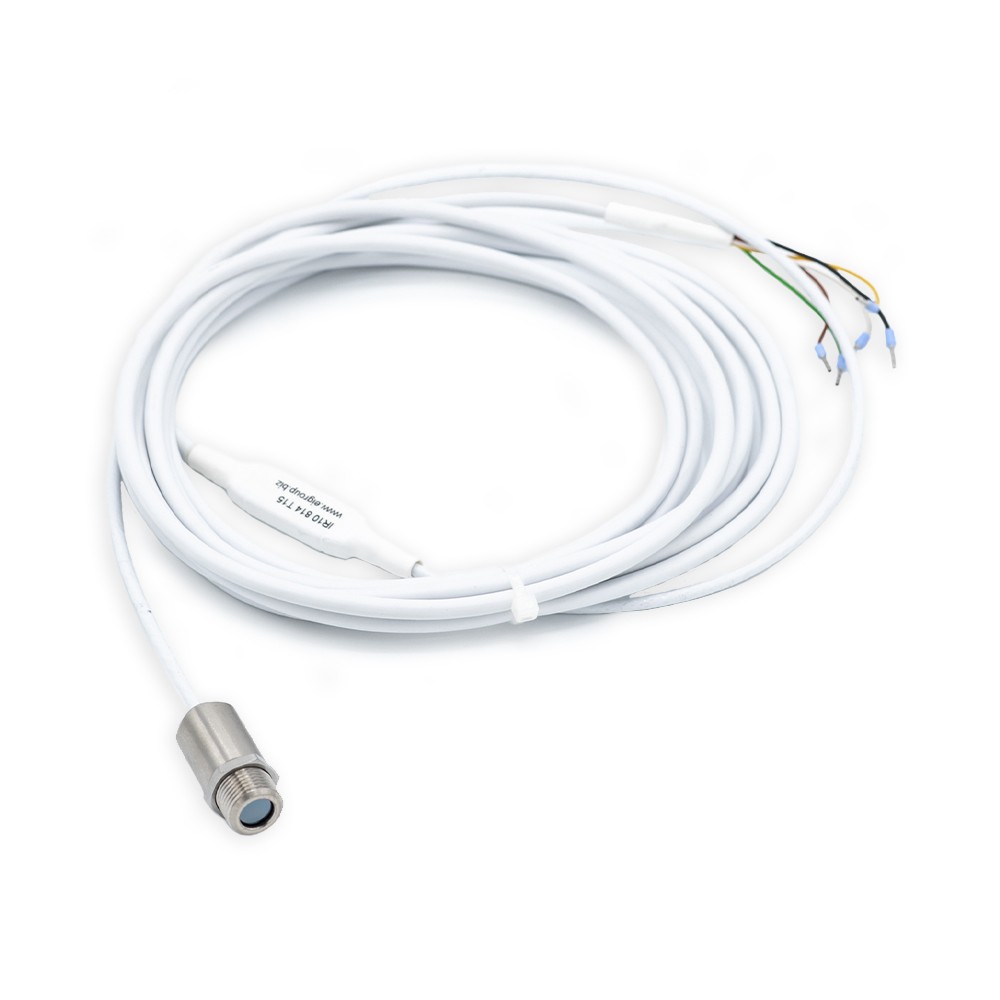
IR6 and IR10 — Compact, cost-effective, with analog output
The IR6 and IR10 industrial pyrometers are the ideal solution for machine builders and system integrators who require compact, fast and reliable sensors.
- Cost-effective solution, ideal for multiple integrations on automated lines,
- Stable analog output, compatible with most traditional PLC systems;
- Rugged design, suitable for continuous operation in industrial environments.
IR6
- Temperature range: -20°C to 1000°C;
- Compact dimensions (M12 × 87 mm);
- 0–5 V output.
IR10
- Temperature range up to 1600°C;
- Compact sensor head (M12 × 28 mm);
- 4–20 mA analog output.
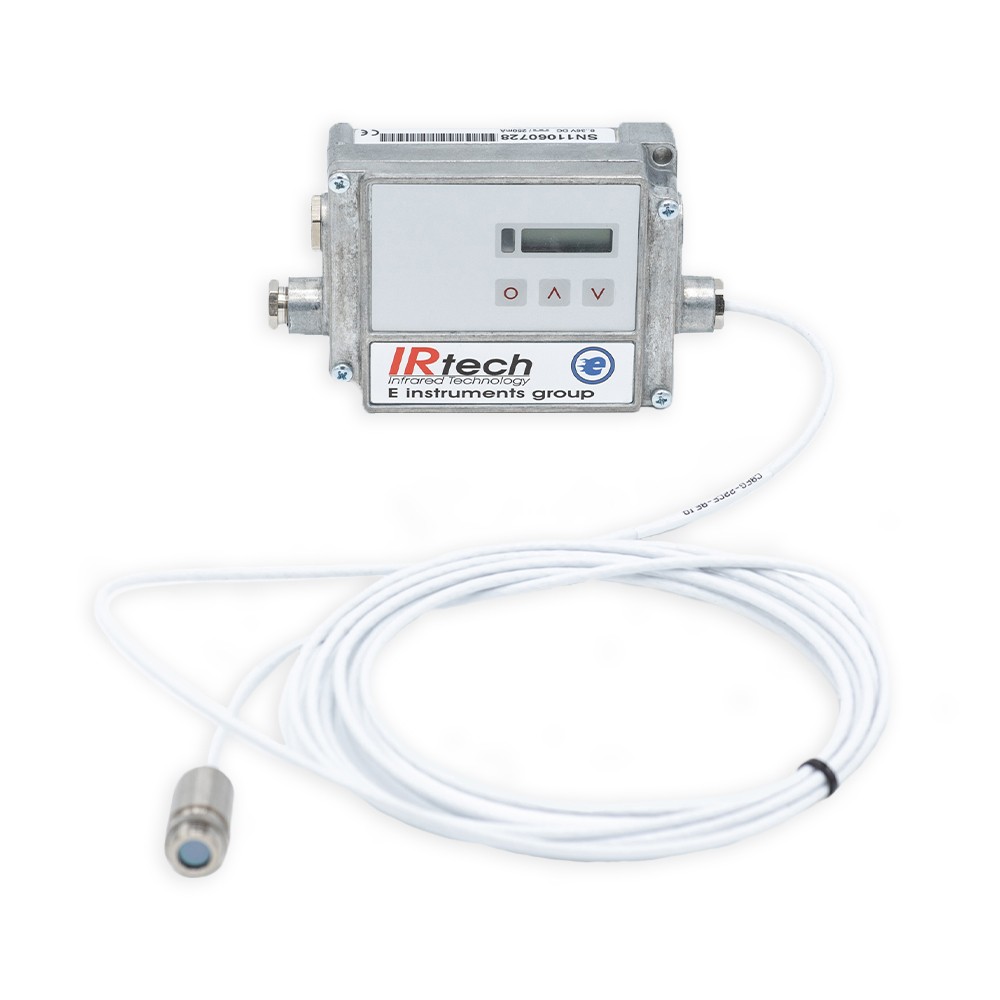
IR14 — Display, keypad and digital communication
The IR14 industrial pyrometer introduces a higher level of integration into control systems thanks to advanced digital communication protocols: Modbus, Fieldbus and TCP/IP Ethernet.
These features make it ideal for industrial automation, intelligent supervision and remote control applications.
- Temperature range up to 2200°C;
- Quick configuration via integrated display and programming keypad;
- Excellent stability even in dynamic process conditions;
- Ideal for systems requiring continuous communication and high accuracy.
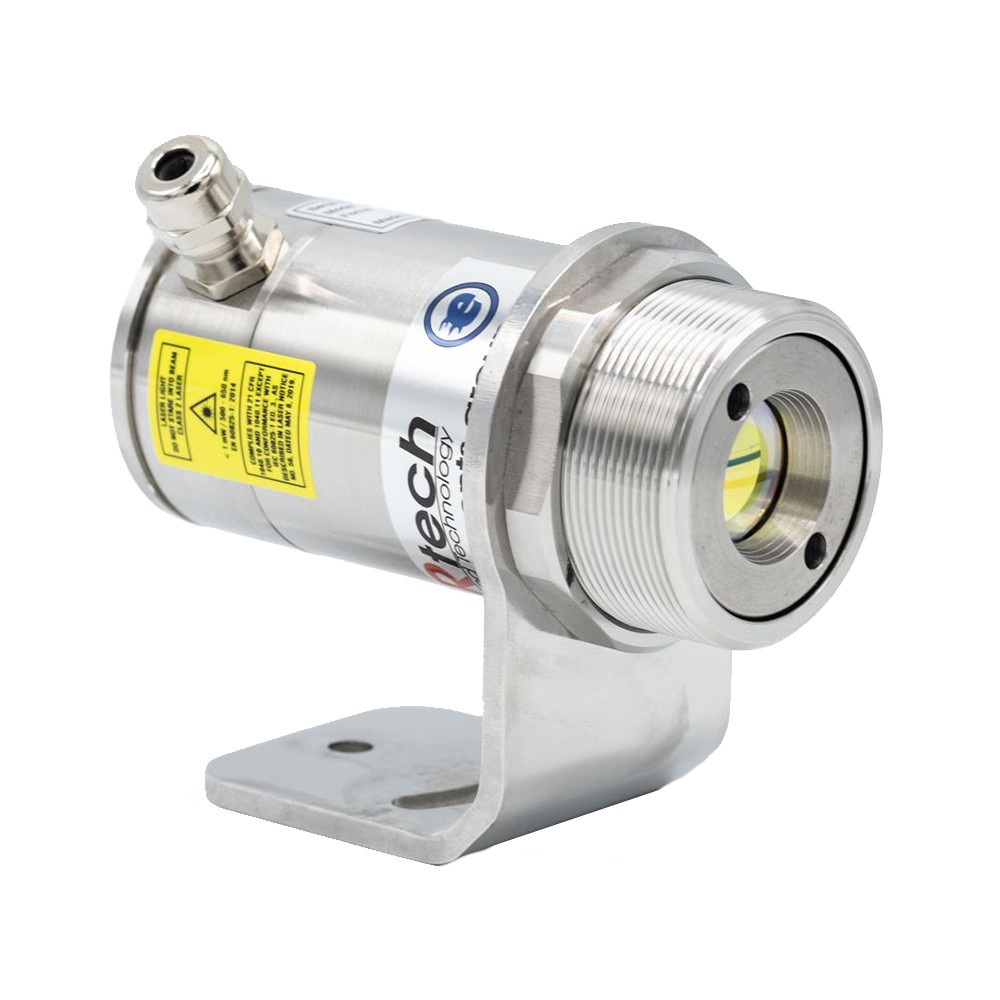
IR40 — High-resolution pyrometer configurable with multiple IR sensors
The IR40 industrial pyrometer is a high-precision instrument designed to adapt to a wide range of processes thanks to interchangeable IR sensors, selectable according to material type and temperature range.
- Temperature range up to 1600°C;
- High optical resolution for accurate measurements on small targets;
- Suitable for complex thermal processes in metallurgy, glass, ceramics and plastics;
- Maximum versatility and configurability.
A single platform for numerous industrial applications.
IR20 — High performance with integrated display
The IR20 industrial pyrometer provides immediate supervision of temperature measurements through its integrated display, enabling direct in-line monitoring.
- Temperature range up to 2200°C;
- High accuracy and fast response time;
- Quick setup via display and programming keypad;
- Ideal for systems requiring local temperature monitoring.
An advanced solution for applications demanding continuous and reliable control.
IR100 — Two-color fiber optic pyrometer for high temperatures
The IR100 industrial pyrometer is designed for the most demanding applications, where ambient temperatures (up to 315°C) make traditional sensors unsuitable.
- Temperature range up to 3000°C;
- Two-color fiber optic technology, ideal for environments with intense radiation, very confined spaces or heavy dust deposits;
- Designed for steel mills, foundries, industrial furnaces and heavy industry;
- Operates with up to 90% optical attenuation, thanks to two-color technology;
- Maximum durability, fast response time and long-term reliability
A robust and high-performance solution for the most challenging industrial processes.
Advantages of industrial pyrometers for companies
The use of industrial pyrometers in production processes provides tangible benefits in terms of performance, safety and operational continuity. Non-contact temperature measurement makes it possible to quickly monitor moving components, hard-to-reach surfaces or extremely hot materials, ensuring constant and reliable control.
The main operational advantages include:
- Improved process efficiency: immediate response allows rapid adjustments, reducing scrap and optimizing energy consumption.
- Increased safety: the absence of physical contact eliminates risks for operators and sensors, especially in high-temperature environments or where moving parts are present.
- Fast measurement speed: temperature detection occurs within milliseconds, making it ideal for automated lines and dynamic controls.
- Reduced maintenance costs: no physical probe wear and less need to stop the process.
- More accurate quality control: thanks to measurement stability and the ability to continuously monitor temperature at critical points.
These benefits make non-contact temperature measurement technology a strategic choice for companies focused on productivity, reliability and long-term competitiveness.
The added value of E Instruments
In addition to supplying carefully selected, high-performance industrial pyrometers, E Instruments provides comprehensive support covering every stage of the instrument’s lifecycle. This approach translates into greater operational safety, service continuity and a long-term, reliable investment.
Key strengths include:
- Dedicated technical support, based on expertise and experience gained over more than thirty years of activity.
- Calibration services performed to ensure maximum measurement reliability.
- Fast repair service, essential for minimizing downtime and keeping production systems fully operational.
- Tailored technical consultancy to identify the most suitable model based on the application, temperature range and operating environment.
This comprehensive approach enables companies to operate with consistently high-performance instruments while relying on a competent and reliable technical partner.
Why non-contact temperature measurement is the most modern choice
Non-contact temperature measurement is now one of the cornerstones of modern industrial automation. Industrial pyrometers offer speed, reliability and accuracy, allowing materials and processes to be monitored that cannot be controlled using traditional contact-based instruments.
This technology ensures:
- Increased safety for both operators and equipment;
- Reduced maintenance and production costs;
- Consistent quality, thanks to continuous temperature monitoring;
- High adaptability across a wide range of industries and applications.
Ongoing advancements in IR sensors, optical systems and digital interfaces are making these instruments increasingly powerful, intelligent and easily integrated into modern automation systems.
Choosing E Instruments means relying on a partner that combines advanced technology, direct technical support and in-depth knowledge of industrial applications.
An added value that transforms non-contact temperature measurement into a strategic asset for competitiveness and long-term growth.