


Acoustic Cameras
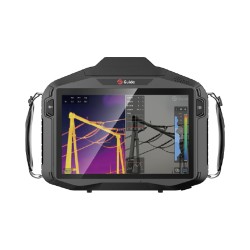
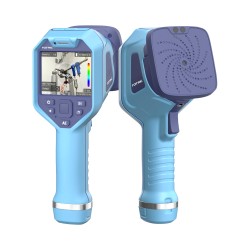
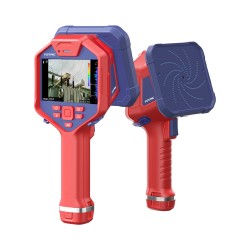
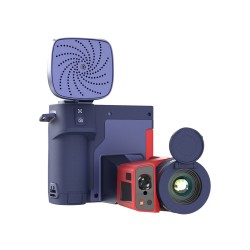
Our Acoustic Cameras were developed to capture the turbulent air flow of gases created by leaks. Compatible with numerous types of gas and compressed air, these tools represent the latest frontier in maintenance defined by Fotric. Thanks to their compact dimensions and high performance, they represent the definitive solution for leak detection.


Technical FAQ:
Acoustic Cameras
What is an acoustic leak detection?
It is an advanced measuring instrument that combines an array of MEMS microphones (typically from 30 to 128 microphones) and an optical camera, capable of spatially locating noise or ultrasound sources by overlaying them on the video image, generating an "acoustic map" in real time.
What is an acoustic camera used for?
It is used to quickly and visually identify gas or compressed air leaks, partial discharges (PD) on MV/HV electrical panels, anomalous noises on machinery, noise sources in industrial environments for acoustic analysis, cleaning or obstruction problems on valves and pneumatic systems, drastically reducing diagnostic times.
In which sectors is an acoustic camera used?
It is used in manufacturing industry (compressed air system verification), oil & gas (remote gas leak detection), energy and electrical (diagnosis of MV/HV panels and overhead lines), automotive, aerospace, acoustic research, quality control (leak verification), HVAC and in all predictive maintenance contexts.
How does an acoustic camera work?
The microphone array simultaneously acquires sound from each microphone; a processor applies beamforming algorithms that, exploiting the propagation delays between the microphones, calculate the spatial direction of the sound source. The result is an acoustic intensity map overlaid on the optical image, displayed in real time on the screen.
How many microphones does an acoustic camera have?
Compact models have 30-64 MEMS microphones, professional models up to 128 or more. More microphones mean greater spatial resolution, better signal-to-noise ratio, ability to work at greater distances and to detect weaker sources.
Can acoustic cameras detect gas or compressed air leaks?
Yes, it is one of the most widespread applications: gas or compressed air leaks generate ultrasound (typically 20-100 kHz), which the acoustic camera detects and locates visually. It allows even small leaks to be identified in minutes in large installations, with very rapid ROI thanks to energy savings (compressed air leaks generate waste of up to 30%).
Can acoustic cameras diagnose electrical partial discharges (PD)?
Yes, partial discharges (PD) in MV/HV cables, insulators and transformers generate characteristic ultrasound. The acoustic camera locates them visually from a safe distance (5-50 meters), allowing the identification of incipient failures without the need to take the installation out of service, fundamental for predictive maintenance of electrical substations.
What is the difference between acoustic camera and sound level meter?
The sound level meter measures the overall sound level at a point, with a single precision microphone (class 1 or 2 according to IEC 61672). The acoustic camera does not replace the sound level meter for level measurements, but visually identifies the source of the noise, perfectly complementing integrated acoustic diagnostics.
Which frequency ranges do acoustic cameras cover?
Most models cover extended ranges: from audible (20 Hz - 20 kHz, for process noise) to ultrasonic (up to 100 kHz, for gas leaks and electrical PD). The displayed frequency range is selectable via software to optimize the identification of the target phenomenon.
How is the saving in compressed air leaks quantified?
The acoustic camera automatically calculates the estimated leak flow rate and the related annual cost in € based on plant operating hours and energy cost. An average manufacturing company typically loses 20-40% of compressed air: inspection with acoustic camera once a year allows savings of thousands of euros, with ROI generally <1 year.
Do acoustic cameras have recording and reporting functions?
Yes, they record photos and videos with the acoustic map overlaid, save metadata (sound level, dominant frequency, estimated distance, leak flow rate, annual cost) and automatically generate structured PDF reports, exportable to dedicated software or cloud platforms for the management of maintenance activities.
Can acoustic cameras be used by non-specialized personnel?
Yes, the interface of modern acoustic cameras is designed to be intuitive: the operator points the instrument and immediately sees "where" the noise source is on the image. A basic training of a few hours is sufficient for the most widespread applications (compressed air, gas leaks, industrial noise), reducing dependence on external specialists.