


Fixed optical pyrometers
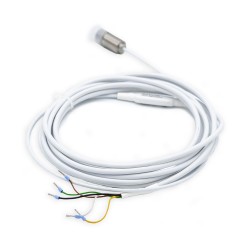
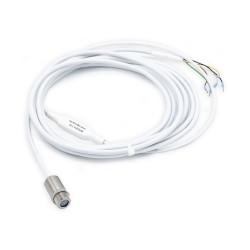
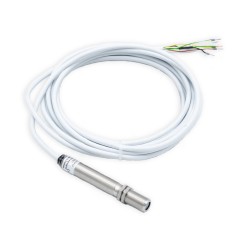
Fixed optical pyrometers are perfect for precise and uninterrupted thermal monitoring in industrial environments. These fixed and reliable instruments are ideal for temperature control in continuous production processes, offering unmatched precision and stability. Each model is designed to withstand the most demanding conditions, ensuring accurate readings even in the most complex situations. They are the ideal solution for companies that require constant, precise thermal measurements and easy integration into their control systems.
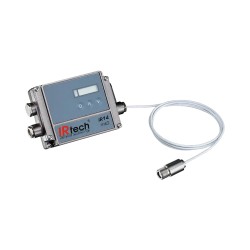



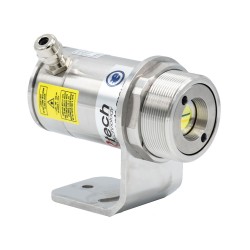
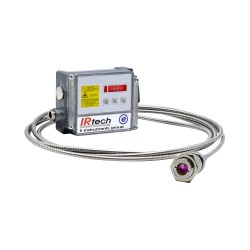
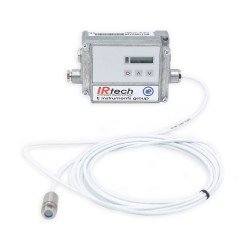
Technical FAQ:
Fixed optical pyrometers
What is a fixed optical pyrometer?
It is an infrared pyrometer with an advanced optical system designed for permanent installation on industrial plants. It combines the precision of the optical system (visual viewfinder, interchangeable optics, two-color technology or fiber optics) with the mechanical robustness and industrial connectivity typical of fixed pyrometers.
What is a fixed optical pyrometer used for?
It is used for continuous temperature monitoring in industrial processes requiring maximum aiming precision on specific objects (metal ingots, glass in processing, rolling wire, furnace parts), with stable measurements transmitted over time to process automation systems.
In which sectors are fixed optical pyrometers used?
They are used in metallurgy (rolling mills, foundries, rolling trains, quench furnaces), glass industry (melting furnaces, forming), ceramics, cement, semiconductors (epitaxy, deposition), automated welding, and all high-temperature processes requiring continuous temperature control with high accuracy.
What is the difference between a fixed optical pyrometer and a fixed laser pyrometer?
The fixed laser pyrometer has a laser pointer for initial alignment but standard optics. The fixed optical pyrometer integrates a visual viewfinder optical system, interchangeable lenses, two-color technology, or fiber optics for high-precision applications, long distances, or harsh environments.
What does two-color monitoring mean in a fixed optical pyrometer?
It means the instrument measures infrared radiation at two wavelengths simultaneously and calculates the ratio: this eliminates or reduces errors due to target emissivity variations, presence of dust/smoke in the optical path, or partial coverage of the object. It is fundamental in metallurgy, where the emissivity of metals varies with temperature and oxidation.
What applications require fiber optics?
Fiber optics are indispensable when the electronic sensor cannot be installed near the target due to: high ambient temperatures (>250 °C), intense vibrations (rolling mills), strong electromagnetic fields (induction furnaces, plasma), inaccessible spaces, ATEX environments. It allows positioning the optics near the target and the electronics in a safe area up to tens of meters away.
What industrial outputs do fixed optical pyrometers offer?
Typically isolated 4–20 mA (2–3 wire), 0–10 V, relay contacts for threshold alarms, RS485 Modbus, Profibus DP/PA, Ethernet/IP, Modbus TCP, PROFINET, HART on premium models. Analog and digital outputs are often available simultaneously for redundancy.
What temperature ranges do fixed optical pyrometers cover?
The range covers from 50 °C for LWIR models for cold surfaces up to over 3500 °C in NIR/MWIR models for molten metals, plasma arcs, and space processes. Selection of range and wavelength is critical for accuracy and depends on material and process conditions.
How is a fixed optical pyrometer aligned?
Alignment is performed via the integrated optical viewfinder (eyepiece with reticle showing the exact measurement area), optionally combined with a laser pointer. The adjustable mounting bracket allows fine adjustments on three axes. For critical applications, manufacturer software is used for live optical image visualization.
Are accessories needed for harsh environments?
Yes: air purge (compressed air for continuous optical cleaning from dust and smoke), water cooling jacket for very hot environments, sapphire/ZnSe protection windows (high mechanical and thermal resistance), safety filters for laser applications, radiation shields for furnaces. All must maintain transparency at the working wavelength of the pyrometer.
What certifications do fixed optical pyrometers have?
CE marking, IP65/67 for mechanical protection, ATEX/IECEx Ex d / Ex e for explosive atmospheres, SIL 2 according to IEC 61508 for functional safety applications, EMC for immunity to electromagnetic interference typical of industrial environments.
How often does a fixed optical pyrometer need calibration?
The recommended periodicity is annual for critical applications and biennial for general use, by comparison with a reference blackbody source with metrological traceability in an ISO/IEC 17025 accredited laboratory. For metallurgy or semiconductor applications, calibration may be semi-annual.