


Multifunction Calibrators
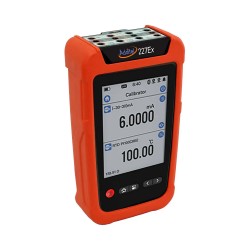
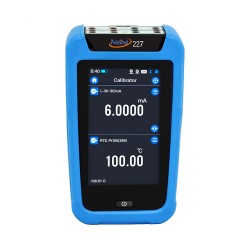
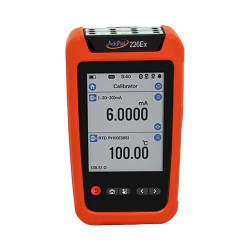
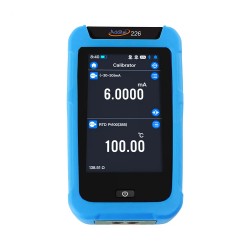
Our range of Multifunction Calibrators is designed to offer precision and versatility in a variety of industrial applications. These advanced calibrators are ideal for calibrating a wide range of devices, ensuring accurate and reliable measurements. Easy to use and robust, our calibrators are perfect for laboratories, production plants, and field applications. With advanced features and intuitive design, Multifunction Calibrators are the optimal choice for professionals seeking efficiency, reliability, and precision.
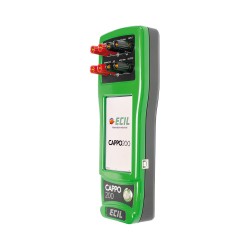

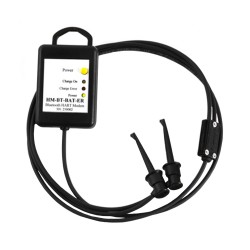

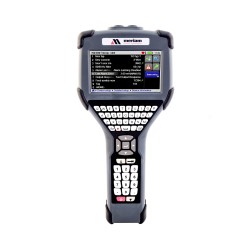

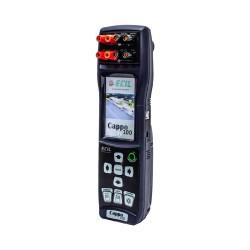

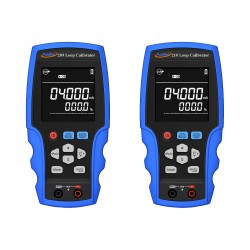
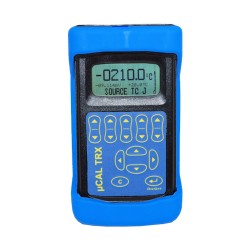
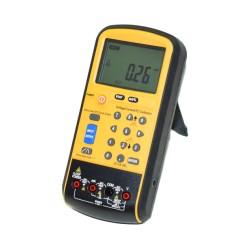
Technical FAQ:
Multifunction Calibrators
What is a multi-function calibrator?
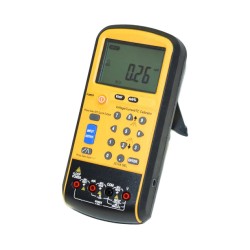
A multi-function calibrator is an instrument designed to measure, simulate and generate various signals used in industrial processes. It can manage quantities such as voltage, current, resistance, frequency, thermocouples, thermoresistances and, in some cases, even pressure via external sensors. It is a versatile solution for technicians, laboratories and maintenance workers who need to verify multiple instruments with a single device.
What signals can a multifunction calibrator measure or simulate?
A multifunction calibrator can measure and simulate electrical signals such as mA, mV, V, Ohm, and Hz. Depending on the model, it can also generate or measure signals from thermocouples, resistance thermometers, transmitters, current loops, and process devices. In the more advanced models there may be datalogging functions, 24 V power supply and HART communication.
What is the difference between a standard and advanced multifunction calibrator?
A standard multifunction calibrator is intended for the most common measurement and simulation tasks, such as electrical signals, thermocouples, and resistance thermometers. An advanced model offers more extensive functions, such as data loggers, 24 V power supply for transmitters, management of external pressure sensors and advanced functions for more complex applications. The choice depends on the type of instruments to be calibrated and the level of automation required.
What are HART calibrators used for?
HART programmers are multifunctional tools designed to communicate with field devices equipped with the HART protocol, such as pressure, temperature, level or flow transmitters. They allow you to read parameters, configure instruments, verify the 4-20 mA analog signal and carry out diagnostic and calibration operations. They are particularly useful in automated industrial processes.
Can a multi-function calibrator power a transmitter?
Yes, many advanced multi-function calibrators integrate a 24V power supply to power transmitters during testing and calibration activities. This function is very useful in the field because it allows you to test the device even when it is not connected to the system power supply, simplifying checks, maintenance and functional checks.
What does it mean to calibrate a 4-20 mA loop?
Calibrating a 4-20 mA loop means verifying that the analog signal generated or measured by a transmitter is consistent with the real value of the physical quantity measured. The multifunction calibrator can simulate the signal, measure the loop current, power the transmitter and check for any deviations from expected values. It is a fundamental procedure in industrial control systems.
Can multifunction calibrators be used for thermocouples and resistance thermometers?
Yes. Many multifunction calibrators are designed to measure and simulate thermocouple and resistance thermometer signals, allowing the verification of temperature sensors, transmitters and control systems. This function is useful both in the laboratory and in the field, especially when it is necessary to verify the measurement chain without using a physical temperature source.
What is the difference between simulating and measuring a signal?
Measuring a signal means reading the value generated by an instrument or sensor. Simulating a signal, on the other hand, means generating a controlled value to verify the response of a device or control system. A multifunction calibrator can do both operations, making it useful both for testing individual instruments and for verifying entire measurement chains.
When is the datalogger function useful in a multifunction calibrator?
The datalogger function allows you to record values over time, monitoring the trend of electrical signals, temperature or other process parameters. It is useful for prolonged checks, diagnosis of intermittent anomalies, tests on systems and documentation of calibration activities. In industrial contexts it allows you to analyze the behavior of the instrument even beyond the single instantaneous measurement.
Can one multifunction calibrator replace multiple instruments?
Yes, in many applications one multifunction calibrator can replace several separate instruments, such as multimeter, signal simulator, loop generator, calibration thermometer and HART communicator. This reduces the number of devices to transport, simplifies field operations and improves technician efficiency during maintenance, testing and calibration.
In which industries are multi-function calibrators used?
Multi-function calibrators are used in industrial automation, oil & gas, pharmaceutical, energy, chemical, HVAC, water treatment, manufacturing and calibration laboratories. They are indicated in all contexts where it is necessary to verify process instruments, transmitters, electrical signals, temperature sensors and devices connected to control systems.
How to choose the most suitable multifunction calibrator?
To choose the correct multifunction calibrator it is necessary to evaluate the signals to be measured or simulated, the need to power transmitters, the compatibility with thermocouples or RTDs, the presence of the HART protocol, the datalogger function, the required accuracy and the intended use in the field or in the laboratory. For complex applications, an advanced or HART model is preferable.