


Software
Discover our innovative range of software, designed to optimize your thermal measurements. Our software is intuitive yet packed with advanced features, suitable for both professionals and beginners. We provide solutions that enhance efficiency, precision, and ease of use in thermal applications. Whether it's detailed analysis or real-time monitoring, our software ensures reliable and accurate results. Trust E Instruments for cutting-edge software solutions that elevate your thermal measurement work to new levels of excellence.
Technical FAQ:
Software
What is thermal measurement software for?
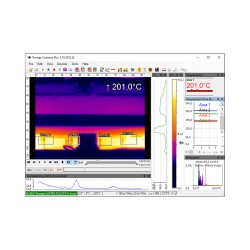
Thermal measurement software allows you to acquire, analyze, store and interpret data from instruments such as thermal imaging cameras, pyrometers and infrared monitoring systems. It is useful for transforming measurements taken in the field into structured technical information, documentable reports and analyzes useful for maintenance, quality control and process monitoring.
Which instruments can be managed via thermographic software?
Thermographic software can be used with portable thermal imagers, fixed thermal imagers, portable pyrometers, fixed pyrometers and infrared measurement systems. Compatibility depends on the instrument model and the type of data acquired, such as radiometric images, thermal videos, temperature point values or continuous process trends.
What is the difference between portable thermal imaging camera software and fixed thermal imaging camera software?
Portable thermal imaging camera software is designed primarily for post-inspection analysis, thermal image management, radiometric data processing and report creation. Software for fixed thermal cameras, on the other hand, is oriented towards continuous monitoring, management of alarm thresholds, process supervision and integration with industrial systems.
Does thermographic software allow you to create automatic reports?
Yes. Many thermal camera software allows you to generate technical reports from radiometric images, spot measurements, analysis areas, thermal profiles and annotations. This feature is particularly useful for predictive maintenance activities, quality control, electrical inspections, energy audits and technical documentation.
What are radiometric images and why are they important?
Radiometric images contain temperature information for each pixel of the thermal image. This allows you to analyze the image even after acquisition, modifying scales, measurement points, areas, thresholds and analysis parameters. Dedicated software allows you to exploit this data to obtain more precise and documentable assessments.
Is it possible to monitor temperatures and processes in real time via software?
Yes. Continuous thermal monitoring software allows you to view data from fixed thermal cameras or pyrometers installed on the system in real time. They can be configured to monitor temperature thresholds, generate alarms, record trends and support process control in critical industrial applications.
Can the software be integrated with industrial systems such as PLC or SCADA?
In many industrial applications, analysis and monitoring software can communicate with supervision systems, PLC, SCADA or control networks. The integration allows you to use thermal data as a process variable, activate alarms, record events and automate interventions in the event of thermal anomalies.
What advantages does software offer compared to just reading the instrument?
Direct reading on the instrument provides immediate data, but the software allows you to archive, compare, analyze and document the measurements in the time. This is essential when you need to build a history, compare subsequent inspections, identify anomalous trends or produce technical reports to share with maintenance, quality or safety.
Does pyrometer software allow recording of temperature trends?
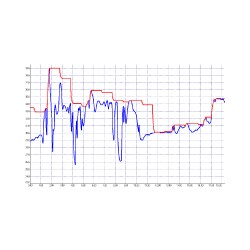
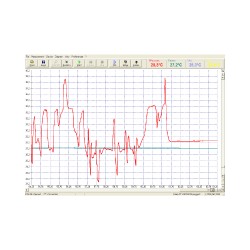
Yes. Software dedicated to pyrometers can record the temperature trend over time, view trends, configure thresholds and support the control of thermal processes. This feature is useful in applications such as industrial ovens, metalworking, glass, plastics, production lines and automated processes.
How to choose the most suitable software for your application?
To choose the correct software it is necessary to evaluate the type of instrument used, the data format, the need for reporting, the type of analysis required, the frequency of acquisition and any integration with industrial systems. For occasional inspections, post-processing analysis software may be sufficient; for systems and continuous monitoring, a solution oriented towards real-time supervision is preferable.
Does the software help in predictive maintenance?
Yes. The software allows you to compare measurements over time, identify anomalous variations and analyze thermal trends before they turn into faults. In combination with thermal cameras and pyrometers, they become fundamental tools for predictive maintenance programs and prevention of plant downtime.
Why is software important in safety and prevention applications?
In safety applications, software allows you to monitor critical areas, set alarm thresholds and record thermal events. This is useful, for example, in the control of electrical panels, batteries, piles of material, conveyor belts and processes subject to risk of overheating. The combination of thermal measurement and software analysis allows intervention before the anomaly develops into damage.