Why It Is Central Today for Laboratories and Industry
In recent years, measurement quality has become an increasingly strategic factor for both industry and metrology laboratories. In a context characterized by stricter controls, frequent audits and increasingly demanding technical requirements, ensuring reliable results is no longer simply a good practice—it is an operational necessity.
The ISO 17025 standard for instrument calibration is now the primary international reference for demonstrating the technical competence of laboratories and the validity of calibration activities. The standard defines precise criteria to ensure metrological traceability, control of measurement processes and management of measurement uncertainty, all essential elements for obtaining repeatable results that are recognized internationally.
In Italy, this process is closely linked to the activity of Accredia in calibration laboratories, the national accreditation body responsible for verifying that laboratories comply with the requirements established by the standard. Operating as an ISO 17025 accredited laboratory means demonstrating not only the correctness of procedures, but above all the technical capability to perform reliable and well-documented calibrations.
For industrial companies, relying on instruments verified according to these standards helps reduce the risk of non-conformities and improve the quality of production processes. For laboratories, the adoption of ISO 17025 certified calibrators represents a key element in maintaining high levels of accuracy and meeting the requirements demanded during audits and technical inspections.
The standard therefore becomes much more than a regulatory reference: it forms the foundation of a metrological culture focused on precision, traceability and confidence in measurement results.
What Is the ISO 17025 Standard and Who It Applies To
The ISO 17025 standard is the international benchmark that defines the general requirements for the competence of testing and calibration laboratories. Its main objective is to ensure that measurements are technically valid, traceable and internationally recognized, regardless of the industrial sector in which they are applied.
Unlike certifications primarily focused on company quality management, ISO 17025 specifically addresses the technical aspects of measurement. The standard establishes rigorous criteria related to personnel competence, equipment management, validation of test methods and, above all, the control of measurement uncertainty. This approach ensures that the results obtained by an ISO 17025 accredited laboratory are reliable and reproducible over time.
The standard applies to a wide range of operational environments. These include independent metrology laboratories, internal laboratories within manufacturing companies, research centers and facilities operating in regulated sectors such as pharmaceutical, aerospace, energy and automotive. In all these contexts, ISO 17025 serves as the reference framework for demonstrating the correctness of calibration activities and compliance with the technical requirements demanded by clients and regulatory bodies.
One of the defining concepts of the standard is metrological traceability: every measurement must be linked to recognized reference standards through a documented chain of calibrations. This requires the use of appropriate instrumentation and ISO 17025 certified calibrators, capable of ensuring levels of accuracy consistent with the specifications declared by the laboratory.
In summary, ISO 17025 does not simply define a procedure to follow; it establishes a comprehensive technical and organizational system that enables laboratories to demonstrate competence, reliability and consistency in measurement results—essential elements for operating in markets that are increasingly regulated and quality-driven.
Accredia: The Role of the Italian Accreditation Body in Calibration Laboratories
In Italy, the application of the ISO 17025 standard for instrument calibration is closely linked to the activities of Accredia, the national accreditation body designated by the State to verify the competence of testing and calibration laboratories. Its main task is to ensure that laboratories operate according to internationally recognized technical standards, guaranteeing the reliability of measurement results.
The accreditation process goes far beyond a simple documentation review and involves in-depth technical assessments. Accredia inspectors evaluate operating procedures, personnel competence, equipment management, calculation of measurement uncertainty, and metrological traceability. Only laboratories that demonstrate full compliance with these requirements can obtain and maintain the status of an ISO 17025 accredited laboratory.
The role of Accredia in calibration laboratories is therefore essential in building trust among clients, companies and regulatory bodies. A certificate issued by an accredited laboratory is recognized not only at the national level but also internationally, thanks to mutual recognition agreements between accreditation bodies in different countries.
For industrial companies, relying on an accredited laboratory means having access to verified and comparable metrological results, reducing the risk of disputes during quality audits or regulatory inspections. For laboratories themselves, accreditation represents an ongoing commitment: maintaining appropriate instrumentation, updated procedures and ISO 17025 certified instruments capable of ensuring performance consistent with declared accuracy levels.
In this context, Accredia does more than simply perform a supervisory role—it also promotes a culture of measurement quality, encouraging high standards of technical competence and ensuring that instrument calibration is carried out according to rigorous and shared criteria.
Measurement Uncertainty: The True Core of ISO 17025
Among all the aspects introduced by the standard, measurement uncertainty represents one of the most important—and often least understood—concepts within ISO 17025 for instrument calibration. It is not enough for an instrument to provide a numerical value; it is essential to understand how reliable that value is and what margin of variation may be associated with the measurement.
Measurement uncertainty expresses exactly this: the degree of doubt associated with the obtained result. Every measurement, even when performed with high-precision instruments, is influenced by multiple factors, including environmental conditions, instrument stability, calibration methods and operational competence.
The ISO 17025 standard requires that these factors be systematically identified, evaluated and documented.
For an ISO 17025 accredited laboratory, managing uncertainty is not a theoretical exercise but a daily operational requirement. The laboratory must demonstrate a clear understanding of the entire metrological traceability chain linking the instrument used to internationally recognized reference standards, ensuring both traceability and consistency of measurement results over time.
Within this process, the quality of the instrumentation used plays a crucial role. The use of ISO 17025 certified calibrators, characterized by high accuracy and stability, helps reduce overall measurement uncertainty and maintain results within the limits required by technical standards and Accredia audits. Reliable reference instruments minimize operational variables and improve the repeatability of calibration procedures.
Understanding and properly managing measurement uncertainty therefore means moving from a simple instrument check to a scientific evaluation of measurement quality. This approach is what distinguishes standard calibration activities from calibrations performed in compliance with ISO 17025 requirements, transforming a measurement into a technically defensible result recognized at an international level.
ISO 17025 in Critical Sectors: Pharmaceutical and Aerospace
The importance of the ISO 17025 standard for instrument calibration becomes even more evident in highly regulated industrial sectors, where the reliability of measurements is not only a technical requirement but also a fundamental condition for regulatory compliance and process safety.
Pharmaceutical Sector
In the pharmaceutical industry, every process parameter—temperature, pressure, electrical signals, or environmental conditions—must be controlled with extreme precision. Even minimal errors can compromise the quality of the final product or invalidate entire production batches.
For this reason, companies rely on ISO 17025 accredited laboratories, capable of ensuring traceable calibrations and metrological documentation compliant with GMP (Good Manufacturing Practice) requirements. Accreditation provides objective assurance that the instruments used in production processes are verified according to internationally recognized standards.
Aerospace Sector and AMS2750 Standard
An even more demanding context is the aerospace industry, where temperature control in heat treatment processes is regulated by the AMS2750 standard. This specification defines extremely strict criteria for the measurement, calibration and control of instruments used in industrial furnaces and critical thermal processes.
In this scenario, instrument calibration must be carried out exclusively through controlled and traceable procedures, often supported by high-accuracy ISO 17025 certified calibrators.
Measurement uncertainty becomes a key parameter, as it directly determines the validity of process certifications.
Why Accreditation Is Essential
In both sectors, working with an Accredia-accredited laboratory for calibration activities allows organizations to objectively demonstrate:
- metrological traceability of measurements;
- the laboratory’s technical competence;
- compliance with international standards;
- repeatability and reliability of results over time.
ISO 17025 is therefore not just a laboratory standard—it is a key element for ensuring quality, safety and compliance across the entire industrial supply chain, particularly in environments where measurement plays a central role in product certification.
Instrumentation and Calibration: The Role of ISO 17025 Certified Calibrators
To comply with the requirements of the ISO 17025 standard for instrument calibration, relying solely on correct procedures is not sufficient. It is essential to use instrumentation designed to ensure accuracy, stability and long-term metrological traceability.
In calibration processes, the quality of the instrument used directly affects measurement uncertainty and the validity of the results obtained. For this reason, ISO 17025 accredited laboratories and the most critical industrial applications rely on high-performance calibrators designed to operate according to rigorous metrological standards.
Temperature Calibration
In temperature control—a key parameter in sectors such as pharmaceutical and aerospace—thermal stability and uniformity are fundamental.
Instruments such as:
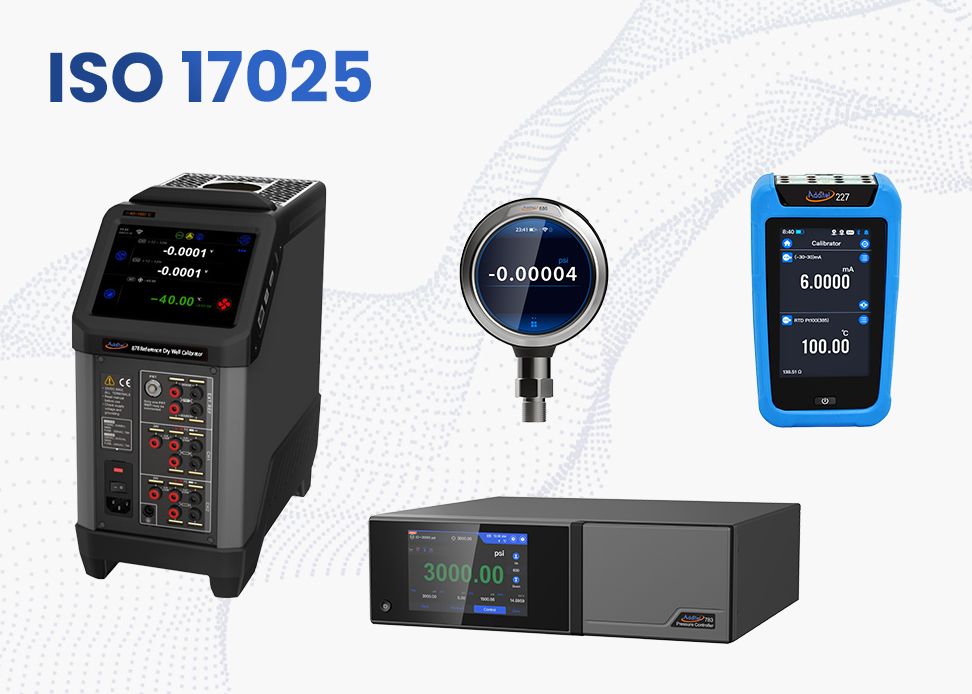
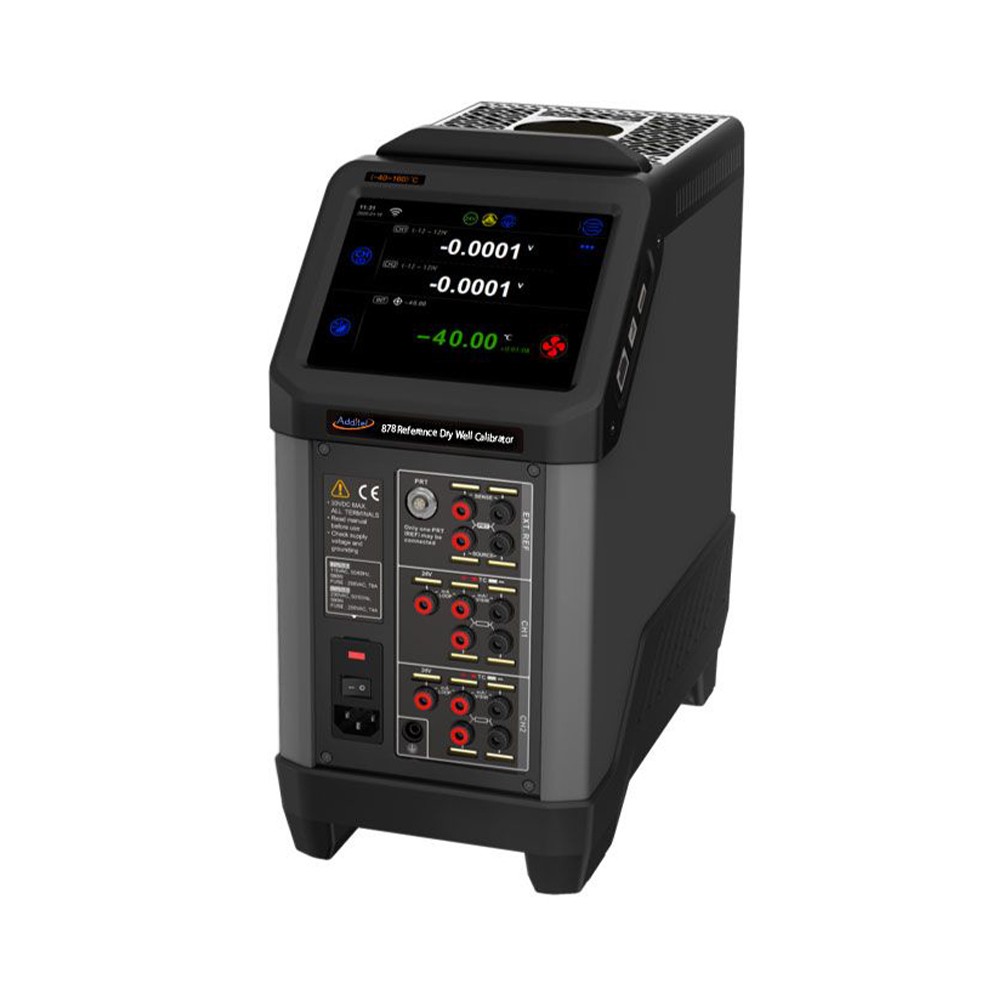
- Additel ADT878, a high-precision portable temperature calibrator
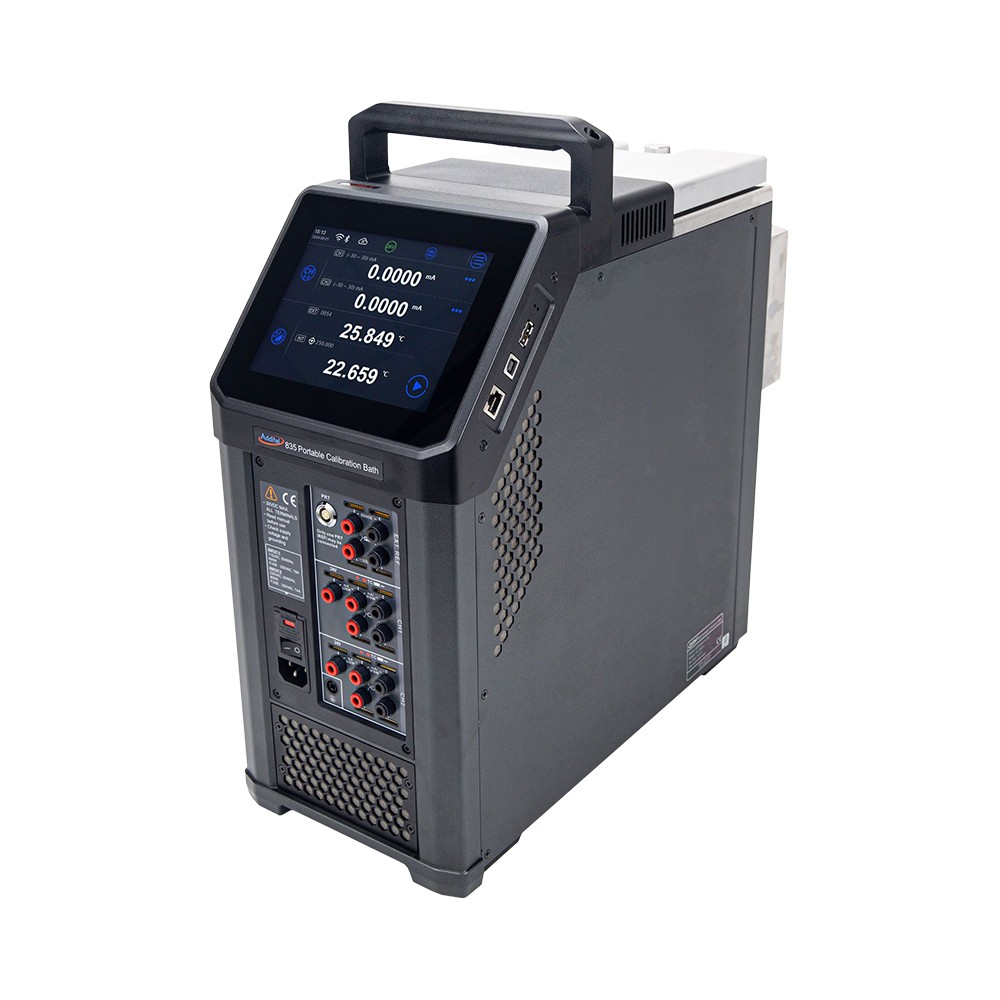
- Additel ADT835, a portable calibration bath designed for laboratory applications and advanced metrological verification
allow reliable calibrations to be performed both in the laboratory and directly in the field, maintaining high levels of accuracy and repeatability. The use of solutions like these helps meet the requirements of ISO 17025 compliant procedures and standards such as AMS2750.
Electrical Signal Calibration
In modern industrial systems, many measuring instruments operate through analog and digital electrical signals. Accurate verification of these signals is essential to ensure the reliability of measurement chains.
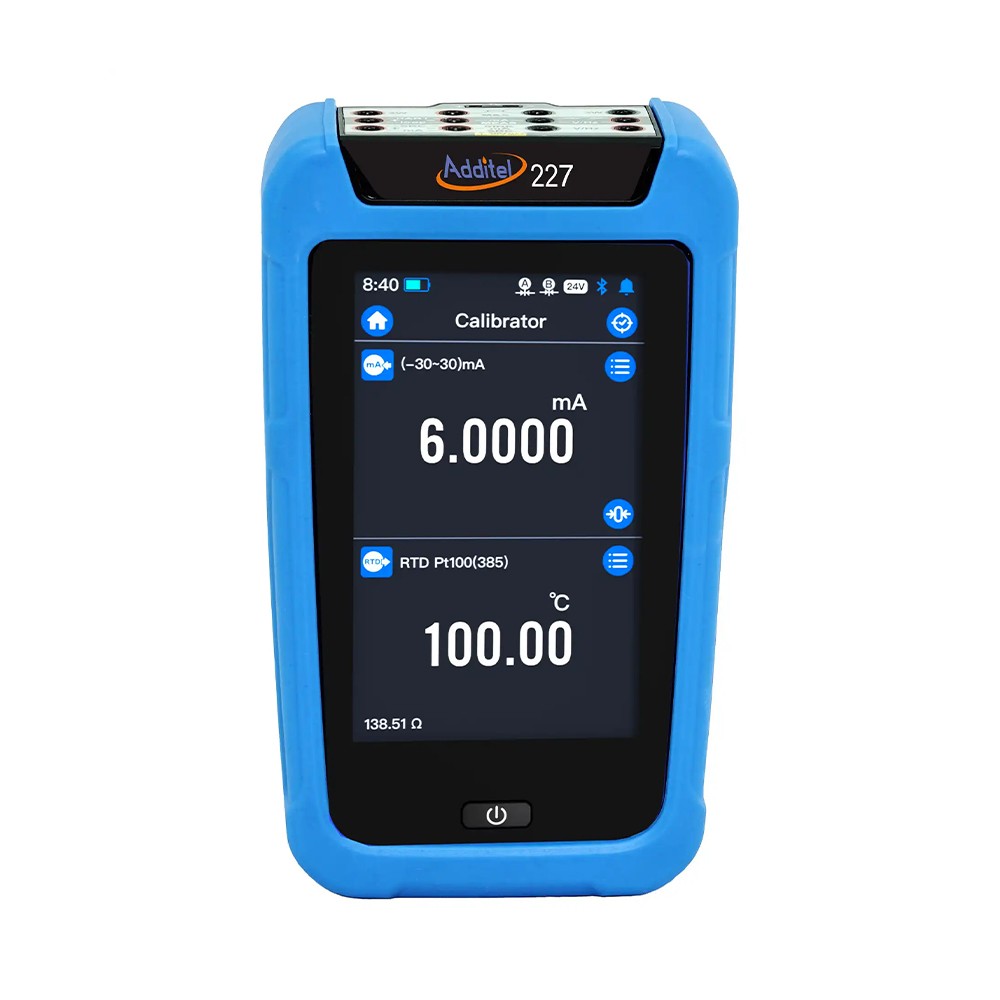
The Additel ADT227 multifunction calibrator allows users to simulate and measure various electrical signals with high precision, supporting comprehensive calibration activities while reducing the need for multiple instruments. This approach improves operational efficiency while maintaining compliance with the metrological requirements of accreditation.
Pressure Calibration
In the field of pressure measurement, the accuracy required in advanced industrial environments demands instrumentation with high metrological performance.
Solutions such as:
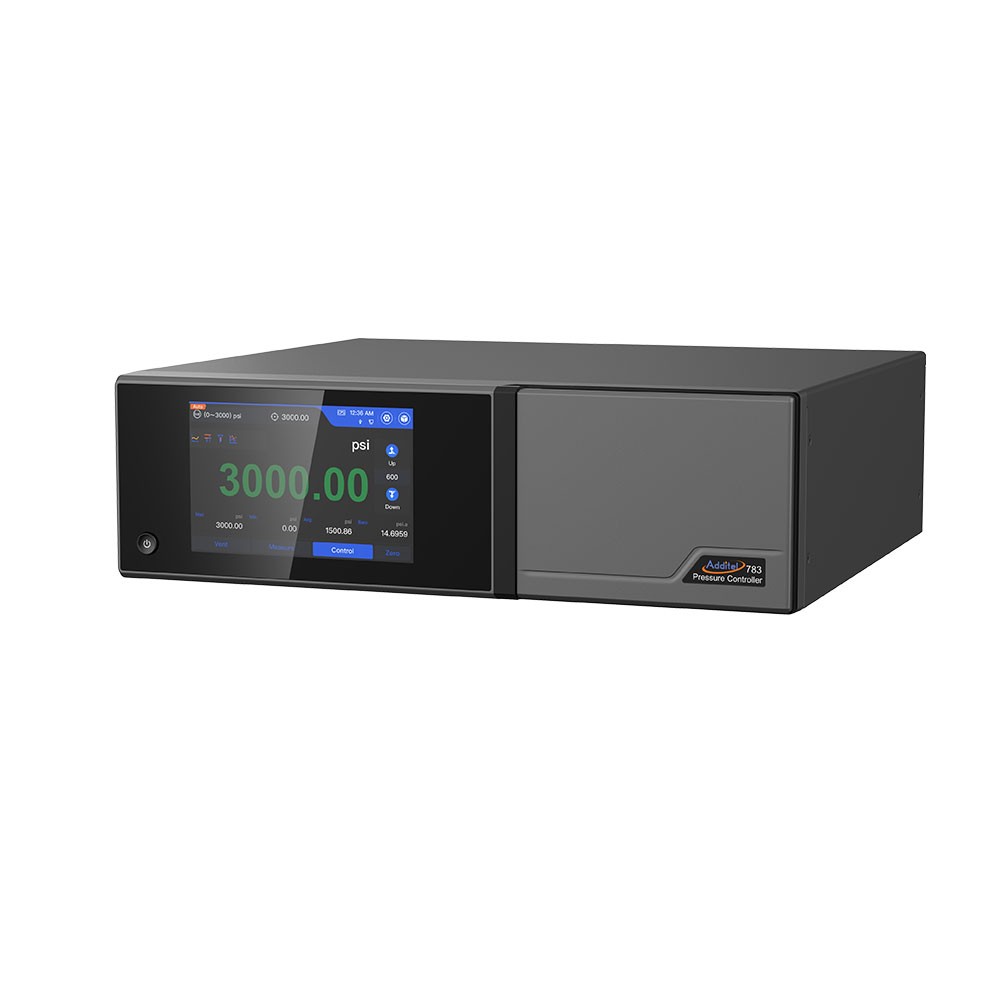
- Additel ADT783, a pneumatic pressure calibrator with sensors up to 0.005% FS
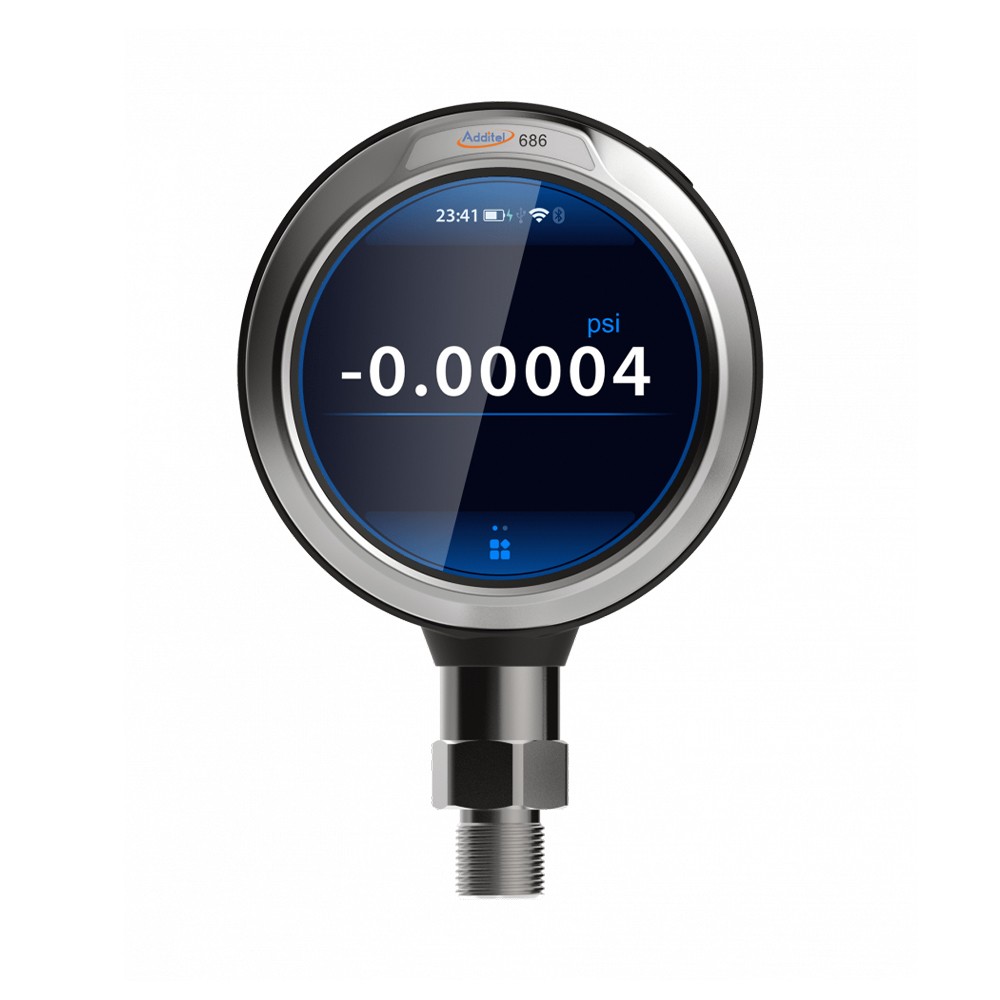
- Additel ADT686 advanced digital pressure gauges, available with 0.01% FS class sensors
enable highly reliable calibrations, reducing measurement uncertainty and ensuring results that are traceable according to Accredia standards.
Accuracy and Reliability as Regulatory Requirements
The use of ISO 17025 certified instruments is not simply a technical choice but a strategic requirement for companies operating in regulated environments. Using instrumentation designed for advanced metrology allows organizations to:
- maintain regulatory compliance;
- improve measurement reliability;
- reduce errors and non-conformities;
- ensure operational continuity and process quality.
In this way, instrumentation becomes an integral part of the company’s quality system, actively supporting the implementation of ISO 17025 in real industrial contexts.
Why ISO 17025 Is a Strategic Investment for Companies and Laboratories
Adopting the principles of the ISO 17025 standard for instrument calibration does not simply mean meeting a regulatory requirement; it means building a reliable, traceable and internationally recognized measurement system. In an industrial environment increasingly focused on quality and compliance, metrology becomes a strategic element for ensuring the credibility of data and the robustness of production processes.
Working with an ISO 17025 accredited laboratory and using appropriate instrumentation allows companies to reduce operational uncertainties, improve control of critical parameters and approach audits and certifications with greater confidence. This aspect becomes even more significant in regulated sectors—such as pharmaceutical, aerospace and advanced manufacturing—where measurement quality directly affects the compliance of the final product.
The role of organizations such as Accredia, responsible for accrediting calibration laboratories in Italy, also ensures that procedures meet rigorous standards of technical competence and impartiality. This system builds trust across the entire industrial supply chain, ensuring that measurement results are comparable and recognized internationally.
Investing in suitable and certified instruments therefore goes beyond simple periodic instrument verification. It means adopting a structured approach to measurement quality, reducing risks associated with unreliable data and improving operational continuity.
Ultimately, the ISO 17025 standard has become a fundamental benchmark for organizations aiming to transform calibration from a technical obligation into a tool for continuous improvement.
A choice that strengthens process safety, increases confidence in measurement results and contributes to building a more controlled, efficient and competitive industrial system over time.


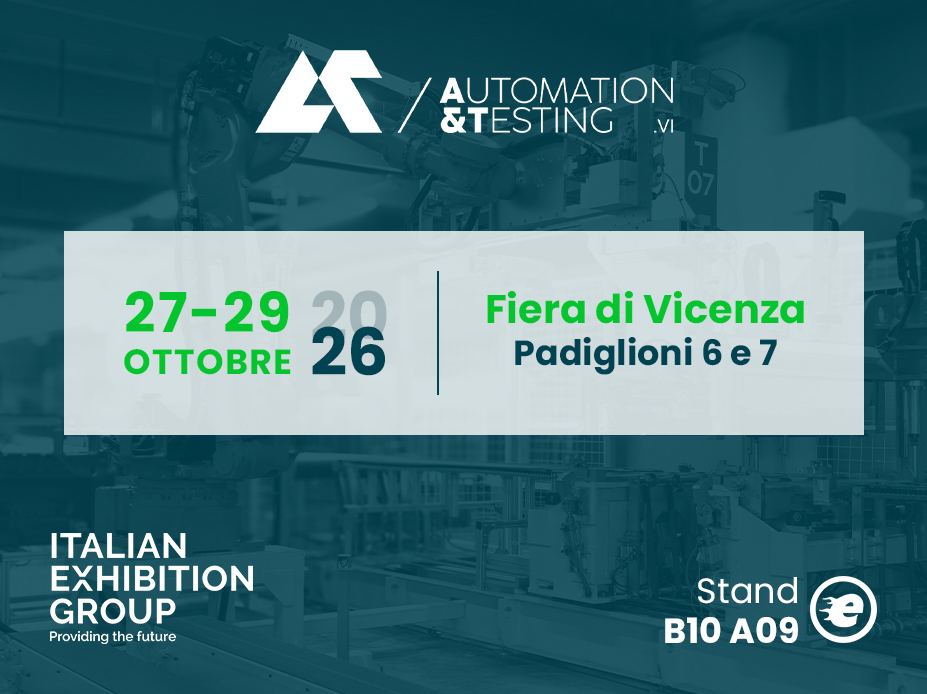 E Instruments at the A&T Vicenza 2026 Trade Fair: Measurement, Calibration, and Safety in Hall 7
 Additel dry-well temperature calibrators: the complete range for thermocouples and resistance thermometers
 Thermal imaging cameras and pyrometers for the plastics industry: applications, benefits, and solutions