


Portable single parameter instruments
Our portable single parameter instruments are designed to provide precise and immediate measurements. Our wide range of products includes, Anemometers, Phmeters, Humidity Meters, Luxmeters, Tachometers, Thermometers, CO Meters, Sound Level Meters, Vibration Analysis, Balometers and much more. Thanks to our internal laboratory, we are able to certify and repair all the instrumentation we treat.


Technical FAQ:
Portable single parameter instruments
What is a single-parameter portable instrument?
It is a compact measuring device dedicated to the acquisition of a single physical or chemical quantity (e.g. only temperature, only humidity, only pressure) with high accuracy, specialization and ease of use.
What is a single-parameter portable instrument used for?
It is used to perform recurring spot measurements on a specific quantity, ensuring maximum accuracy thanks to the optimization of the sensor and electronics for that precise parameter. It is the ideal choice for specialist maintenance or targeted quality control activities.
In which sectors is a single-parameter portable instrument used?
It is used in HVAC (anemometers, thermometers), food (probe thermometers), pharmaceutical, automotive, quality control, research, agriculture, construction and in all contexts where repeated controls are performed on the same parameter.
When to choose a single-parameter instead of a multi-parameter instrument?
The single-parameter is chosen when the activity requires only a specific measurement, when maximum accuracy is needed on that quantity, when the budget is limited or when the device is dedicated to a specific task. The multi-parameter is
preferable for complete inspections on multiple variables.
What quantities are measured with single-parameter instruments?
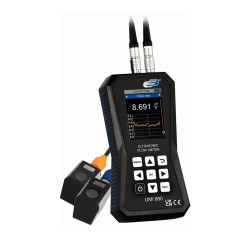
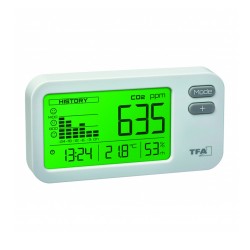
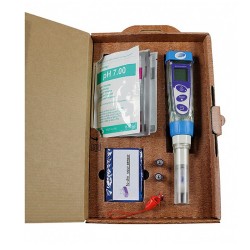
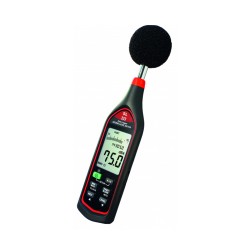
The most common are: temperature (contact, infrared), relative humidity, differential or absolute pressure, air velocity, illuminance (lux), CO or CO₂, sound (sound level meters), conductivity, pH, dissolved oxygen, vibration and flow.
Are single-parameter portable instruments more accurate than multi-parameter ones?
Often yes, because all the electronics and sensors are optimized for a specific quantity, without compromises imposed by the integration of multiple sensors. For high-accuracy laboratory measurements or certified audits, the single-parameter is
generally preferable.
Are single-parameter portable instruments cheaper than multi-parameter ones?
Generally yes: the cost is significantly lower than an equivalent multi-parameter. However, you need to purchase one instrument per quantity, so if many measurements are required, the multi-parameter can be more convenient overall.
Do single-parameter portable instruments have datalogging functions?
Professional models integrate an internal memory to record thousands of measurements with date and time, exportable via USB or Bluetooth to dedicated software. For long-term continuous acquisitions, a dedicated data logger is preferable.
What sensors do single-parameter portable instruments use?
They vary according to the quantity: PT100/PT1000 and thermocouples for temperature, capacitive sensors for humidity, MEMS sensors for pressure, hot-wire or thermal plate sensors for air velocity, NDIR for CO₂, precision microphones for sound.
Are single-parameter portable instruments certifiable for official activities?
Yes, professional single-parameter instruments are certifiable with a calibration certificate traceable to national standards and are commonly used for HACCP inspections (food), environmental controls, GMP audits and official inspection activities.
Can single-parameter portable instruments be replaced by a smartphone with an app?
For indicative home measurements, an app with phone sensors may be sufficient, but for professional use, the dedicated instrument is irreplaceable: it ensures declared accuracy, traceability, certified sensors, ruggedness, calibration certificates and
repeatability over time.
How often should single-parameter portable instruments be calibrated?
Annually for official inspection activities and biennially for general use, according to quality management system requirements (ISO/IEC 17025).