


Advanced multifunction calibrators
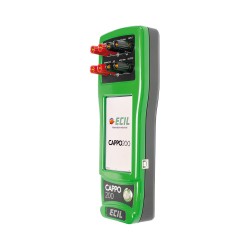
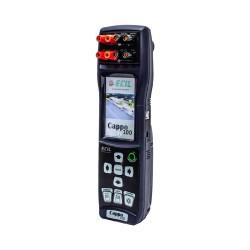
Our advanced multifunction calibrators are the ideal choice for those who need to carry out tests, trials and calibrations of various electrical parameters. Thanks to our loop calibrators you will have the possibility to detect the main electrical parameters: mA, mV, V, Hz, Ohm as well as the generation and measurement of thermocouples and thermoresistances. Furthermore, you would have the possibility of combining an external sensor for detecting pressure. The selection of the most performing models also integrates the datalogger functionality, documenting the data acquisitions and the HART communication protocol.

Technical FAQ:
Advanced multifunction calibrators
What is an advanced multifunction calibrator?
An advanced multifunction calibrator is a portable calibration instrument capable of measuring and generating a wide range of electrical and process quantities — voltage, current, resistance, frequency, RTDs, thermocouples and in many cases even pressure — with high accuracies and integrated automation, documentation and digital communication capabilities (HART, FOUNDATION Fieldbus, Profibus).
What is an advanced multifunction calibrator for?
It is used to perform the complete calibration of smart transmitters, RTDs, thermocouples, pressure switches, process indicators and safety systems (SIL), managing the entire procedure - from device configuration to certificate generation - with a single instrument compliant with ISO/IEC 17025.
In which sectors is an advanced multifunction calibrator used?
It is used in accredited metrological laboratories, in calibration services, in oil & gas, refineries, petrochemical, GMP pharmaceutical, energy (thermoelectric and nuclear power plants), aerospace, automotive and in all contexts that require complete documentary traceability of calibrations.
What is the difference between the standard multifunction calibrator and the advanced multifunction calibrator?
The standard calibrator covers the essential measurement/generation functions (mA, V, RTD, thermocouples). The advanced one adds superior accuracy, HART/Fieldbus communication, documenting mode with automatic procedures, interchangeable external pressure sensors and native integration with calibration management software.
What quantities can an advanced multifunction calibrator measure and generate?
DC/AC voltage, DC/AC current (mA), resistance, frequency, pulse count, RTD (Pt100, Pt1000, Cu, Ni), thermocouples (K, J, T, N, R, S, B, E), pressure (with external sensors) and in some models also relative humidity, 24 V loop power and simulation functions.
What does "documenting" mode or automatic documentation mean?
It is the calibrator's ability to perform pre-set calibration procedures, automatically acquire data at programmed points, calculate deviations and uncertainty and store the results on-board, ready to be transferred to the calibration management software. Eliminate manual transcription and associated errors.
Does it support HART, FOUNDATION Fieldbus and Profibus digital protocols?
Yes, the top of the range models natively integrate the HART protocol and in many cases also FOUNDATION Fieldbus and Profibus PA, allowing you to configure, diagnose and calibrate smart transmitters without the need for a separate programmer.
What level of accuracy do advanced multifunction calibrators offer?
Typical accuracy is ±0.01% for current, ±0.01% for voltage, ±0.02°C for Pt100 RTDs, and ±0.2-0.5°C for thermocouples. The best laboratory models achieve even higher accuracies, approaching the performance of dedicated advanced pressure calibrators.
Can SIL safety systems be calibrated?
Yes, advanced calibrators are used for periodic proof testing of functional safety systems compliant with IEC 61508/61511, generating test signals and documenting the outcome of the verification in a traceable way, a fundamental requirement in regulated systems.
Are they suitable for accredited metrological laboratories?
Yes, the advanced models are compatible with the documentary requirements of ISO/IEC 17025. They can be used as secondary working standards, as long as they are periodically calibrated for comparison with primary ACCREDIA traceability standards.
Can they be used both in the laboratory and in the field?
Yes, they are designed for dual uses: in the laboratory they use mains power and complete connection to the software, in the field they work on battery power, in a robust case and with a protection rating typically IP54 or higher, suitable for the maintenance of industrial systems.
Are they compatible with calibration management software and CMMS systems?
Yes, the native integration with dedicated software allows the bidirectional transfer of procedures and results, and interfacing with the main CMMS systems (SAP PM, IBM Maximo) via API for complete asset management.