


Video surveillance
Discover our selection of surveillance systems, designed to offer maximum security and peace of mind. Our advanced systems are ideal for effectively monitoring businesses, homes, and public areas. We offer a variety of solutions, including high-definition cameras, recording systems, and analysis software, all characterized by reliability and ease of use. You can rely on innovative technologies for surveillance that not only protects but also integrates seamlessly with your environment and specific needs.

Technical FAQ:
Video surveillance
What is a video surveillance system?
It is an integrated system of cameras, recording systems (DVR/NVR), management software and data transmission infrastructure, designed for continuous audiovisual monitoring of areas, processes and industrial plants for security, process control or inspection purposes.
What is a video surveillance system used for?
It is used to ensure the physical security of industrial sites (perimeters, critical areas), monitor production processes remotely, support the maintenance and inspection of plants in hazardous areas, record events for audit and compliance purposes, and in some cases automatically detect anomalies through video analytics.
In which sectors is a video surveillance system used?
It is used in oil & gas, refineries, petrochemical, chemical, energy (power plants and substations), steel, naval, offshore, logistics, automotive, pharmaceutical, food, critical infrastructure (ports, airports, tunnels) and in all sites subject to safety and security regulations.
What is the difference between the various video surveillance systems?
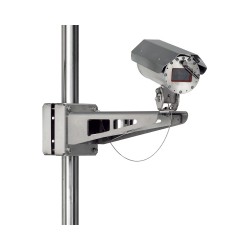
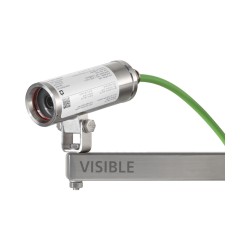
The main distinctions are: analog vs digital (based on signal transmission technology); standard vs ATEX (certified for explosive atmospheres); PTZ vs fixed (motorized movement and zoom or fixed view); daytime vs thermal (video surveillance in the infrared spectrum for night vision and heat detection). See analog, digital, analog ATEX, digital ATEX, ATEX thermal cameras.
What does ATEX video surveillance mean?
It indicates cameras and accessories certified according to the ATEX Directive 2014/34/EU for use in potentially explosive atmospheres (Zones 1, 2 for gas and 21, 22 for dust). The certification ensures that the equipment cannot become a source of
ignition even in case of fault.
What is the difference between analog and digital (IP) cameras?
Analog cameras transmit the video signal in analog format via coaxial cable, with limited resolution and simple infrastructure. Digital IP cameras transmit the digitized signal via Ethernet network, with resolutions up to 4K-8K, integration with video analytics software and remote management, but require adequate network infrastructure.
What are PTZ cameras?
PTZ (Pan-Tilt-Zoom) are motorized cameras that rotate horizontally (pan), vertically (tilt) and have variable optical zoom. They are ideal for covering large areas and for active monitoring from a control room, with the possibility of tracking events in real time.
What is meant by IP and IK protection rating?
The IP (Ingress Protection) rating indicates resistance to dust and liquid infiltration (e.g. IP66/67/68); the IK rating indicates resistance to mechanical impacts (from IK01 to IK10). For outdoor industrial use, IP66 or higher and IK08 or higher are typically required.
Which regulations govern video surveillance in Italy?
The main ones are GDPR (EU 2016/679) and Italian D.Lgs. 196/2003 for data protection, the 2010/2018 Privacy Guarantor Provision for video surveillance, the Italian Workers' Statute (art. 4 L. 300/70) for workplace video surveillance, and technical standards EN 62676 for video surveillance systems.
Can they be integrated with video analytics and AI systems?
Yes, modern IP cameras integrate AI-based video analytics functions (motion detection, facial recognition, people counting, perimeter detection, line crossing, smoke/fire detection, license plate reading), capable of reducing false alarms and automating responses.
What are thermal cameras for video surveillance?
They are infrared cameras (LWIR) that detect the heat emitted by bodies rather than visible light, allowing vision even in total darkness, fog or smoke. In industrial settings, they detect plant thermal anomalies, hot spots and incipient fires, as described in Lithium batteries and fire risk. ATEX versions also exist.
How is a video surveillance system sized?
Sizing starts from the analysis of surveillance objectives (security, inspection, control), assesses areas to be covered, resolution and viewing angle requirements, environmental conditions (temperature, lighting, ATEX), available network infrastructure, storage capacity (required recording days) and budget. A GDPRcompliant privacy project must always be drawn up.