


Handheld gas analyzers
Handheld gas and multi-gas analyzers combine portability with advanced technology, offering precise and immediate solutions for gas detection in various environments. Lightweight and easy to handle, these devices are perfect for mobile professionals who need to monitor air quality and detect dangerous gases. Equipped with high-quality sensors, the handheld analyzers provide reliable data in real time.

Technical FAQ:
Handheld gas analyzers
What is a handheld gas analyzer?
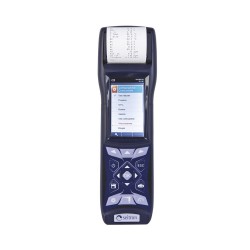
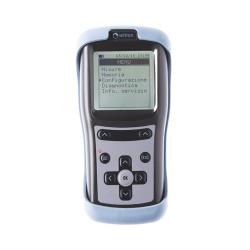
A handheld gas analyzer is a portable, case-format measuring instrument, lightweight and manageable, designed to quantify in the field the gas composition of industrial plants and combustion processes. It combines electrochemical and NDIR sensors in a single robust body, equipped with an aspirating pump, sampling probes, and long-life battery for direct field inspections.
What is a handheld gas analyzer used for?
It is used to perform quantitative measurements of gaseous emissions at the outlet of chimneys, boilers, and industrial processes, returning concentrations of pollutants (NOₓ, SOₓ, CO, CO₂, hydrocarbons) in ppm or mg/Nm³. It allows calculating
combustion efficiency, checking compliance with emission limits, and diagnosing the operation of thermal systems.
In which sectors is a handheld gas analyzer used?
It is used in biogas and landfills (biogas composition analysis), incinerators and waste-to-energy plants, thermal power plants, cement, glass, and ceramics industries (process flue gas analysis), R&D of engines and turbines, ARPA controls and environmental inspection activities, energy certification of industrial thermal systems.
What is the difference between a handheld and a fixed analyzer?
The handheld is battery-powered and carried in a case for periodic or spot inspections at multiple different plants. The fixed analyzer is permanently installed at a measurement point, operates continuously 24/7, and integrates with control systems (DCS, SCADA) for continuous emission monitoring.
How many gases does a handheld gas analyzer measure simultaneously?
Professional models measure up to 6 gases simultaneously, chosen from CO, CO₂, O₂, NO, NO₂, SO₂, H₂S, CH₄, and hydrocarbons (CₓHᵧ). The combination is configured by selecting appropriate sensors: electrochemical for toxic gases at low concentrations, NDIR (infrared bench) for CO, CO₂, and hydrocarbons with high longterm stability.
How does the integrated aspirating pump work?
The aspirating pump draws the gas sample from the measurement point through a sampling probe, conditions it (particulate filtration, moisture condensation, optional dilution), and sends it to the sensors at constant flow rate. A second dilution pump allows measurements on high-concentration gases without saturating the sensors.
What sampling probes are used?
Standard probes are in stainless steel from 30–100 cm for chimneys at moderate temperatures (up to 600 °C); long probes from 1–3 m for large ducts; heated probes (maintained at 180 °C along the entire path) are essential for SO₂, NOₓ, and heavy hydrocarbon measurements that would condense in cold tubing, falsifying the measurement.
Is combustion efficiency also calculated?
Yes, professional handheld analyzers automatically calculate combustion efficiency (η), flue gas losses, excess air (λ), Bacharach smoke index, and CO/CO₂ ratio. The calculation follows UNI 10389 and UNI EN 50379 standards, and results are certifiable for declarations of conformity under DPR 74/2013 on mandatory thermal controls.
Do handheld gas analyzers have datalogging and report printing functions?
Yes, they record measurements in internal memory with date, time, and system identifier. Bluetooth connectivity allows transfer to PC, tablet, or smartphone via dedicated apps for graphical analysis and automatic generation of signed PDF reports. Premium models integrate a portable printer for immediate issuance of the test report to the client.
Are handheld gas analyzers also used for biogas analysis?
Yes, specific configurations for biogas measure CH₄, CO₂, O₂, and H₂S (characteristic gases of biogas from anaerobic digestion, landfills, and sludge), allowing verification of biogas quality in real time, optimization of the digestion process, and monitoring of cogeneration engine operation. Dedicated NDIR sensors are used for highconcentration measurements.
What is the difference between a handheld gas analyzer and a combustion analyzer?
The two categories overlap significantly: handheld gas analyzers are a generic instrument for emission and gas composition measurements in the field, while portable combustion analyzers are optimized for the specific control of boilers and burners according to UNI 10389. Many professional instruments perform both functions with modular configuration.
How often do handheld gas analyzers need calibration?
Calibration is mandatory annually for official inspection use, with an ISO/IEC 17025 accredited certificate. It is performed with certified gas mixtures (span gas) and reference gas (zero gas).